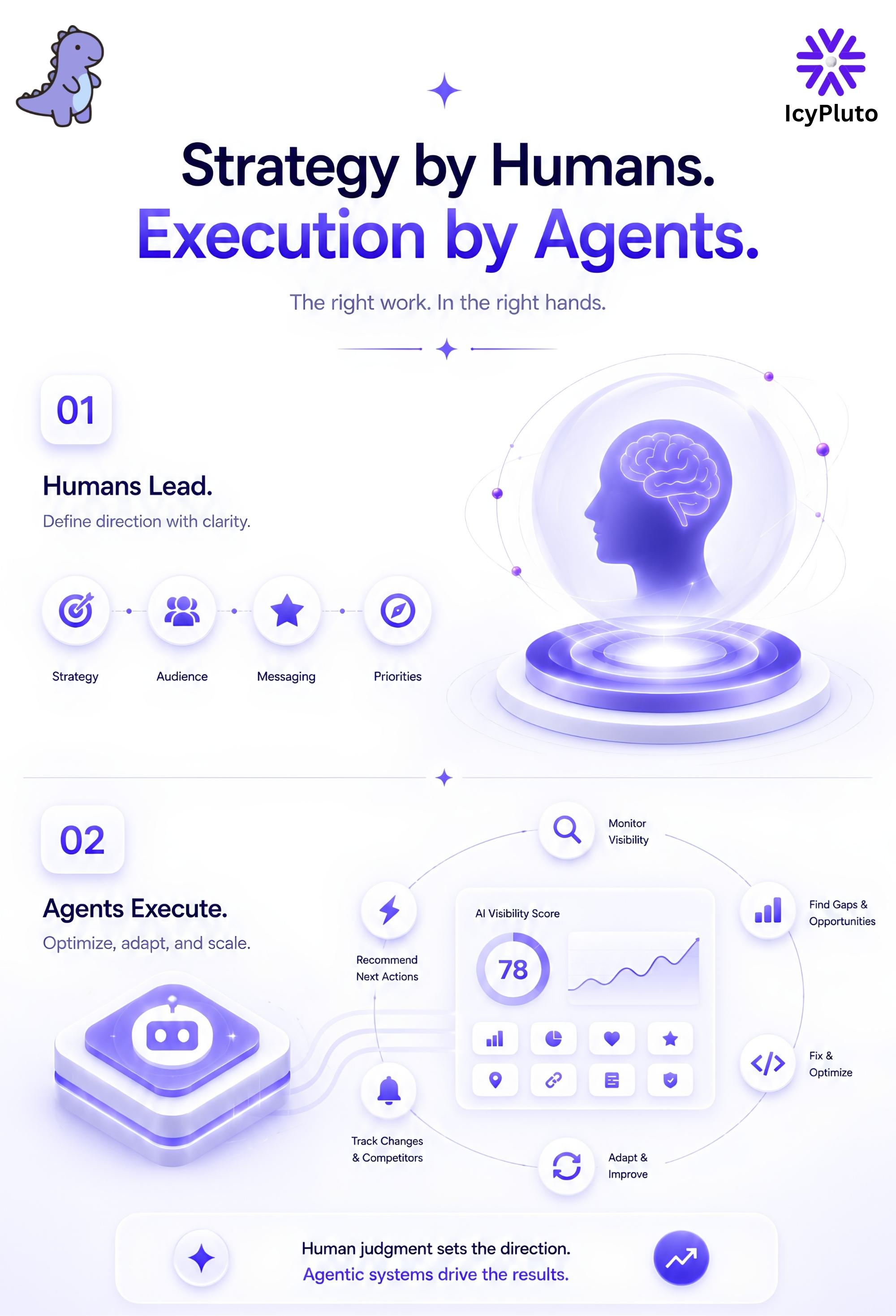
This blog explains how modern marketing teams can ...
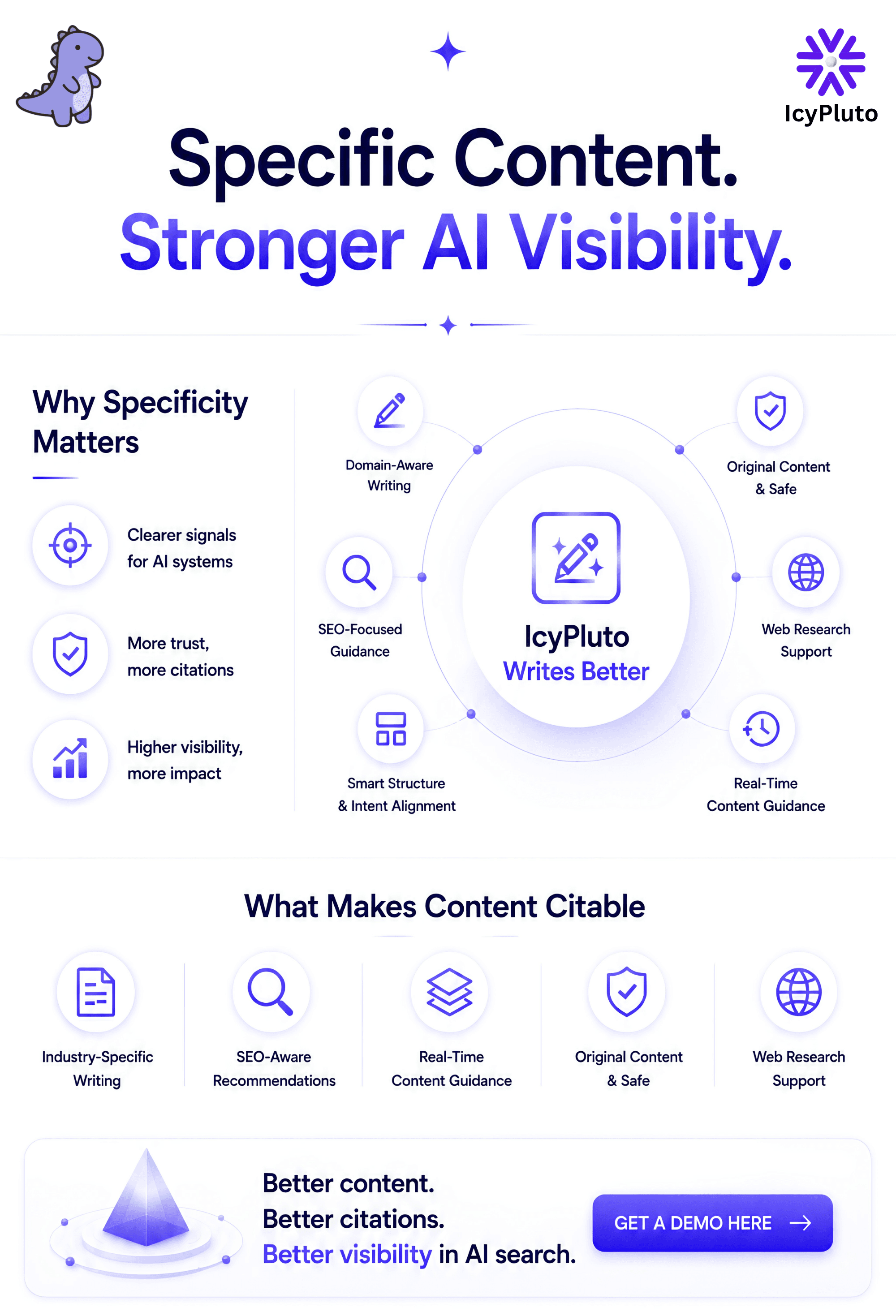
AI SEO writing is getting more specific, and that ...
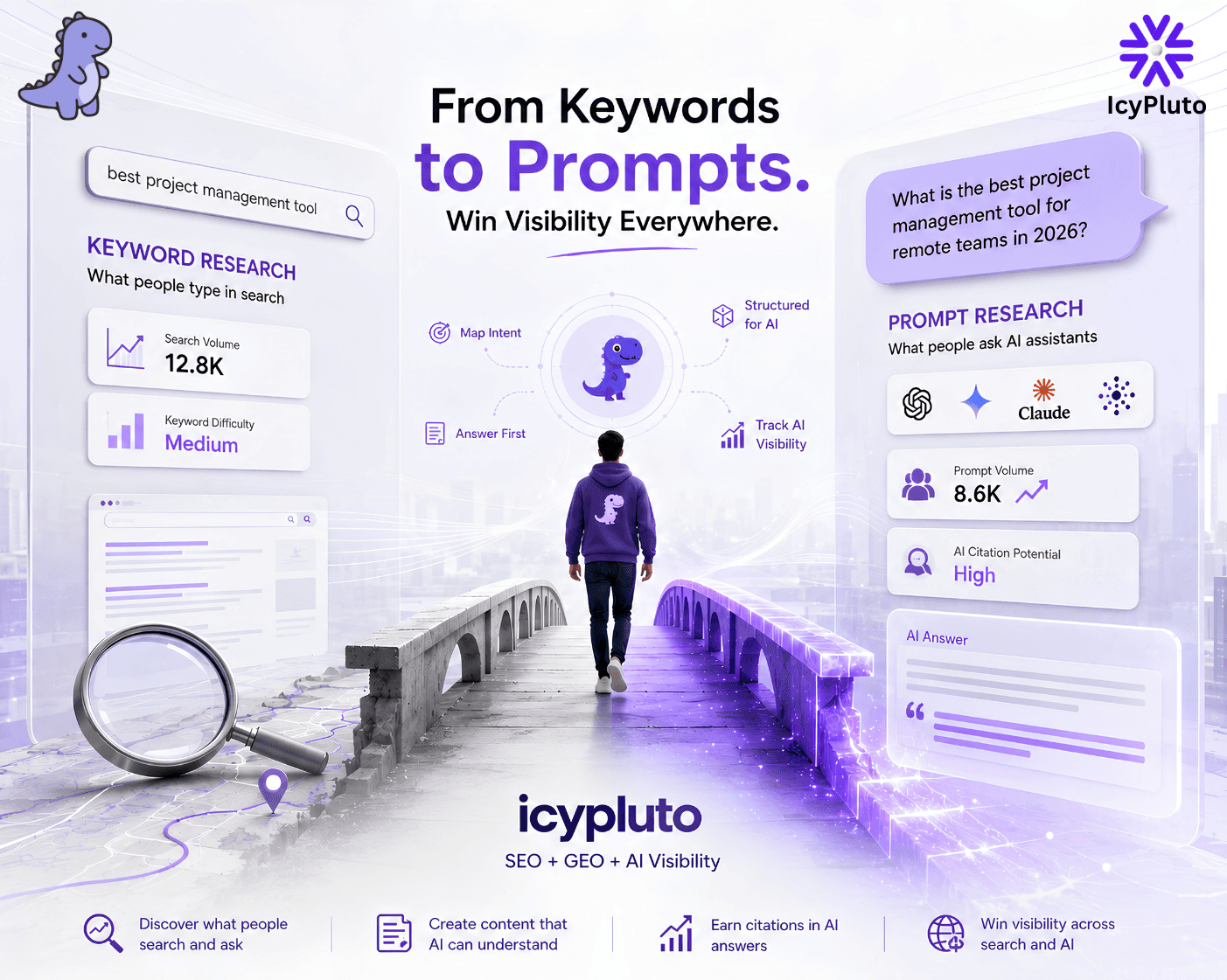
This blog explains how keyword research must now b...
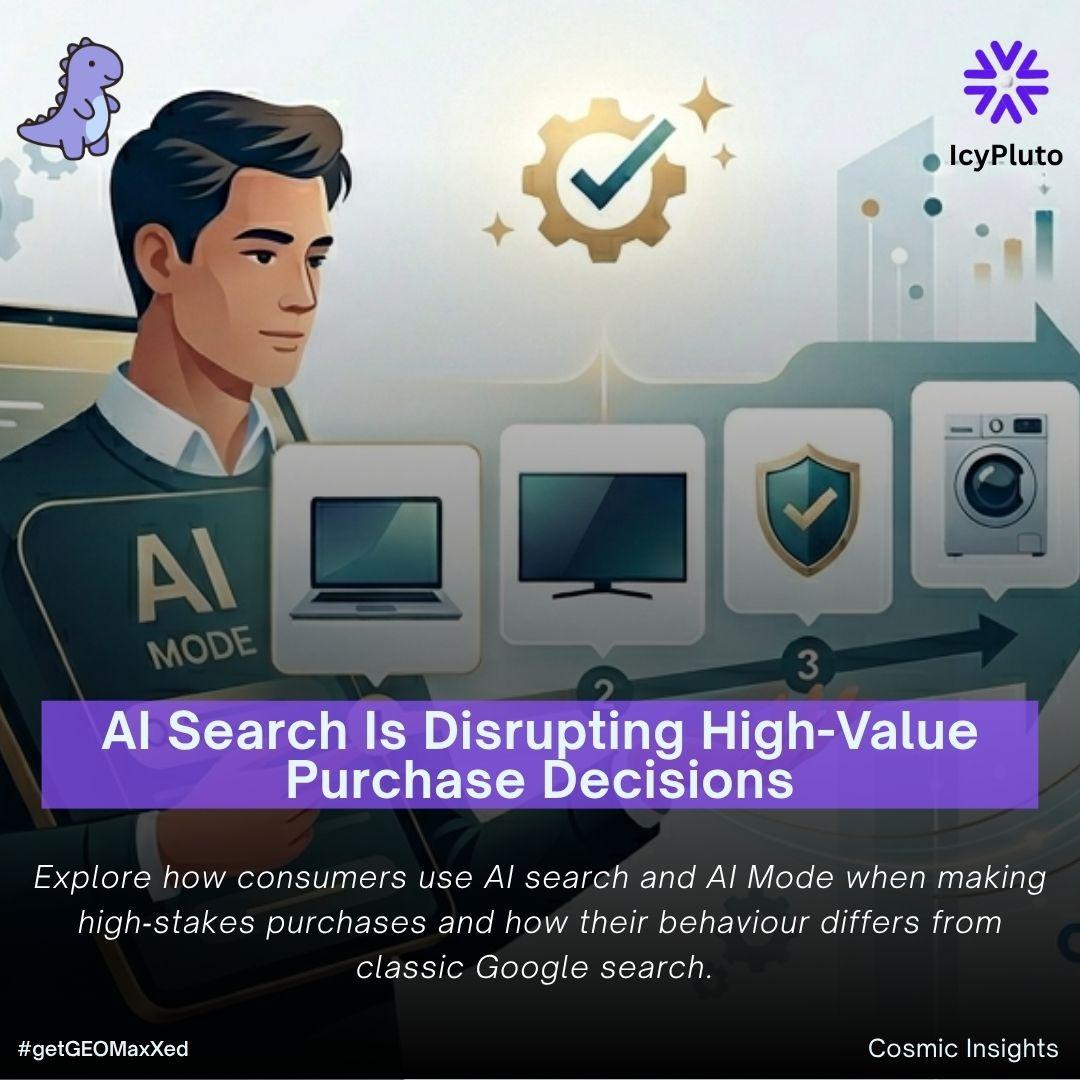
AI search is not just changing how people type queries. It is changing how they decide what to buy when the stakes are high, from laptops and televisions to washer–dryer sets and car insurance. For SEO teams, GEO (Generative Engine Optimization) specialists and anyone thinking about AEO (Answer Engine Optimization), this shift is bigger than one more Google algorithm update. It is a structural change in how consumers build shortlists and assign trust.
A recent usability study of 48 real buyers completing 185 major‑purchase tasks compared behavior in classic search versus “AI Mode” experiences. The results show that when people use AI search, they lean hard on the AI’s recommendations instead of doing their own comparison work. That has serious implications for AI search visibility, SEO content strategy and how brands show up inside generative answers.
Let us walk through the key findings and what they mean for AI search, SEO, GEO, and AEO (Answer Engine Optimization).
Traditional search has always been a comparison environment. People type a query, click several blue links, scan reviews and assemble their own shortlist of candidates. AI search behaves very differently.
In AI Mode, the interface serves a synthesized answer that already contains a small set of recommended products or providers. The study found that 74 percent of AI Mode final shortlists came directly from the AI output, with no external validation and no triangulation across multiple sources. In other words, for three out of four tasks, the AI’s shortlist simply became the user’s shortlist.
Instead of comparison shopping, users treat AI Mode as a recommendation feed. They read the generated paragraph, skim the inline product cards and then decide. For SEO and GEO practitioners, that means the real competition is moving from page one of Google’s ranking system to the handful of items the AI includes in its summary.
One of the starkest differences in the study was how often people built their own shortlist in classic search compared to AI Mode.
The researchers defined four behaviors:
AI Adopted: user takes the AI’s suggested candidates as their shortlist with no changes or external checks.
User Built: user ignores suggestions and assembles a candidate set from independent sources.
AI Verified: user starts from AI candidates but checks them against another source before deciding.
Hybrid: user mixes AI suggestions with at least one independently discovered option.
In classic search, 56 percent of participants built their own shortlist by clicking through multiple sites and comparing options. In AI Mode, only 8 out of 147 codeable tasks produced a truly self‑built shortlist. The rest either adopted the AI list directly or made only minor adjustments.
Two numbers capture the scale of the shift:
64 percent of AI Mode tasks had zero clicks. Users did not leave the AI interface at all.
Only 23 percent of AI Mode tasks involved any external site visit, usually to check a price or spec for an already chosen candidate.
By contrast, in standard search, nearly 89 percent of participants clicked out to at least one external site. SEO in that world is about getting discovered across many sources. AI search compresses that comparison phase into a single interaction with the answer engine.
For GEO and AEO, that means the key question is no longer “How many sites does my brand appear on for this keyword?”, but “Am I visible in the AI’s shortlist at all?”
Even inside AI search, ranking still matters. The study found that 74 percent of participants chose the item ranked first in the AI output as their top pick, and the average rank of the final choice was 1.35. Only about 10 percent chose something ranked third or lower.
This is very similar to how click‑through rates concentrate at the top positions in classic Google search results, but with an important twist. In AI Mode, position one sits inside a curated list of only two to five items that the model has already filtered. That makes top placement even more powerful, because users see it as the AI’s best answer after “doing the work” for them.
Interestingly, about 26 percent of users overrode the rank order when they saw a familiar brand lower in the list. Brand recognition led them to choose Samsung, LG, Apple or Lenovo even when those brands were not in the top spot. However, 81 percent of those rank overrides still came from within the AI’s candidate set. Users were not rejecting the AI’s shortlists. They were just rearranging them based on prior preferences.
From an SEO and AI search standpoint, that suggests two parallel levers:
Ranking within AI output: classic ranking logic still applies. Higher is better.
Brand strength: where generative answers surface multiple brands, recognition can let you “punch above your rank” inside the shortlist.
GEO and answer engine optimisation need to account for both. You want to be both present and familiar when the AI summarises your category.
In traditional search, users build trust through multi‑source convergence. They check whether several different sites, reviews and forums say the same thing about a product or provider. That pattern largely disappears in AI Mode.
The study coded trust drivers and found that in AI Mode, AI framing accounted for 37 percent of trust signals, while brand recognition accounted for 34 percent. Multi‑source convergence was almost absent at just 5 percent.
AI framing means the specific words and structure the model uses to describe a brand or product. For example, calling something “best for affordability” or quoting a concrete price like “around 850 dollars” can heavily influence which options users shortlist.
One participant evaluating car insurance said they preferred Travelers and USAA because the AI summary mentioned exact dollar amounts rather than percentage discounts, which felt more transparent. That phrasing choice from the AI became the trust signal.
The balance between AI framing and brand recognition depended on the category:
In televisions and laptops, where most users arrived with brand preferences, recognition dominated.
In insurance and washer–dryer sets, where users had less prior knowledge, AI wording was more important.
For SEO and content teams, this means that the way your site describes pricing, features and use cases is not only for human readers and Google’s ranking systems. It also feeds the AI models that will rephrase your value proposition during answer generation.
Answer engine optimisation requires you to think about:
Providing specific, structured data that AI can quote confidently.
Clearly framed use cases and differentiators that can be lifted into summaries.
Honest, conditional pricing explanations for context‑sensitive services.
If you do not provide those signals, the AI has less to work with, and your presence in AI search may be vague or generic.
The concentration effect in AI Mode is extreme. In the laptop category, three brands captured 93 percent of all final choices when people used AI Mode. In classic search, the spread was wider, and lesser known brands such as certain HP or ASUS models appeared in shortlists that never showed up in AI Mode.
This creates two distinct visibility problems:
Brands that never appear in the AI output are never considered. If the answer engine does not include you, you simply do not exist for that query. Users do not feel the need to search beyond the AI set.
Brands that appear but lack recognition still struggle. For example, Erie Insurance surfaced in AI results, yet several participants discarded it purely on unfamiliarity. In one case, a brand lost trust because its name was not hyperlinked, which the user read as a negative signal.
Despite this narrowness, people did not feel trapped. The study measured “narrowness frustration” and found it showed up in 15 percent of AI Mode tasks and 11 percent of classic search tasks, a difference that was not statistically significant. Users felt they had enough options even when the AI gave them a smaller set.
This is a key mindset shift. In AI search, the shortlist the model offers is “the market” in the user’s mind. There is no felt need to widen the funnel.
For Generative Engine Optimization and AI search strategy, that means:
You must audit prompts that real buyers use and document which brands appear and in what order.
You should track how these AI shortlists change over time, just as you would monitor SERP features in traditional SEO.
You need a plan for improving “model‑layer visibility” so that your brand is eligible to appear in those lists in the first place.
Only about 23 percent of AI Mode tasks included a visit to an external site, compared with 67 percent in classic search. Even more important than the volume is the intent behind those exits.
When users left AI Mode, they typically:
Visited retailer sites such as Best Buy to check prices or stock.
Landed on manufacturer pages to confirm specific specs like dimensions or stacking compatibility.
They did not leave AI Mode to discover new brands or to read reviews. Reddit, which played a notable role in standard search behavior, appeared in 19 percent of classic search tasks but only twice in 149 AI Mode sessions. The peer‑opinion layer that shapes many high‑intent queries in traditional SEO is largely absent in AI search usage.
Previous research has highlighted how Google’s models rely heavily on Reddit and other UGC to train their ranking systems and generative features. The irony is that once AI summarises those sources, users no longer feel compelled to visit them directly.
This reinforces a pattern across multiple AI search studies:
AI search compresses discovery and evaluation into the model layer.
Clicks are increasingly “reserved for transactions” such as buying or sign‑ups.
For SEO reporting and funnel analysis, that means you may see fewer research clicks from certain queries, even as AI search continues to learn from and echo your content.
The study closes with three practical levers that align tightly with modern SEO, GEO and answer engine optimization.
In classic SEO, you worry about crawling, indexing and ranking in Google’s algorithm. In AI search, you need to think one layer deeper. Are you even visible inside the model’s knowledge graph for your category?
Practical steps include:
Running realistic prompts such as “best car insurance for a family with a teen driver” or “best washer dryer set under 2,000 dollars” and tracking which brands appear.
Logging position, wording and any price points the AI returns.
Repeating this across multiple prompt variations and at regular intervals, since AI answers drift over time.
This is Generative Engine Optimization in action: treating AI answers as a dynamic “SERP” that needs intentional monitoring.
The way AI describes you is constrained by what it can find about you. Brands that were mentioned with specific models, clear prices and explicit use cases enjoyed stronger positions than brands described generically.
For AI search and AEO, high‑leverage content patterns include:
Structured pricing blocks where possible, supported by schema markup and Merchant Center feeds for physical products.
Detailed specs and compatibility notes for hardware, with clear labels that can be pulled into AI summaries.
Category pages and FAQs that explain “best for” scenarios and tradeoffs in plain language.
Think of this as writing for both Google’s ranking systems and the AI that will paraphrase you. The more concrete your content, the more confidently the model can represent you inside its recommendations.
Context‑dependent pricing is a minefield in AI Mode. In the insurance tasks, 63 percent of participants were rated overconfident about pricing. They accepted AI‑quoted rates without checking whether those numbers applied to their state, driving record or current provider, and eliminated options accordingly.
Where AI showed explicit, retailer‑confirmed prices, such as washer–dryer sets with shopping panels, 85 percent of participants understood pricing clearly. Confusion and misplaced confidence were concentrated in categories where AI had to infer or generalize.
Service providers and SaaS companies can mitigate this by:
Explicitly stating that prices are estimates subject to specific conditions.
Outlining which variables affect the final rate so the AI can echo that nuance.
Using FAQs and educational content to set expectations about custom quotes.
For SEO, that might feel like you are adding friction, but in AI search it can prevent the model from presenting misleadingly precise numbers that harm you or your competitors.
Taken together, these findings show that AI search is not just another interface on top of the same old behavior. It is a different mode altogether:
Users trust AI shortlists at a much higher rate than they trust raw SERPs.
The comparison phase that classic SEO grew up on is collapsing into the AI’s own synthesis.
Traditional ranking systems still matter, but a new “model‑layer ranking” is emerging inside AI answers.
For practitioners, that suggests a three‑layer approach to search strategy:
Classic SEO to stay competitive in Google’s ranking systems, especially for queries where AI overviews and shopping units have not fully taken over.
GEO and AEO to make sure your brand is visible and well framed in AI shortlists across Google AI Mode, Bing Copilot and independent AI engines.
Brand building and awareness so that when you do appear inside AI search results, users are biased in your favor even if you are not in the top slot.
The study confirms that buyers are adopting AI search faster than many brands are adapting their SEO strategies. For marketers who move early on Generative Engine Optimisation and answer engine optimisation, that gap is an opportunity, not just a risk.