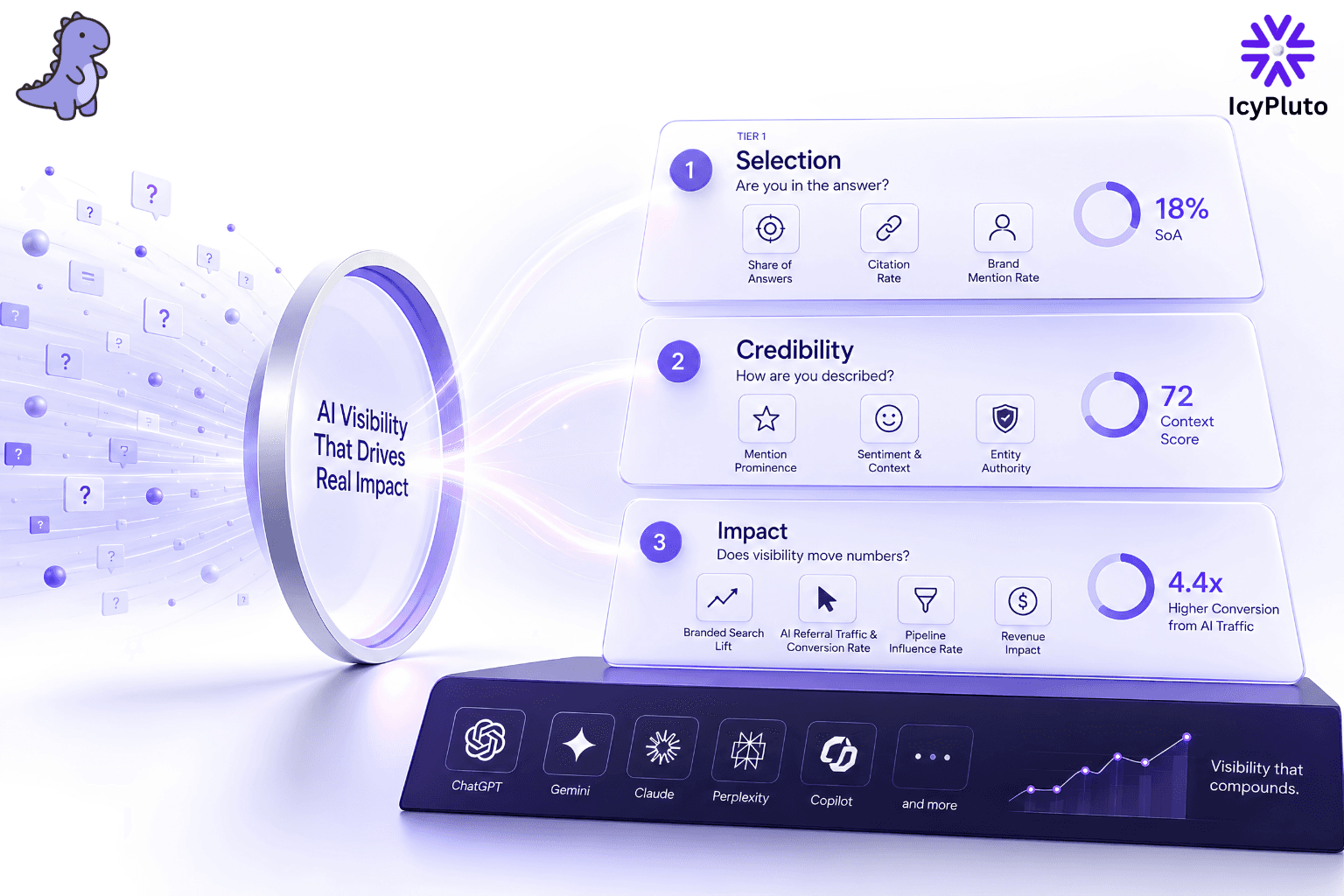
AI search has turned visibility into a numbers gam...
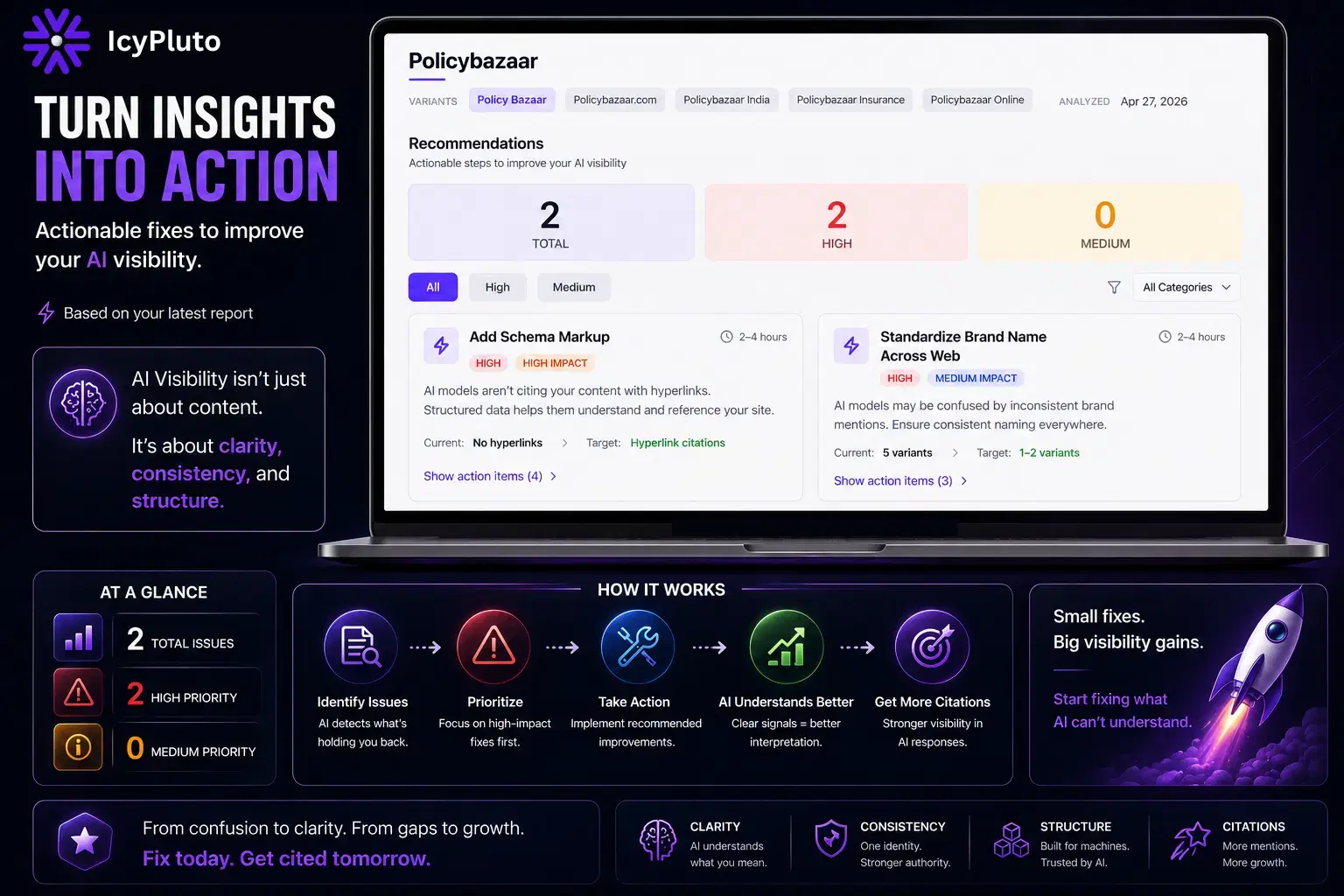
This blog explores how IcyPluto’s Action Feature h...
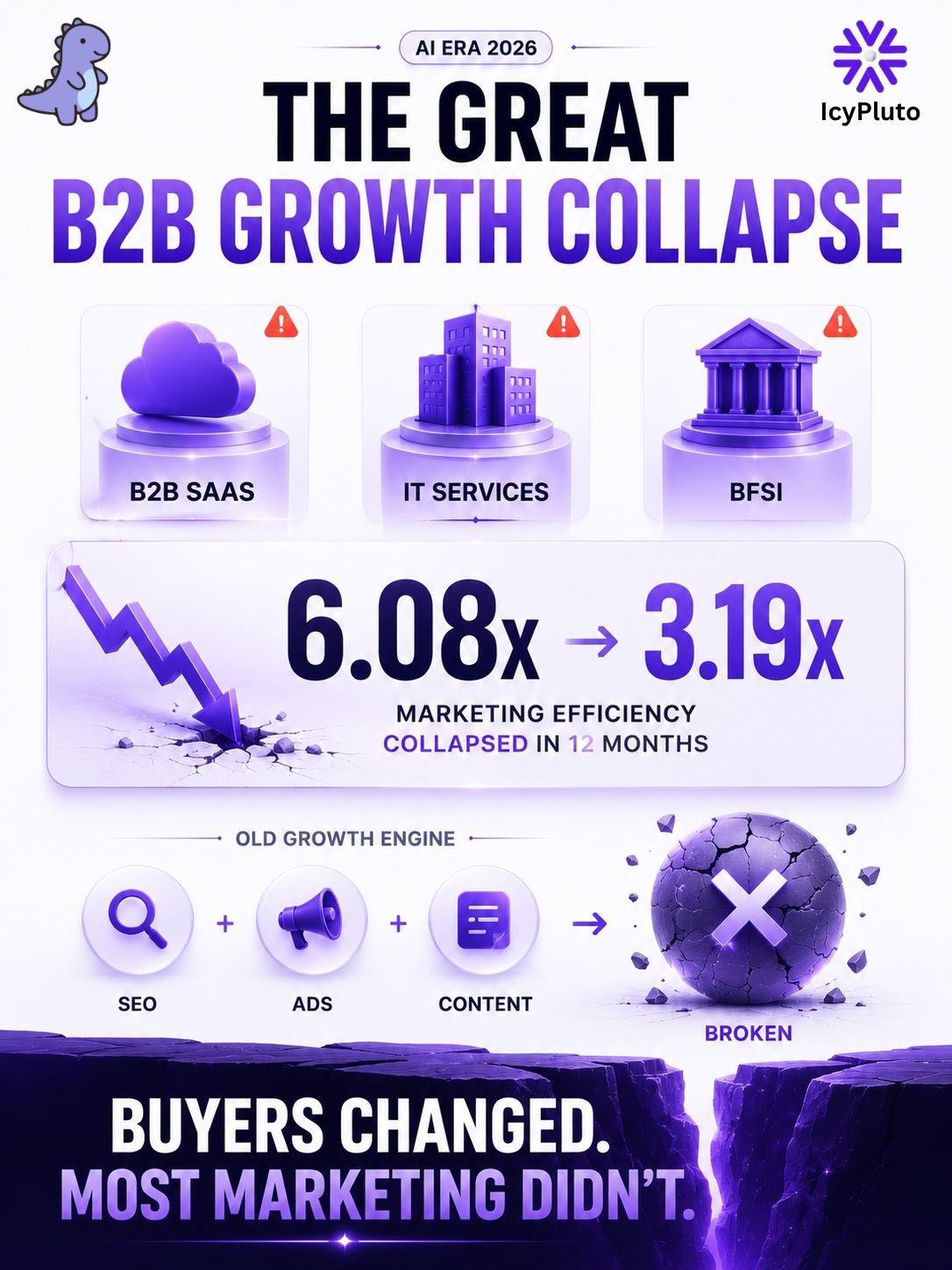
This hard-hitting blog reveals why IT, B2B SaaS, a...
Marketing is no longer about campaigns. It is about systems that think, decide, and act.
In the last five years, automation has evolved from rule-based workflows to intelligent ecosystems. But 2026 marks a sharper shift. We are now entering the era of Agentic AI, where systems are not just assisting marketers; they are replacing decision layers altogether.
According to McKinsey & Company, companies that adopt AI-driven decision systems see up to 40% faster execution cycles and 30% higher marketing ROI. Yet, most organizations are still stuck in dashboards and manual optimization loops.
This blog breaks down what Agentic AI really means, why it matters now, and how it is reshaping the future of marketing in ways most teams are not prepared for.
Agentic AI refers to systems that can independently plan, execute, and optimize tasks toward a defined goal without continuous human input. Unlike traditional automation, which follows predefined rules, Agentic AI adapts in real time based on changing data and outcomes.
The shift is not incremental; it is architectural.
A study by Gartner predicts that by 2027, over 50% of marketing workflows will be managed by autonomous systems, compared to less than 10% in 2022. This acceleration is driven by the increasing complexity of digital ecosystems, where human-led optimization simply cannot keep up.
Traditional marketing tools provide insights. Agentic AI systems take action.
For example, instead of analyzing campaign performance and suggesting changes, an agentic system can:
Reallocate budget across channels in real time
Adjust messaging based on audience behavior
Launch new experiments autonomously
Kill underperforming campaigns instantly
This creates a compounding advantage. Decisions happen faster, learning cycles shorten, and performance improves continuously without bottlenecks.
The non-obvious insight here is that Agentic AI is not just a tool upgrade. It fundamentally reduces the need for middle-layer decision-making roles in marketing teams.
Most marketing stacks today are fragmented. Tools for analytics, CRM, ad platforms, and content operate in silos. Even with integrations, decision-making still relies heavily on human interpretation.
According to HubSpot, marketers spend over 32% of their time analyzing data instead of executing strategy. That is nearly one-third of productivity lost to interpretation lag.
At the same time, consumer behavior has become more dynamic. A report from Statista shows that the average customer interacts with 6 to 8 touchpoints before conversion, up from 2 to 3 a decade ago.
This creates a mismatch:
More data
More channels
Slower human decision-making
The result is inefficiency at scale.
Agentic AI solves this by collapsing the loop between data and action. Instead of dashboards feeding humans, data feeds autonomous agents that execute instantly.
The deeper insight is that the value is no longer in access to data, but in the speed of acting on it.
Agentic AI is not a single feature. It is a combination of capabilities that together create autonomy.
First is continuous learning. Unlike static models, agentic systems improve with every interaction. Google research indicates that adaptive AI systems can improve performance efficiency by 20% to 35% over time without manual retraining.
Second is goal-oriented execution. Instead of completing tasks, these systems pursue outcomes. For example, the goal is not to “run ads,” but to “maximize qualified pipeline at lowest CAC.”
Third is cross-channel orchestration. Agentic AI does not treat channels separately. It understands the entire customer journey and optimizes across touchpoints simultaneously.
Fourth is real-time decision-making. According to Forrester, brands that adopt real-time personalization see up to 1.5x higher engagement rates compared to batch-based campaigns.
The combination of these capabilities creates a system that behaves less like software and more like a strategic operator.
The key takeaway is that Agentic AI is not about doing marketing faster. It is about doing fundamentally different marketing.
The impact of Agentic AI is not limited to one area. It is reshaping every major marketing function.
Agentic systems can dynamically allocate budgets across platforms based on real-time ROI. This eliminates delayed optimization cycles.
Companies using AI-driven bidding strategies have reported up to 25% reduction in cost per acquisition, according to Google Ads benchmarks.
Instead of static content calendars, Agentic AI can identify trending topics, generate content, distribute it, and optimize performance continuously.
Data from Content Marketing Institute shows that AI-assisted content strategies can increase content efficiency by 30% to 50%.
Agentic AI can personalize user journeys at scale, adjusting messaging, offers, and timing based on behavior.
Salesforce reports that 84% of customers say experience is as important as the product, making real-time personalization a competitive necessity.
Agentic systems can align marketing and sales by optimizing lead scoring, routing, and follow-ups automatically.
The non-obvious shift here is that marketing is becoming less about creative execution and more about system design.
The biggest advantage of Agentic AI is not efficiency; it is compounding intelligence.
Every decision made by the system feeds back into future decisions. This creates a flywheel effect where performance improves exponentially over time.
According to Boston Consulting Group, companies that integrate AI deeply into operations achieve 2x faster growth rates compared to those that use it only for isolated tasks.
Speed becomes a strategic weapon.
Scale becomes effortless.
And intelligence becomes cumulative.
The deeper insight is that companies adopting Agentic AI early are not just improving performance. They are building systems that get smarter faster than their competitors.
Despite its potential, adoption is not without challenges.
One major misconception is that Agentic AI eliminates the need for human involvement. In reality, it shifts the role from execution to supervision and strategy.
Another challenge is data quality. Autonomous systems are only as good as the data they learn from. Poor data can lead to poor decisions at scale.
Security and control are also concerns. According to PwC, 55% of executives cite lack of trust in AI decisions as a barrier to adoption.
The key is not to replace humans, but to redesign workflows where humans set direction and AI handles execution.
This is exactly where IcyPluto becomes relevant.
Most tools stop at insights. IcyPluto moves into action.
Instead of telling marketers what is happening, it builds Agentic AI systems that respond, adapt, and optimize continuously. It connects leadership intelligence, search shifts, and market signals into a unified decision engine.
In a world where marketing is becoming autonomous, the real advantage lies in systems that can think ahead, not just react.
IcyPluto enables that shift.
We are moving toward a future where:
Campaigns are self-optimizing
Content is dynamically generated and distributed
Customer journeys adapt in real time
Growth strategies evolve continuously
According to Accenture, AI could contribute up to $15.7 trillion to the global economy by 2030, with marketing being one of the most impacted domains.
The companies that win will not be the ones with the most tools.
They will be the ones with the smartest systems.