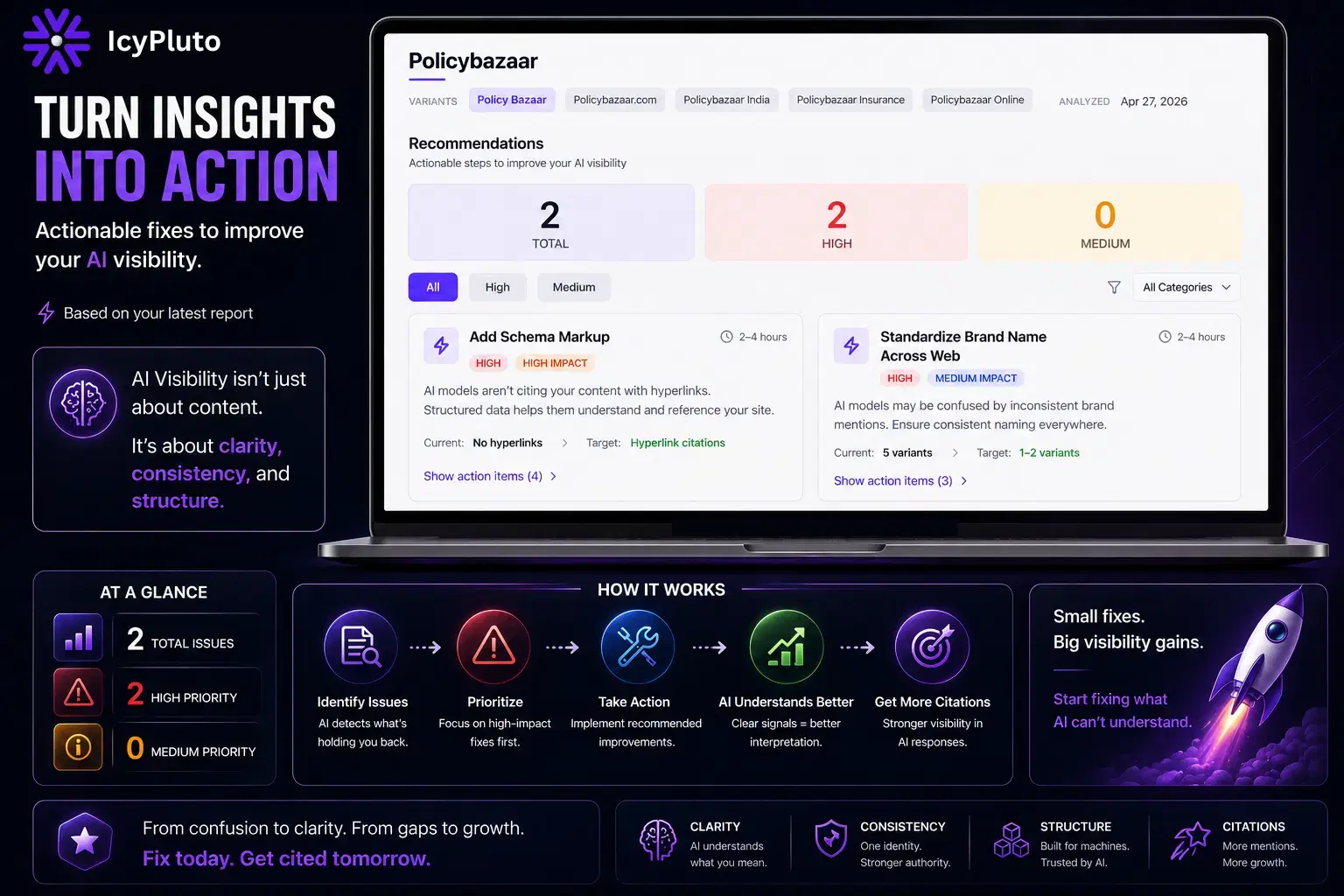
This blog explores how IcyPluto’s Action Feature h...
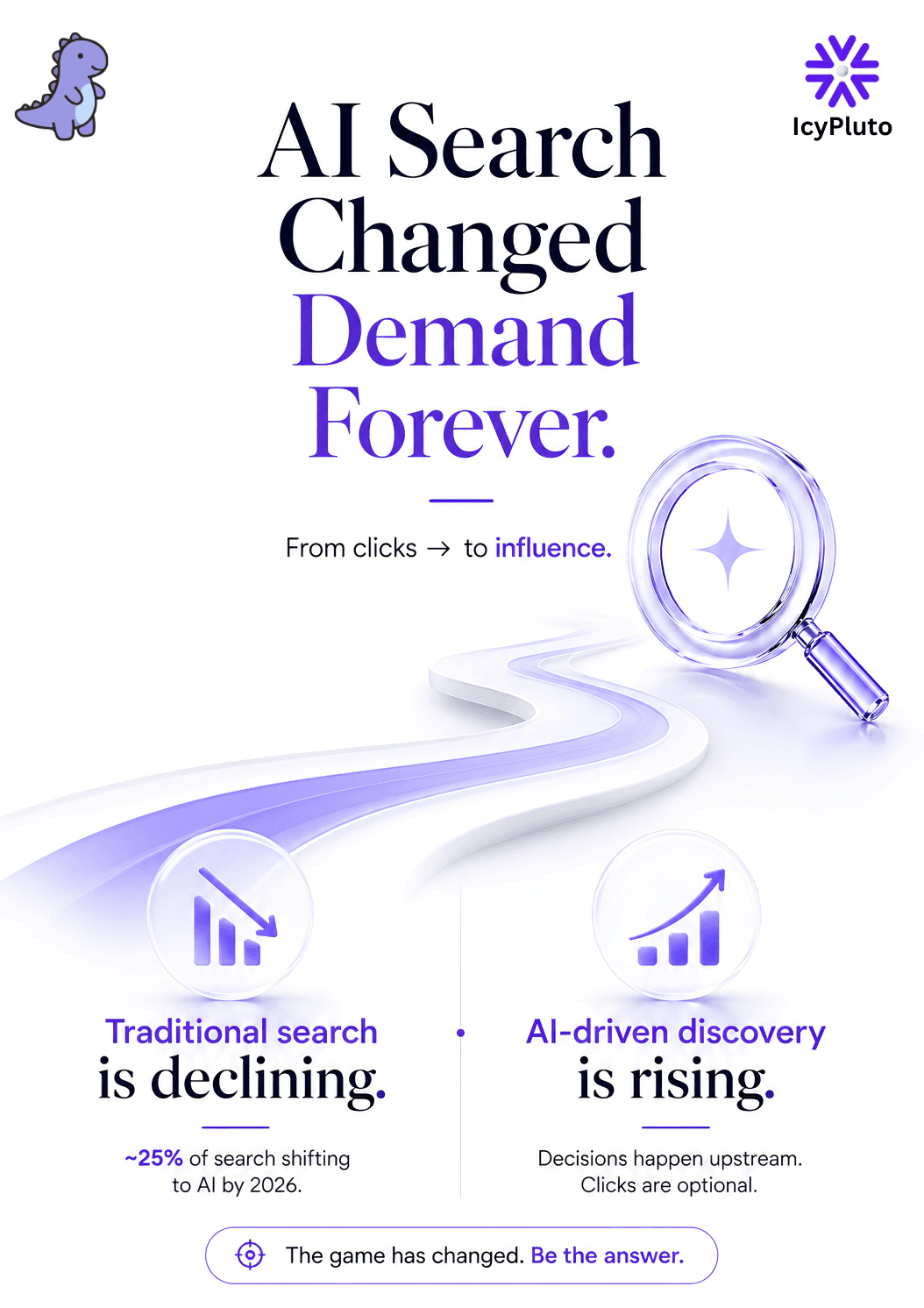
This blog explains why traditional, traffic-focuse...
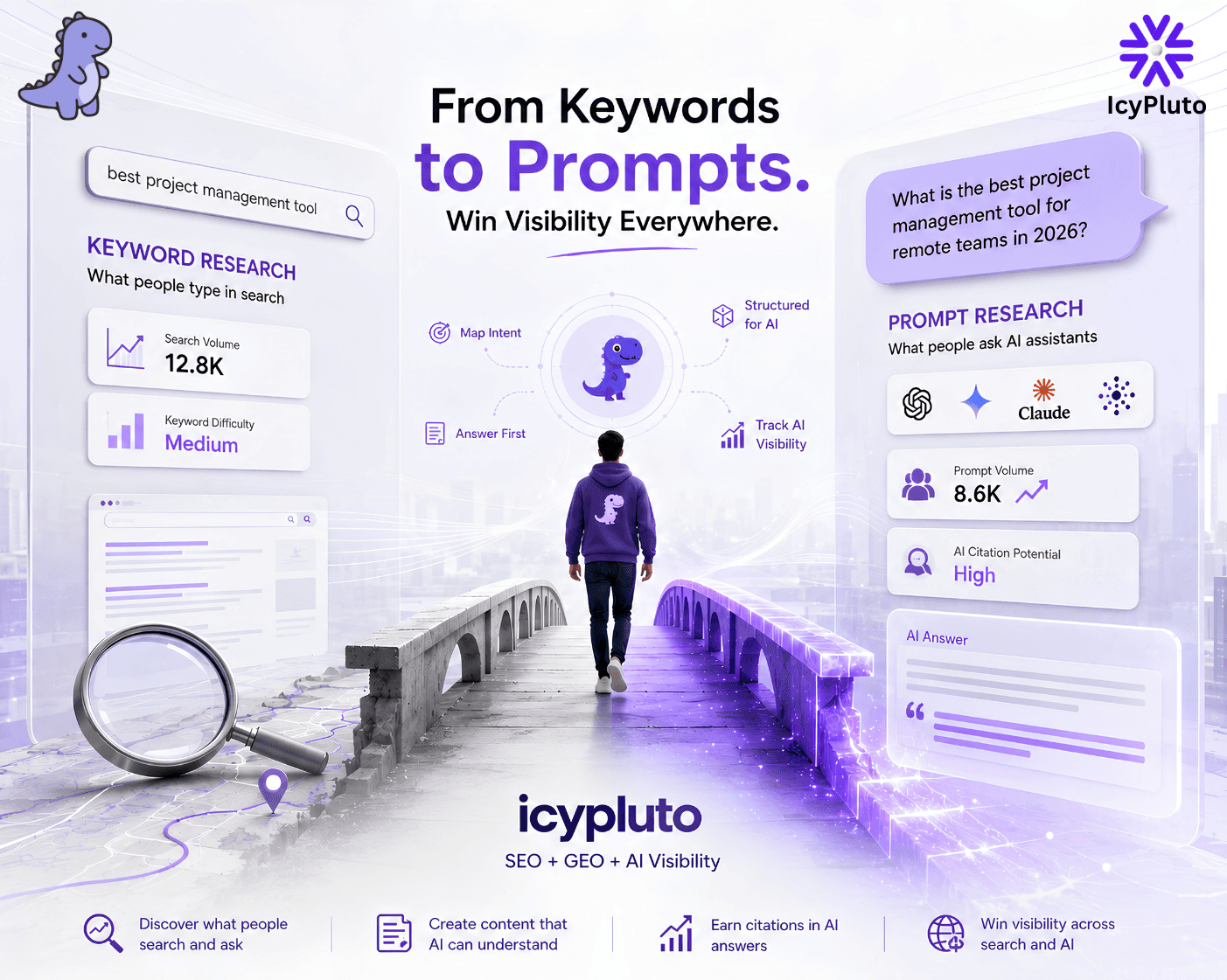
This blog explains how keyword research must now b...
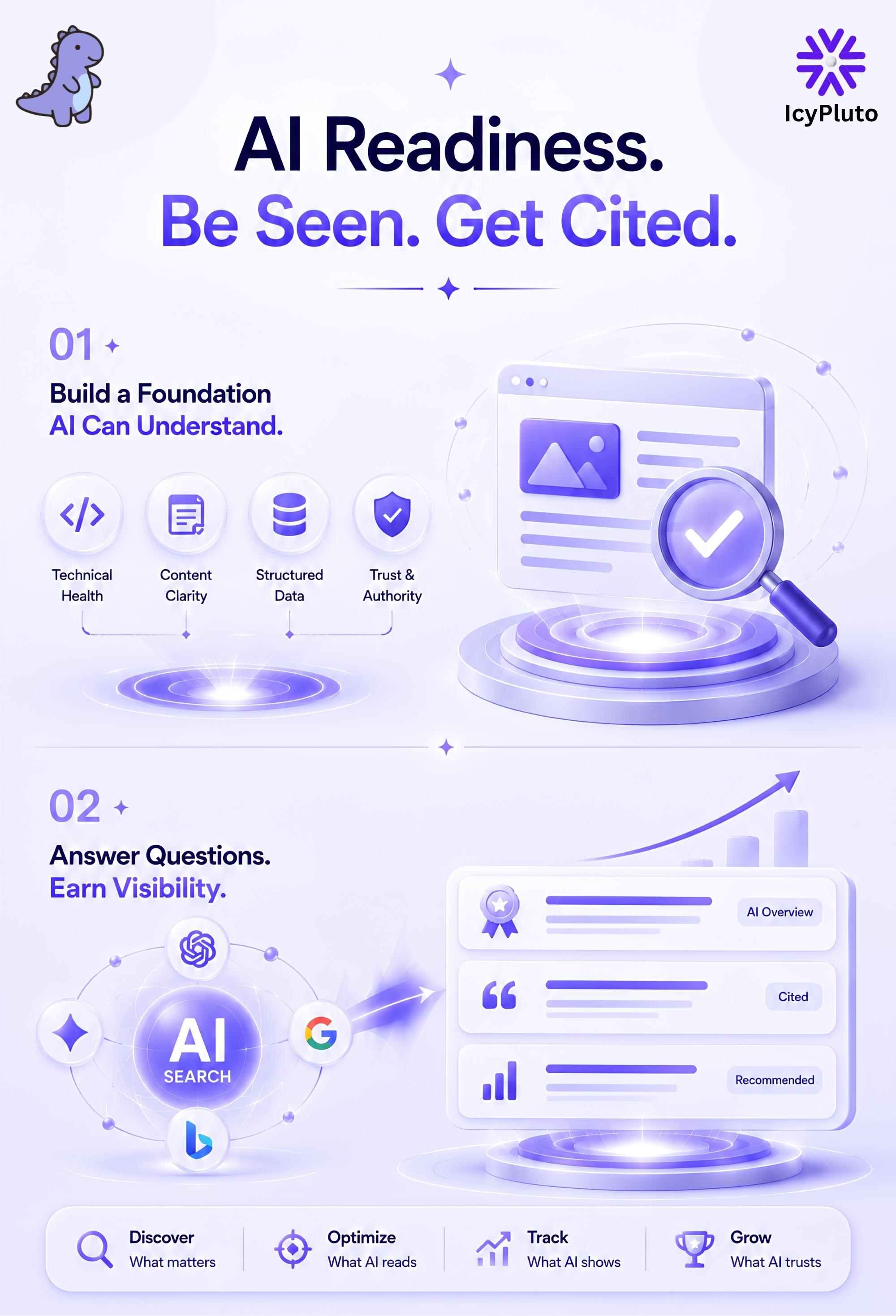
AI readiness refers to how well your website can be discovered, interpreted, and reused by AI systems. In simple terms, it measures whether your content is structured in a way that makes sense to both humans and machine systems that generate answers. A ready website does not just contain information; it presents that information clearly enough for AI search features to extract it confidently.
This matters because the search journey is changing. Google now says its generative AI features rely on core Search systems and retrieve relevant web pages through techniques like retrieval-augmented generation, which means traditional SEO still plays a central role. That means a website must be technically sound, content-rich, and easy to parse if it wants to appear in AI-driven search results.
AI readiness matters because users are increasingly relying on AI tools to find answers, compare options, and make decisions. Google’s own guidance indicates that people are gravitating toward generative AI experiences to find information, creating new opportunities for websites optimized for those environments. At the same time, AI-driven search is pushing brands into a more competitive visibility landscape where clear structure and trust signals matter more than ever.
It also matters because readiness affects more than traffic. An AI-ready website can improve brand citations, increase answer visibility, and strengthen authority in both search and chat-based discovery. For B2B and service brands, this can influence how early-stage buyers evaluate credibility before they ever click through.
AI readiness is best understood through a few practical pillars. Cisco’s AI Readiness Assessment highlights six major areas: strategy, infrastructure, data, governance, talent, and culture. For websites, these translate into how you plan content, organize data, manage technical access, and maintain quality over time.
Here is a simple view of how those ideas connect to website AI readiness:
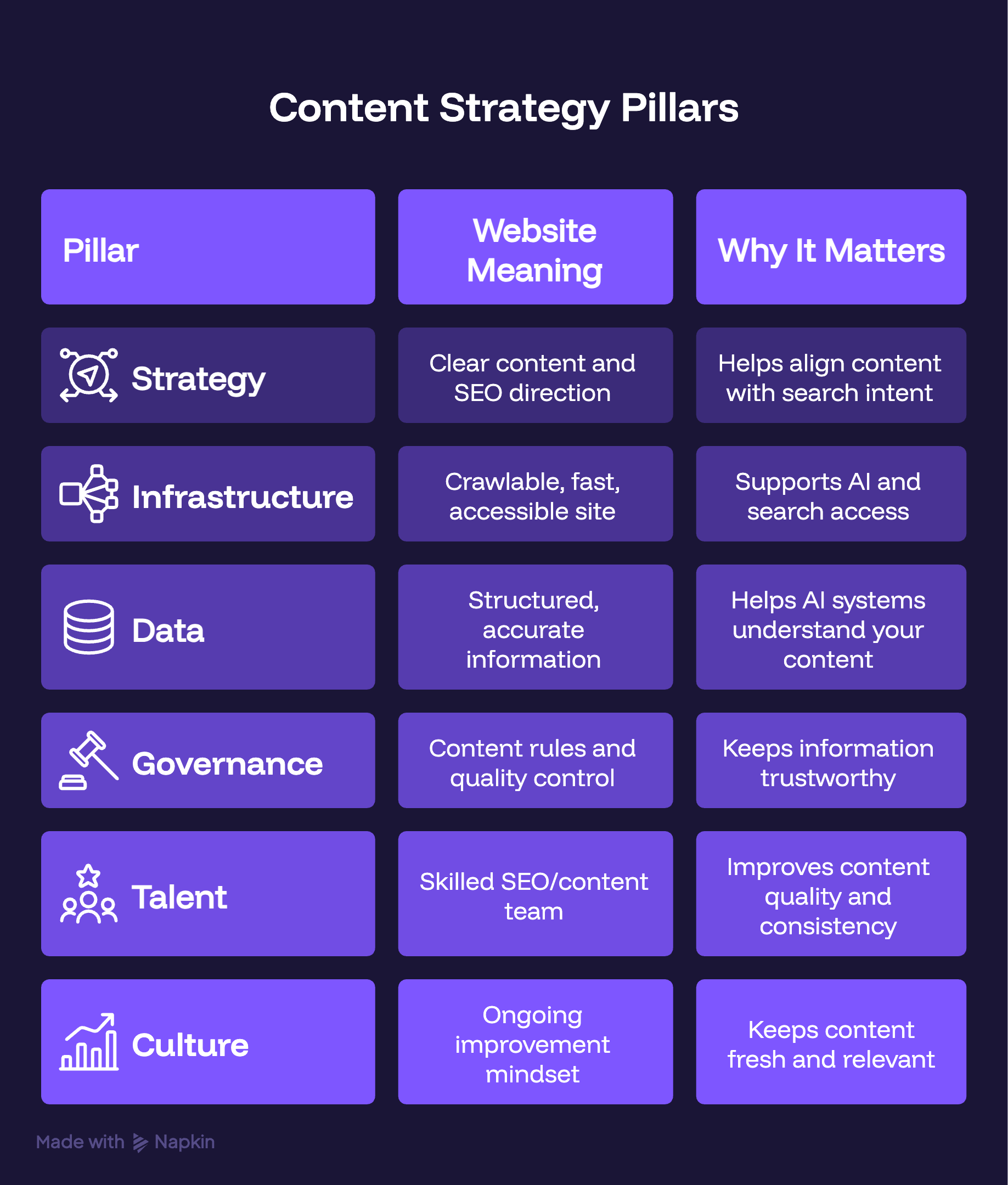
These pillars show that AI readiness is not a single tactic. It is a system that combines content, structure, and operational discipline to ensure your website performs well in a generative search environment.
AI systems favor websites that are easy to crawl, easy to understand, and easy to trust. Google says its generative AI features use publicly accessible, crawlable content and rely on core ranking systems to retrieve relevant pages. That means technical SEO is still foundational, even if the final experience is a conversational answer.
Beyond crawlability, AI systems pay attention to structure. Clear headings, semantic HTML, a useful page experience, and reduced duplicate content all help improve content processing. If your content is hidden behind heavy scripts, unclear navigation, or weak formatting, it becomes harder for AI systems to use it effectively.
Technical readiness is one of the biggest parts of AI readiness. Google recommends crawlable content, good page experience, support for JavaScript SEO when needed, and clean technical architecture as part of readiness for generative AI features. These are not new SEO ideas, but they now matter even more because AI systems depend on them for retrieval and grounding.
The most important technical checks include:
Make sure your pages are indexable.
Keep content crawlable without unnecessary barriers.
Use semantic HTML where possible.
Improve page speed and mobile usability.
Reduce duplicate or thin content.
Maintain a clear, easy-to-navigate site structure.
When technical foundations are weak, even strong content can underperform. When they are in a solid state, AI systems can more easily understand your pages and cite them in response to user queries.
Content readiness is about whether your pages are actually useful to AI systems and human readers. Google advises creating unique, valuable, people-first content rather than commodity content that simply repeats what already exists. That is important because AI systems increasingly reward content with clear viewpoints, practical detail, and easy readability.
Strong content readiness usually includes:
Clear page purpose.
Direct answers near the top.
Helpful examples and explanations.
Up-to-date facts and sources.
Section headers that reflect real user questions.
Natural language that matches how people search.
This is where many brands fall behind. They may publish a lot of content, but if the writing is generic or poorly structured, it is less likely to be reused in AI search results.
If a website wants to be AI-ready, it should be able to pass a simple usability test for both humans and machines. The goal is to make the content understandable, credible, and extractable without losing quality. That means every page should answer a real question and support that answer with a clear structure.
Use this checklist:
Is the topic specific and useful?
Is the main answer visible early?
Are headings descriptive and logical?
Is the content easy to skim?
Are facts current and verifiable?
Does the page have enough context to stand alone?
Are internal links helping users explore related topics?
Is the content free of clutter and duplication?
A page that checks these boxes is far more likely to perform well in AI search. It becomes easier for systems like Google’s generative features to ground responses in your content.
Many sites are not AI-ready because they are still optimized only for old search habits. The biggest gaps are usually unclear content structure, weak technical performance, and outdated information. Some sites also rely too heavily on keyword repetition instead of answering questions naturally.
Other common issues include:
Pages that bury the answer too deep.
Heavy design elements that slow down crawlability.
Content that lacks specific facts or examples.
Duplicate pages that confuse site architecture.
No clear update process for older posts.
These gaps reduce the chance that AI systems will trust or cite the content. In a generative search environment, clarity and freshness matter more than ever.
Here is a simple way to evaluate your website’s readiness for AI search and generative visibility:
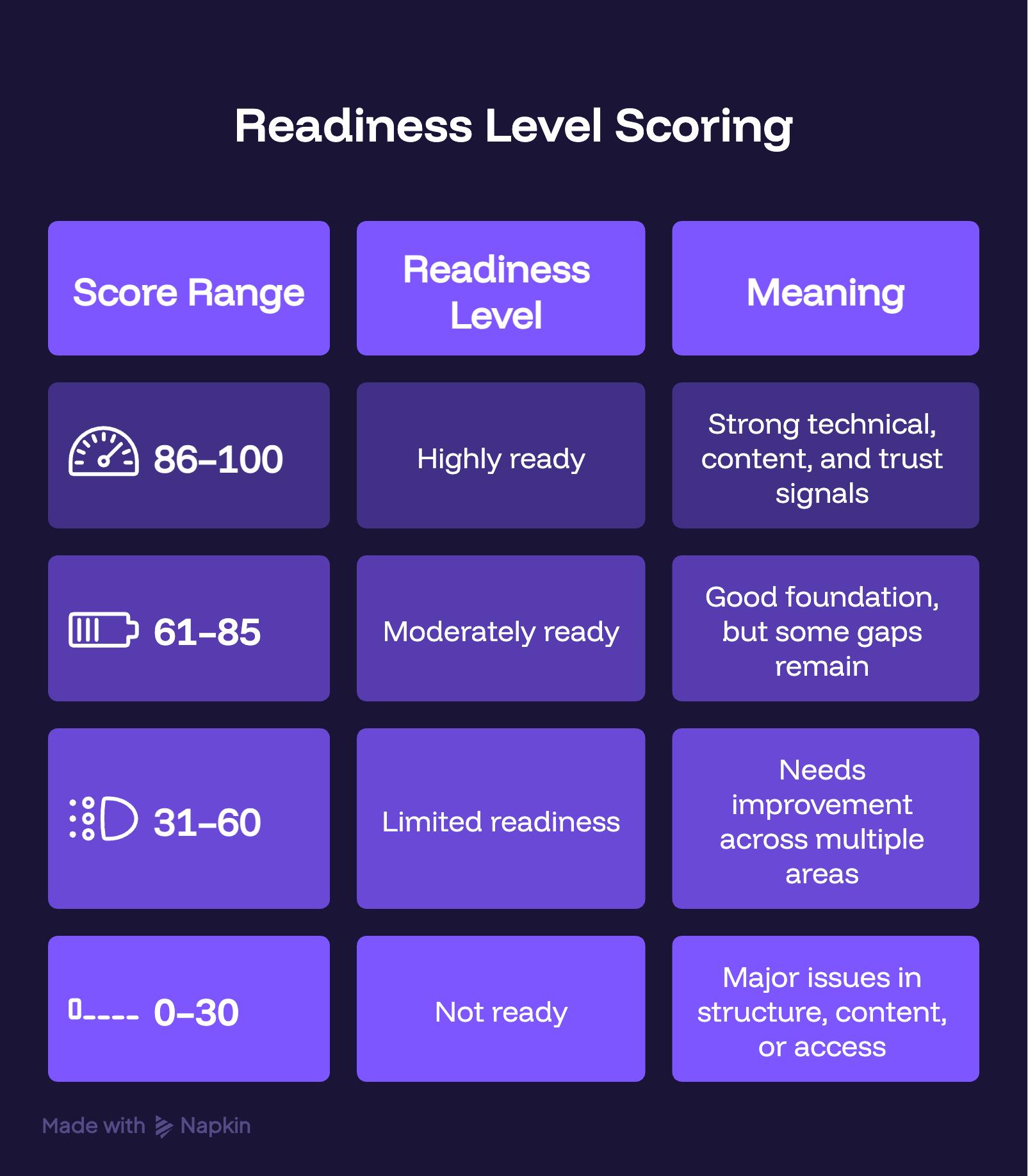
This kind of scorecard is useful because it makes AI readiness measurable. Instead of guessing, teams can prioritize the fixes that will improve visibility fastest.
For IcyPluto, AI readiness is valuable content and an SEO positioning angle. The brand can help businesses audit their website structure, improve their content strategy, and make pages more usable for generative search systems. That means combining technical SEO, content optimization, and answer-first writing into one practical workflow.
This is especially useful for businesses that want long-term visibility in AI search. If the site is easy to crawl, easy to trust, and easy to cite, it becomes a stronger source in both traditional and generative search experiences. That is the real advantage of being AI-ready.
AI readiness is about building a website that can perform in a search world shaped by generative answers. It requires strong technical foundations, a clear content structure, useful information, and a consistent quality-control process. Brands that invest in these areas are better positioned to appear in AI search results and earn trust faster.
For IcyPluto, this topic creates a strong opportunity to educate brands on what truly matters in modern SEO. The message is simple: if your website is ready for people, structured for search, and understandable for AI, it is ready for the next phase of digital visibility.
AI readiness is how well a website can be crawled, understood, and cited by AI systems and generative search tools.
It helps your content appear in AI-generated answers, improves visibility, and supports long-term search performance.
Check crawlability, structure, freshness, content quality, and whether your pages answer real user questions clearly.
No. Google says SEO fundamentals still matter because generative AI features depend on core Search systems and ranking signals.
Start by improving content clarity, updating stale pages, fixing technical crawl issues, and organizing content with clean headings and useful answers.