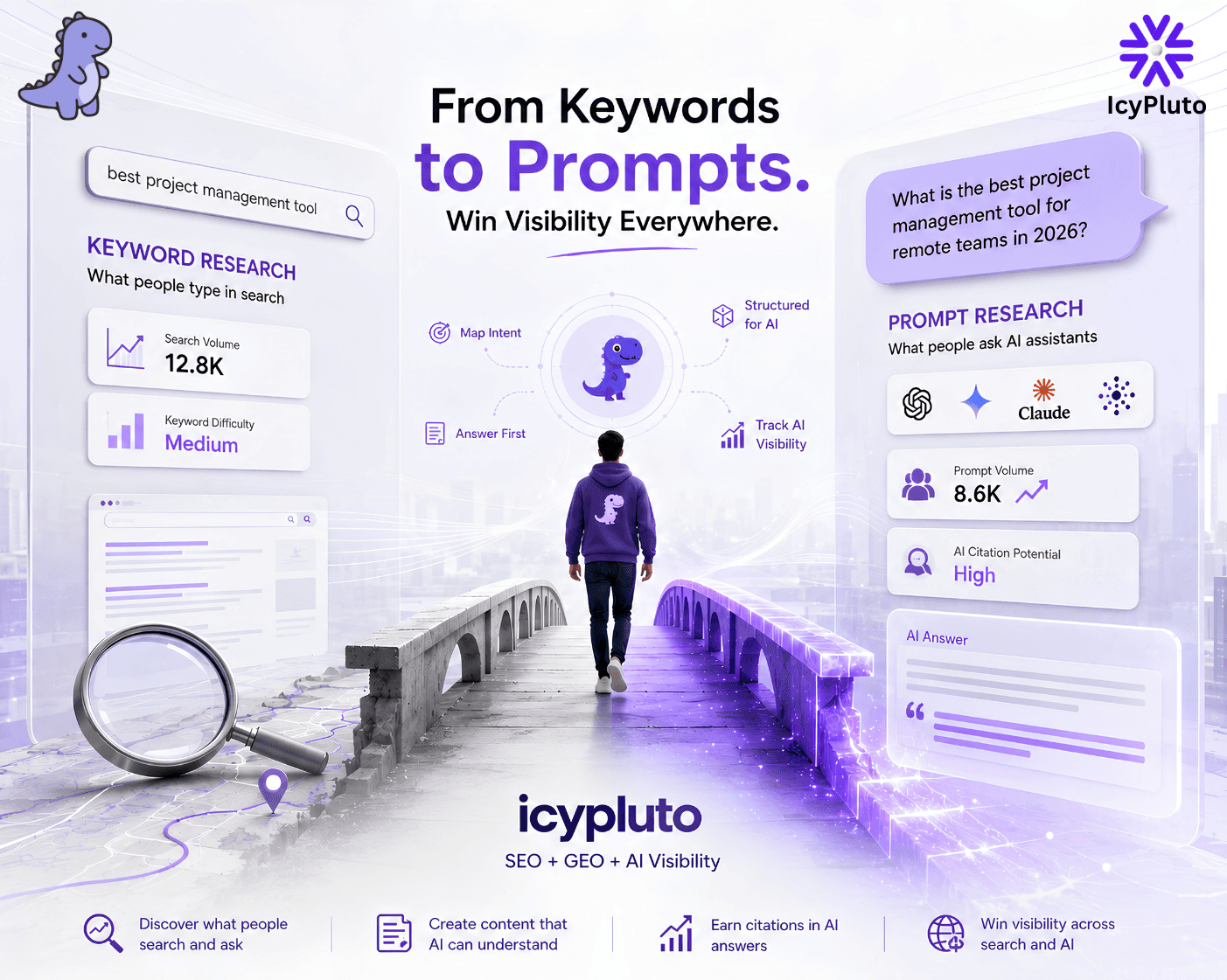
This blog explains how keyword research must now b...
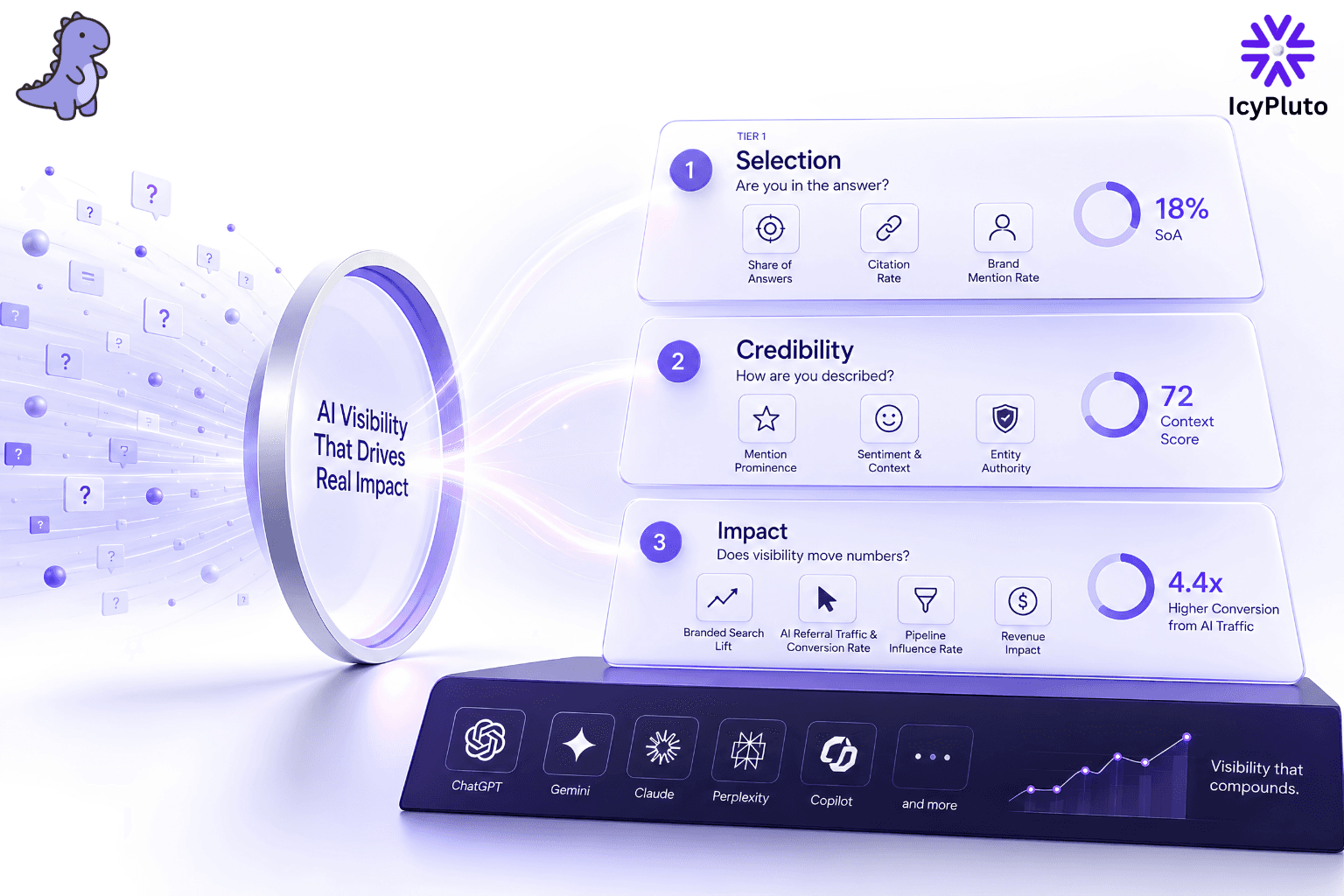
AI search has turned visibility into a numbers gam...
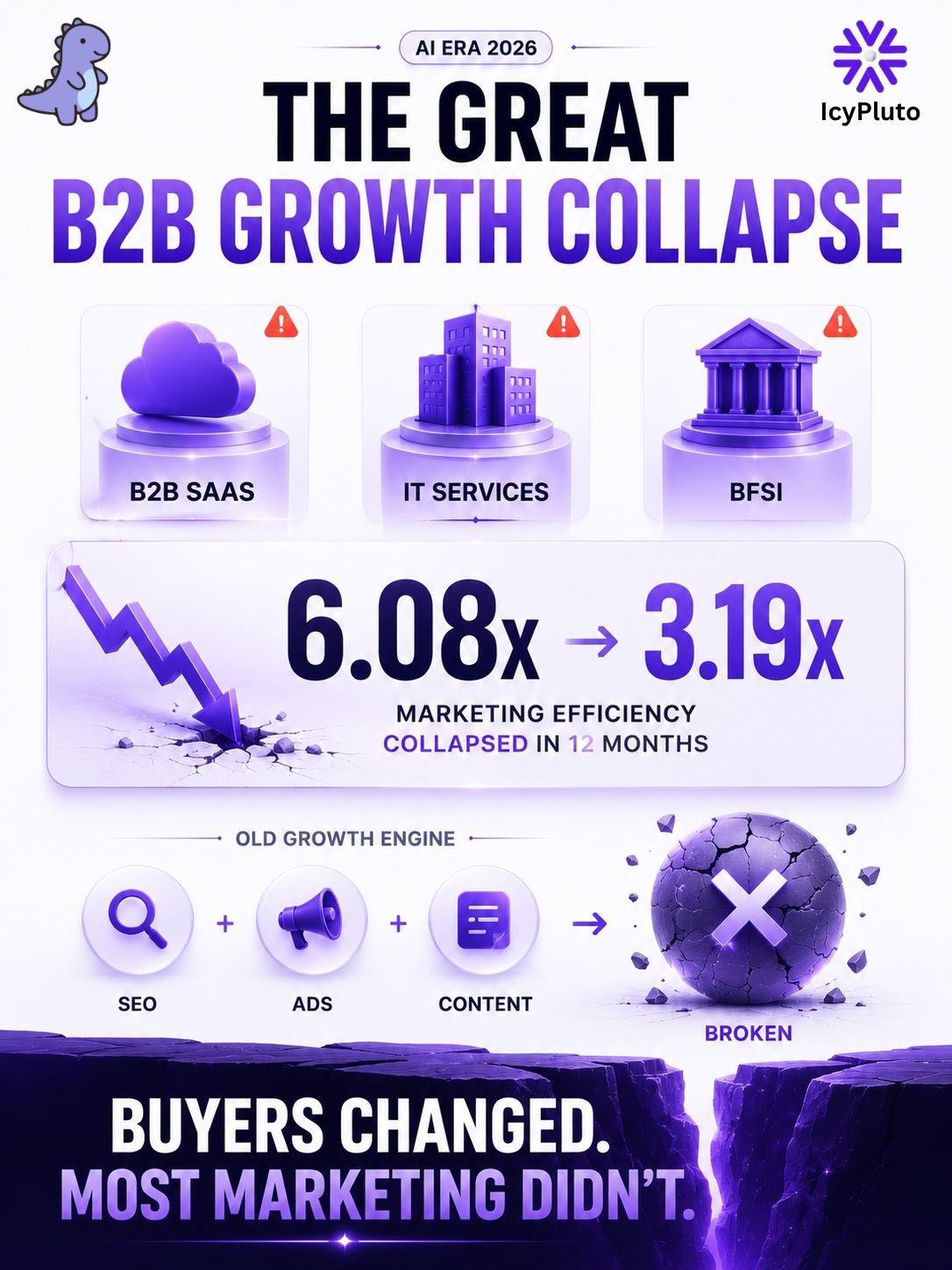
This hard-hitting blog reveals why IT, B2B SaaS, a...
The digital search ecosystem is changing faster than most brands realize. For nearly three decades, marketers optimized websites for traditional search engines using familiar tactics such as keyword optimization, backlinks, technical SEO, and content authority. But the rise of AI-powered search experiences through tools like OpenAI, Google, and Perplexity AI is fundamentally rewriting how visibility works online.
Today, appearing in AI-generated answers is no longer just an extension of SEO. It is a completely different challenge involving multiple systems, multiple data layers, and multiple optimization models. Many organizations still treat AI visibility as a single issue. If their brand disappears from AI-generated responses, they assume they simply need “more content.” But that assumption is becoming dangerously outdated.
The reality is that AI visibility operates across three distinct layers. Each layer has its own infrastructure, signals, and optimization requirements. If marketers fail to diagnose which layer is broken, they risk wasting resources on strategies that never solve the real issue. This emerging framework is rapidly becoming one of the most important concepts in modern Generative Engine Optimization (GEO) and Answer Engine Optimization (AEO).
Traditional search engines worked primarily as retrieval systems. Users typed a query, and search engines returned a ranked list of links. Visibility depended heavily on where a page ranked in the Search Engine Results Page (SERP).
AI-powered search changes this model completely.
Instead of presenting multiple blue links, generative AI systems synthesize information from multiple sources and generate a single conversational response. In many cases, users never even click through to a website. This dramatically changes how brands compete for visibility.
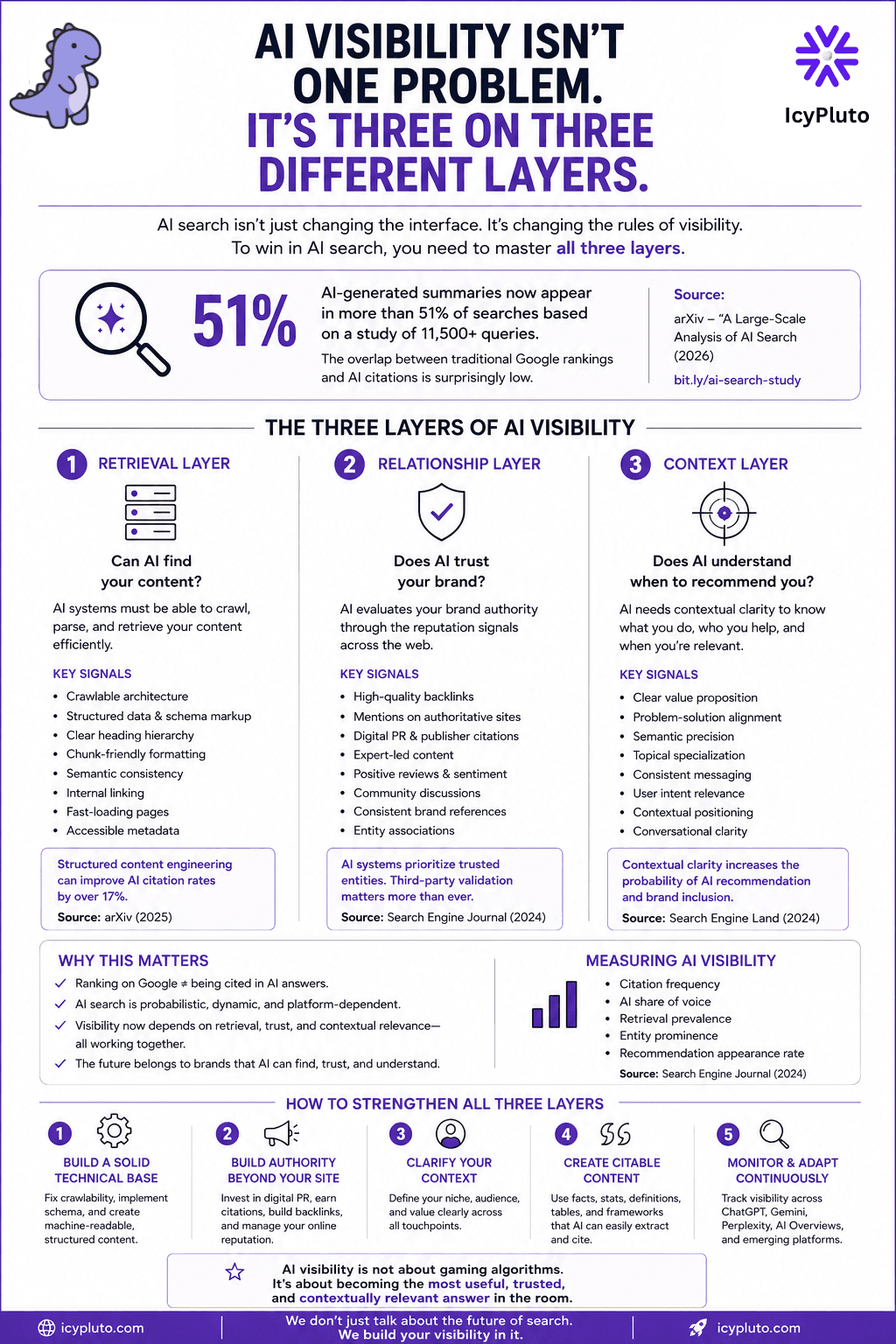
Research published in 2026 studying over 11,500 search queries found that AI-generated summaries appeared in more than 51% of representative searches. The study also discovered that AI systems retrieve and cite sources differently than traditional search engines, with low overlap between standard Google results and generative AI citations.
This means ranking well in Google no longer guarantees visibility in AI-generated responses.
The AI era introduces a new reality:
Your content must be machine-readable.
Your brand must be contextually trusted.
Your authority must exist across multiple data ecosystems.
In short, AI visibility is no longer a single SEO problem. It is a layered intelligence problem.
Modern AI visibility operates across three interconnected layers:
The Retrieval Layer
The Relationship Layer
The Context Layer
Each layer represents a different stage in how AI systems discover, evaluate, and recommend information.
If your brand fails at even one layer, visibility collapses.
The first layer is retrieval.
This is where AI systems determine whether your content is even eligible to appear inside generated responses. Most Retrieval-Augmented Generation (RAG) systems rely on indexing, chunking, vector embeddings, structured data, and crawl accessibility to retrieve relevant information.
In simple terms, if AI cannot properly parse or retrieve your content, your brand effectively does not exist.
This layer closely resembles technical SEO, but with stricter machine-readability requirements.
Crawlable website architecture
Structured schema markup
Clear heading hierarchy
Chunk-friendly content formatting
Semantic consistency
Clean internal linking
Fast-loading pages
Accessible metadata
Many brands mistakenly focus only on publishing more articles. However, AI retrieval systems care less about content volume and more about retrieval efficiency.
According to recent GEO research, structured content engineering can improve AI citation rates by over 17%.
That finding is critical.
AI systems are heavily dependent on chunk retrieval. Large walls of text with poor formatting become difficult for language models to parse. On the other hand, content organized into concise sections, tables, definitions, bullet points, and clear explanations becomes easier to retrieve and cite.
This is why modern GEO strategies emphasize “citability” rather than simple readability.
Most businesses still optimize for human scanning rather than machine comprehension.
They create:
vague introductions,
bloated paragraphs,
inconsistent terminology,
missing schema,
poorly structured pages.
AI systems struggle with this type of content.
In contrast, high-performing AI-visible content typically includes:
factual clarity,
precise definitions,
statistics,
structured explanations,
entity consistency,
topical segmentation.
Technical SEO is no longer optional. It is now the admission ticket to AI search ecosystems.
Retrieval alone is not enough.
Even if AI systems can access your content, they still need to determine whether your brand deserves inclusion.
This is where the relationship layer becomes critical.
The relationship layer focuses on authority, trust, citation networks, and entity associations. AI systems increasingly evaluate brands not just based on webpages, but on their broader reputation across the internet.
This includes:
backlinks,
mentions,
reviews,
academic references,
social proof,
publisher authority,
community discussions,
third-party citations.
AI systems learn trust through interconnected signals.
If retrieval determines whether you are eligible, relationship signals determine whether you are credible.
Generative AI tools rely heavily on entity understanding.
An entity is essentially a machine-understood concept tied to reputation and contextual relevance. Brands with stronger entity networks are significantly more likely to appear in AI-generated responses.
This is why established publishers, government domains, academic institutions, and authoritative media outlets dominate citations in AI search systems.
The implications for marketers are massive.
Brands can no longer rely solely on their own websites to build visibility. They must actively strengthen external authority signals.
Key trust signals include:
Mentions across authoritative websites
Citations in industry publications
Consistent brand references
Expert-authored content
High-quality backlinks
Positive review ecosystems
Reddit and community discussions
Strong publisher reputation
Interestingly, AI systems increasingly analyze sentiment and consensus patterns.
For example, negative reviews or repeated complaints across high-authority platforms can directly impact AI-generated recommendations.
This creates an entirely new category of AI reputation management.
Brands must now optimize not only for discoverability, but also for AI perception.
One of the biggest misconceptions in AI visibility is the assumption that publishing on LinkedIn or social media alone builds authority.
Recent analysis suggests otherwise.
AI systems tend to prioritize high-authority sources over self-promotional platforms. Academic citations, publisher references, expert commentary, and reputable media coverage often outweigh large volumes of social content.
This means digital PR is becoming one of the most important GEO tactics.
The future of AI visibility belongs to brands that become widely referenced, not merely widely published.
The third and most advanced layer is context.
This layer determines whether AI systems understand:
what your brand does,
what problems it solves,
when it should appear,
and for which types of user intent.
Many businesses technically pass retrieval and relationship checks, yet still fail to appear in AI answers because the AI lacks contextual clarity around the brand.
In other words, the AI may know your brand exists but does not know when to recommend it.
Modern AI systems operate through semantic associations.
They attempt to match:
user intent,
contextual meaning,
conversational framing,
problem-solving relevance.
If your brand messaging lacks clarity, AI systems struggle to position you correctly.
This is especially important because AI search is collapsing the traditional customer journey. Discovery, evaluation, comparison, and recommendation are increasingly happening inside a single conversational interaction.
Brands that fail to communicate a sharply defined value proposition risk disappearing entirely from AI-mediated discovery.
Historically, brands could survive with broad messaging and aggressive keyword targeting.
AI systems are less forgiving.
They prioritize:
semantic precision,
problem-solution alignment,
topical specialization,
contextual consistency.
For example, if a SaaS company vaguely describes itself as an “all-in-one growth platform,” AI systems may struggle to associate it with specific user needs.
But if the company consistently positions itself around “AI-powered B2B revenue attribution,” contextual understanding becomes stronger.
This clarity dramatically increases recommendation probability.
Brands must now align:
website messaging,
metadata,
PR language,
product descriptions,
reviews,
thought leadership,
schema markup,
social positioning.
Inconsistent messaging weakens contextual understanding.
Consistency strengthens machine confidence.
SEO still matters enormously.
In fact, many AI systems continue to rely on traditional search infrastructure for retrieval and ranking inputs.
But SEO is now just the foundation.
Winning AI visibility requires layering:
technical optimization,
authority ecosystems,
semantic clarity,
structured content engineering,
contextual positioning.
This is why the industry is rapidly shifting toward GEO and AEO frameworks.
Search visibility is evolving from keyword ranking to machine recommendation.
Generative Engine Optimization represents the next evolution of digital visibility strategy.
Unlike traditional SEO, GEO focuses on optimizing content for:
AI retrieval,
citation probability,
semantic clarity,
machine interpretation,
conversational recommendation.
Modern GEO strategies include:
Entity optimization
Citation engineering
Structured formatting
Semantic reinforcement
Machine-readable content architecture
Conversational content design
Context-aware messaging
The goal is no longer just ranking.
The goal is becoming the answer.
One of the biggest challenges marketers face is measurement.
Traditional SEO relied on relatively stable ranking positions. AI search systems behave differently because they are inherently probabilistic and non-deterministic.
Studies show that identical AI queries can produce different citations across repeated searches. Citation rankings also fluctuate significantly across platforms and time intervals.
This means marketers must rethink performance tracking.
Emerging AI visibility metrics include:
citation frequency,
AI share of voice,
mention consistency,
retrieval prevalence,
entity prominence,
recommendation appearance rates.
Marketers are increasingly combining these metrics with Marketing Mix Modeling (MMM) and attribution frameworks to estimate business impact.
To succeed in AI-powered search ecosystems, businesses need a layered strategy.
Focus on:
technical SEO,
structured data,
chunk-friendly formatting,
schema markup,
semantic HTML,
clear information hierarchy.
Think like a machine parser, not just a human designer.
Invest in:
digital PR,
expert-led content,
industry citations,
publisher relationships,
reputation management,
third-party validation.
AI trusts brands that the internet trusts.
Ensure your messaging consistently answers:
What do you do?
Who do you help?
What problem do you solve?
Why are you different?
Contextual clarity is becoming a competitive advantage.
Create content designed for extraction and summarization.
This includes:
concise definitions,
factual statements,
expert quotes,
step-by-step frameworks,
statistics,
tables,
FAQs.
AI systems prefer content that is easy to quote.
AI search behavior evolves rapidly.
Brands should actively monitor visibility across:
ChatGPT,
Gemini,
Perplexity,
AI Overviews,
emerging AI assistants.
Visibility patterns vary significantly between platforms.
AI search is not simply a new interface layered on top of Google.
It represents a complete restructuring of digital discovery.
The future customer journey is increasingly mediated by AI systems that:
retrieve information,
evaluate trust,
synthesize answers,
and recommend solutions.
In this environment, visibility is no longer just about ranking higher.
It is about becoming machine-understandable, machine-trusted, and machine-recommended.
That requires brands to think beyond traditional SEO.
The companies that dominate the next era of search will be the ones that master all three layers:
retrieval,
relationships,
and contextual relevance.
Because in the AI era, visibility is no longer one problem. It is three interconnected systems working together simultaneously.