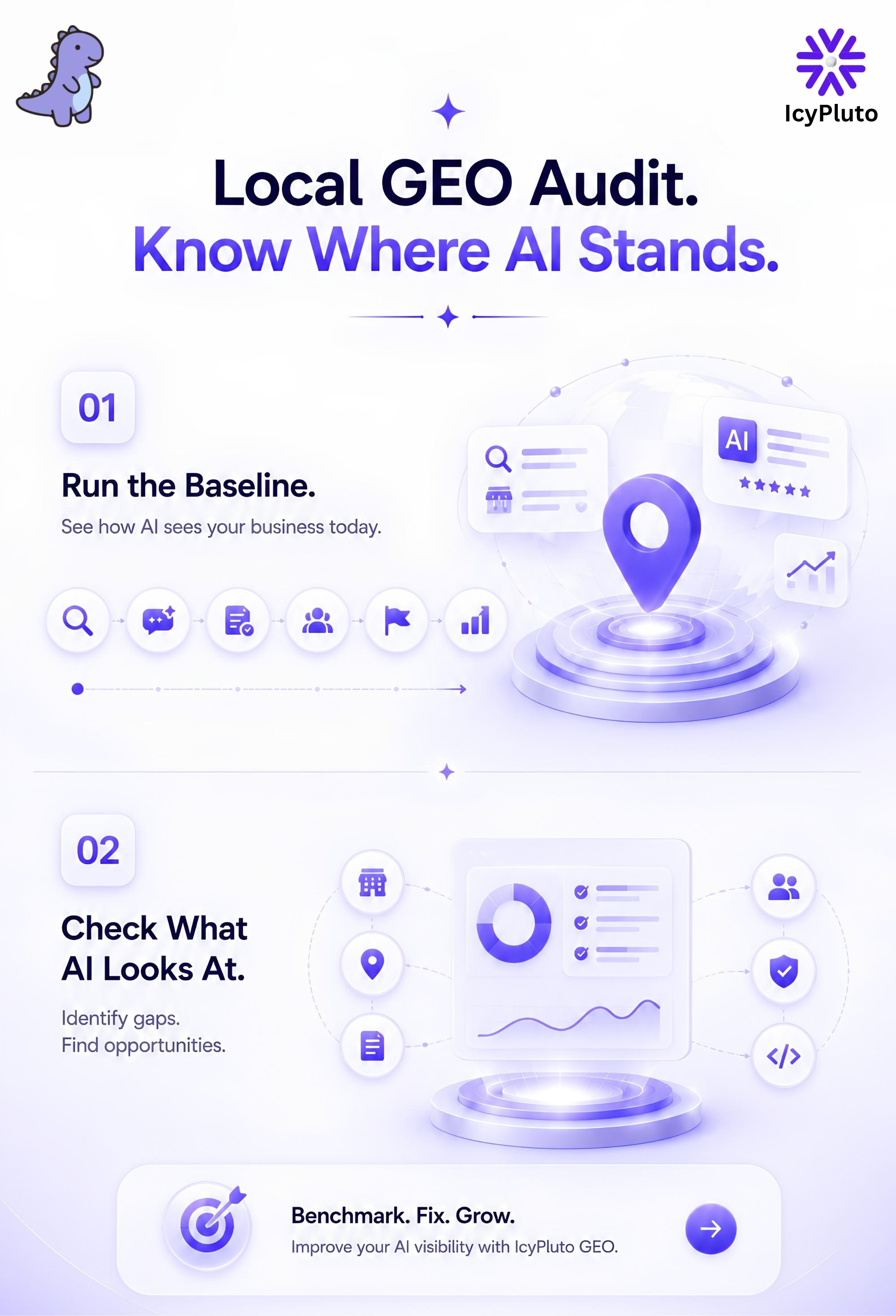
A local GEO baseline audit helps you understand ho...
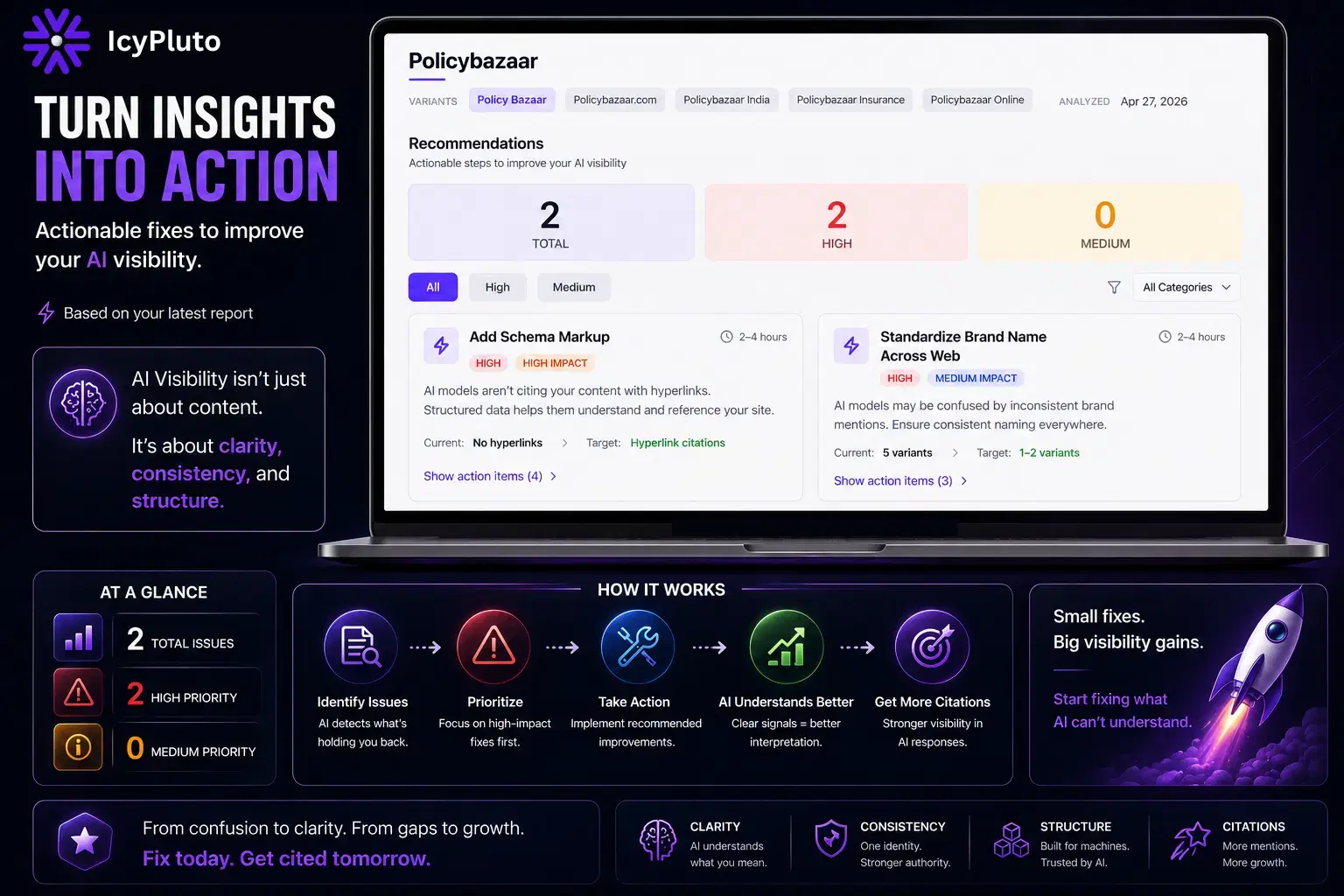
This blog explores how IcyPluto’s Action Feature h...
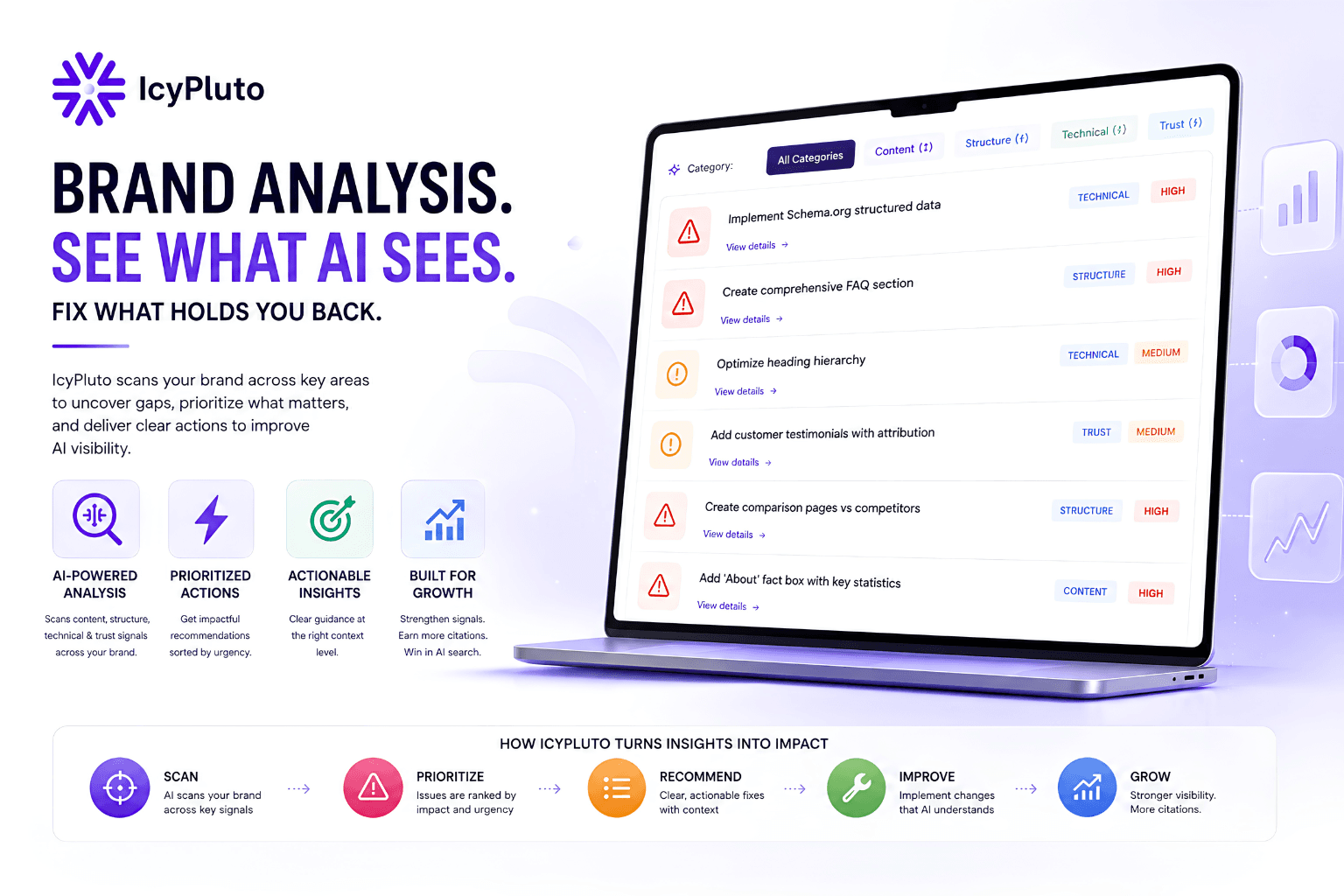
This blog explains why brands are losing visibilit...
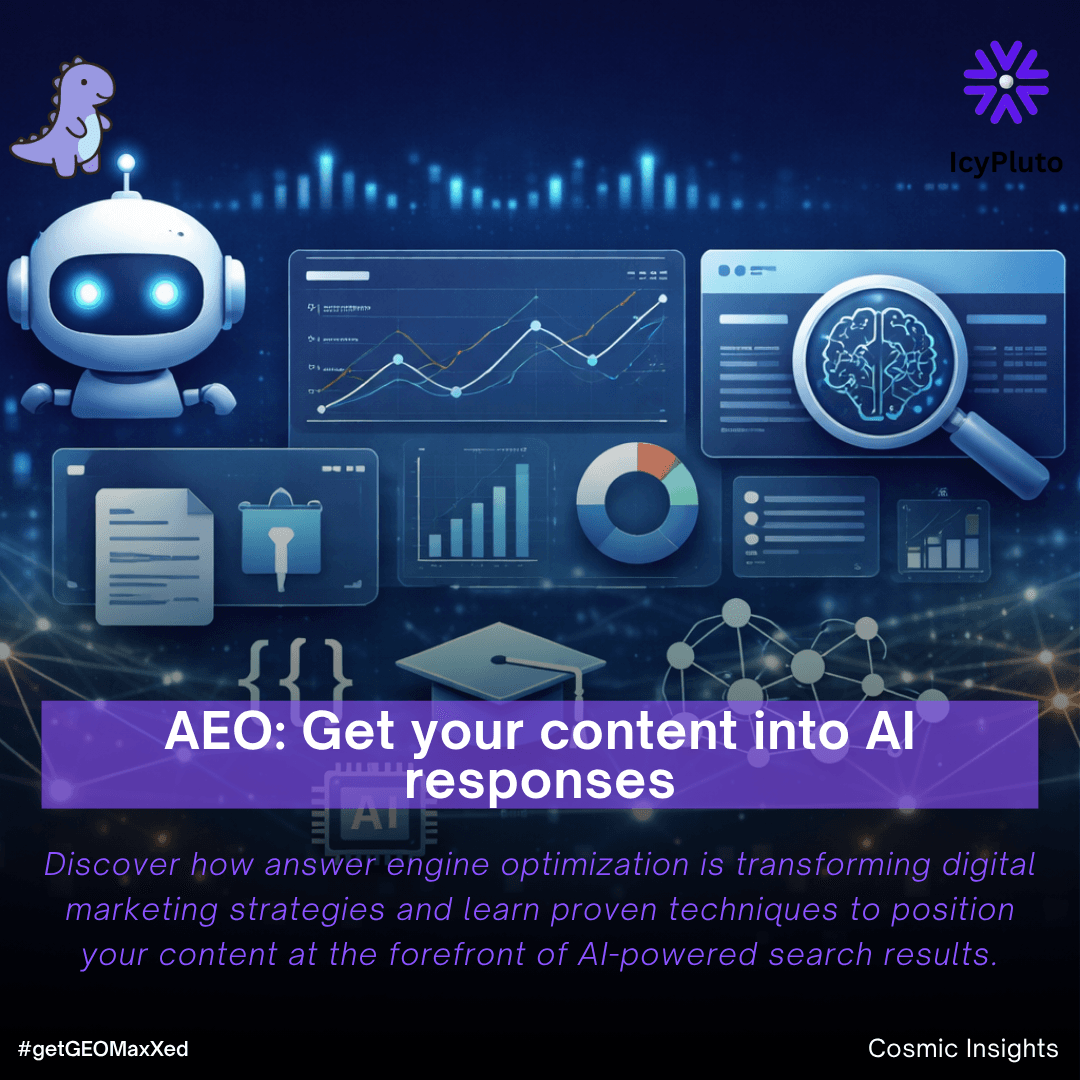
The digital landscape has undergone a fundamental transformation with the emergence of AI-powered answer engines. Unlike traditional search engines that present ranked lists of web pages, answer engines like ChatGPT, Google's Bard, and Bing's AI synthesize information from multiple sources to generate direct, conversational responses. This paradigm shift represents more than just a technological advancement—it fundamentally changes how content creators, marketers, and educational institutions must approach digital visibility.
At its core, the distinction is critical: AI doesn't rank pages—it selects fragments. Traditional search engine optimization (SEO) focused on improving page rankings through keywords, backlinks, and technical optimization. Answer Engine Optimization (AEO), however, centers on making your content citable, quotable, and authoritative enough that AI systems select specific fragments from your content to include in their synthesized responses. This represents a fundamental shift in how digital content gains visibility and influence.
For educational institutions like universities, this shift carries profound implications. Academic research, program information, career guidance, and thought leadership must now be structured not just for human readers or search engine crawlers, but for AI systems that evaluate content through entirely different criteria. The academic research on what makes content citable in AI responses has matured rapidly, revealing that fragment selection depends on clarity, authority signals, structural coherence, and demonstrable expertise—factors that align naturally with educational excellence but require intentional optimization.
Understanding this evolution requires recognizing that generative engine optimization extends beyond technical implementation. It demands a strategic reconsideration of content creation, emphasizing factual precision, contextual relevance, and authoritative sourcing. Educational marketers must now consider whether their content can stand alone as a definitive, trustworthy fragment worthy of AI citation—a standard that demands both rigor and accessibility in equal measure.
Answer Engine Optimization operates on fundamentally different principles than traditional SEO, requiring content creators to adopt new frameworks for developing citable, AI-friendly material. The first core principle centers on fragment-level excellence. Since AI systems extract and synthesize specific content fragments rather than entire pages, every paragraph, statistic, and explanation must possess standalone value and clarity. This means avoiding ambiguous references, ensuring complete thoughts within digestible sections, and providing sufficient context for AI systems to understand and cite your content accurately.
The second principle involves directness and precision in addressing user intent. AI-powered answer engines prioritize content that directly answers specific questions with authoritative, concise responses. This doesn't mean sacrificing depth—rather, it requires structuring information so that comprehensive answers begin with clear, direct statements followed by supporting detail. For educational content, this translates to leading with definitive information about programs, outcomes, methodologies, or research findings, then expanding with context, evidence, and application.
Source attribution and citation transparency form the third critical principle. Academic research has demonstrated that AI systems favor content with clear attribution, referenced data, and transparent sourcing. When presenting statistics, research findings, or industry data, explicit citation not only enhances credibility but signals to AI engines that your content meets rigorous standards. This principle aligns naturally with academic values, positioning educational institutions advantageously in the answer engine ecosystem.
The fourth principle emphasizes semantic richness and contextual depth. AI language models understand content through semantic relationships, not just keyword matching. Content must demonstrate a comprehensive understanding through related concepts, appropriate terminology, and contextual connections. For instance, content about data science programs should naturally incorporate related concepts like machine learning, artificial intelligence, statistical analysis, and practical applications—creating a semantic network that AI systems recognize as authoritative and comprehensive.
Finally, the principle of accessibility and readability cannot be overstated. AI systems prioritize content that demonstrates clarity through appropriate reading levels, logical flow, and well-structured information hierarchy. This doesn't mean oversimplification; rather, it requires presenting sophisticated concepts through clear language, progressive disclosure, and logical sequencing. Educational institutions that master this balance position themselves as both authoritative and accessible—exactly what AI answer engines seek to cite.
Implementing effective Answer Engine Optimization requires strategic use of structured data and semantic markup—technical implementations that help AI systems accurately interpret, extract, and cite your content. Schema markup serves as the foundational layer, providing explicit signals about content type, context, and relationships. For educational institutions, implementing the Education schema, Course schema, FAQPage schema, and Organization schema creates a machine-readable context that AI systems leverage when selecting citable fragments.
The strategic application of structured data extends beyond basic implementation to comprehensive entity definition. When describing programs, research initiatives, or faculty expertise, structured data should explicitly define entities, their attributes, and their relationships. For example, a computer science program page should include structured data identifying the degree type, duration, specializations, career outcomes, accreditations, and institutional affiliations—creating a rich semantic context that AI engines can confidently reference.
Semantic HTML5 elements play an equally critical role in optimization for answer engines. Proper use of header hierarchy (H1, H2, H3), article and section tags, and semantic elements like
Discover how answer engine optimization is reshaping digital marketing and explore practical strategies to ensure your content surfaces prominently in AI-driven search results.
Understanding the Evolution from Search Engine to Answer Engine Optimization
The digital ecosystem is undergoing a profound shift with the rise of AI-powered answer engines. Unlike traditional search engines that display ranked lists of links, answer engines such as ChatGPT, Gemini (formerly Bard), and Bing’s AI aggregate insights from multiple sources to deliver direct, conversational responses. This is not merely a technical upgrade—it fundamentally redefines how content creators, marketers, and educational institutions must think about online visibility.
The distinction is crucial: AI systems do not “rank pages” in the conventional sense; they identify and extract fragments. Classic search engine optimization (SEO) sought to elevate entire pages using keywords, backlinks, and technical tuning. Answer Engine Optimization (AEO) focuses instead on making individual sections of your content so clear, authoritative, and self-contained that AI models select them as citable fragments within their generated answers. This is a different paradigm for how influence and visibility are earned in the digital space.
For universities and higher education institutions, this transition has significant implications. Academic research, program information, career guidance, and institutional thought leadership must now be produced not only for human readers and search crawlers, but also for AI systems that apply new criteria. Emerging research on AI citation behavior shows that fragment selection is closely tied to clarity, authority signals, coherent structure, and demonstrable expertise—elements that align naturally with academic rigor but still demand deliberate optimization.
Recognizing this evolution means understanding that generative engine optimization is as much strategic as it is technical. It requires rethinking content development around factual accuracy, contextual strength, and transparent sourcing. Educational marketers must ask whether a given paragraph or section can function as a definitive, trustworthy fragment worthy of AI citation. Meeting this bar calls for content that is both rigorous and accessible, combining scholarly depth with clear, structured communication.
Core Principles for Optimizing Content for AI-Powered Responses
Answer Engine Optimization is built on different foundations than traditional SEO. It calls for new content frameworks designed specifically to make material discoverable and usable by AI systems.
The first principle is fragment-level excellence. Because AI models extract and recombine specific passages rather than entire pages, every paragraph, definition, statistic, and explanation should be crafted to stand on its own. This involves avoiding vague references (“as mentioned above”), ensuring each section presents a complete thought, and supplying enough context for AI to interpret and reuse the fragment accurately.
The second principle is precision in addressing user intent. AI answer engines prioritize content that responds directly and authoritatively to clear questions. Depth is still essential, but it must be organized so that each section opens with a concise, direct answer, followed by elaboration, examples, and evidence. In an educational context, that means leading with explicit statements about program outcomes, methodologies, curriculum structure, or research findings, then expanding into supporting detail.
A third critical principle is transparent sourcing and attribution. Studies indicate that AI systems favor content that clearly cites data sources, research references, and external authorities. When you present statistics or industry benchmarks, explicit citations strengthen both human trust and AI confidence that your content meets rigorous standards. This mirrors academic best practice and positions universities naturally well in the answer engine environment.
The fourth principle is semantic richness and contextual depth. Large language models interpret content through relationships between concepts rather than through isolated keywords. Content that naturally integrates related terminology, adjacent topics, and practical applications sends strong semantic signals. For example, a page on data science programs should naturally reference machine learning, artificial intelligence, statistical methods, big data, and real-world projects—forming a dense semantic network that AI recognizes as expert and comprehensive.
The fifth principle is accessibility and readability. AI systems are more likely to reuse content that is clearly written, logically organized, and supported by a sound information hierarchy. This does not require oversimplifying complex topics; instead, it entails presenting advanced ideas through clear language, progressive disclosure (from basic to advanced), and well-structured headings and sections. Institutions that successfully balance academic sophistication with readability become especially attractive sources for AI citation.
Structured Data and Semantic Markup Strategies for Answer Engines
Effective Answer Engine Optimization also depends on technical underpinnings that help AI interpret, extract, and cite content accurately. Structured data and semantic markup form this technical backbone.
Schema markup is the starting point. It explicitly defines what your content is about and how different elements relate to each other. For universities, implementing schemas such as Education, Course, FAQPage, Organization, and Article provides machine-readable context that AI systems can rely on when evaluating and selecting fragments.
Beyond basic schema, structured data should support rich entity definition. When describing programs, research centers, or faculty expertise, your markup should specify entities, their properties, and their interconnections. For instance, a computer science program page might include structured data for degree type, duration, specializations, accreditations, learning outcomes, and career pathways. This creates a nuanced semantic map that answer engines can reference with confidence.
Semantic HTML5 elements are equally important. Proper use of headings (H1, H2, H3), sectioning elements (article, section), and descriptive tags clarifies the logical structure of your content. This enables AI systems to identify which segments represent key definitions, summaries, FAQs, or detailed explanations, improving the likelihood that extracted fragments will be accurate, complete, and contextually sound.
Integrating with relevant knowledge graphs is an advanced but powerful AEO tactic. By consistently linking your pages to established entities—such as recognized academic disciplines, professional bodies, or industry standards—you reinforce your institution’s authority in those domains. For example, connecting programs in data science, healthcare, engineering, or business to widely recognized entities and terminology helps AI systems position your content within trusted knowledge ecosystems.
FAQ and Q&A schemas deserve particular attention. AI answer engines often favor explicitly structured question-and-answer formats. Creating robust FAQ sections on topics like admissions, placements, international pathways, program structures, and campus life—and marking them up correctly—provides AI with “ready-made” fragments that map directly to user queries. This is especially effective for voice assistants and conversational interfaces that rely on direct question-answer pairs.
Technical optimization should also encompass accessibility best practices: meaningful metadata, alt text for visual content, descriptive link labels, and consistent content hierarchies. These measures support inclusive design while simultaneously offering additional context to AI systems about images, charts, and non-text assets. The result is an ethical, sustainable optimization approach that benefits both human users and AI-based discovery.
Creating Authority-Driven Content That AI Systems Trust and Cite
Authority signals are central to AEO, determining whether AI models regard your content as trustworthy enough to reference. The E-E-A-T framework—Experience, Expertise, Authoritativeness, and Trustworthiness—originally introduced in the context of search quality, is now equally relevant for AI citation.
Educational institutions hold strong inherent advantages across E-E-A-T, but these must be explicitly surfaced within content.
Experience is shown by evidence of direct, real-world engagement with the subject area. For universities, this includes demonstrable student outcomes, faculty projects, industry collaborations, and alumni success. Quantified statements such as “a high percentage of our graduates secure roles with above-market salaries,” “students complete live industry projects with leading partners,” or “our faculty contribute to international conferences and patents in AI and data science” clearly signal practical involvement rather than purely theoretical knowledge.
Expertise is conveyed through technically accurate, comprehensive coverage of subjects, combined with appropriate use of domain-specific language. AI systems infer expertise from the depth of explanation, the coherence of information architecture, and how thoroughly related subtopics are addressed. Highlighting faculty qualifications, referencing peer-reviewed publications, and ensuring that content reflects current methodologies and standards all strengthen perceived expertise.
Authoritativeness goes beyond subject mastery to encompass recognized standing in the field. This includes accreditations, rankings, funded research projects, patents, collaborations with reputed industry partners, and memberships in professional bodies. References such as “accredited by national and international councils,” “recognized for top-tier patent filings,” or “partnering with global universities and Fortune 500 companies” give AI systems external validation points that reinforce your institutional authority.
Trustworthiness is rooted in accuracy, transparency, and consistency. AI models look for clear citation of data, consistent information across different pages, responsible claims, and visible accountability. For universities, that means rigorous fact-checking, citing original sources for statistics, maintaining aligned program descriptions across brochures and web pages, disclosing partnerships and affiliations, and providing clear contact and governance information. Eliminating outdated or contradictory information is particularly important for preserving trust signals.
To maximize the impact of E-E-A-T, these signals should be woven systematically into your content architecture. Author bios should emphasize credentials, research, and industry experience. Program pages should highlight accreditations, placement records, and unique industry linkages. Research and thought leadership content should showcase citations, collaborations, and real-world impact. Institutional overview pages should consolidate rankings, awards, and strategic partnerships. Together, these elements create a robust authority framework that encourages AI systems to select and reuse your content.
Ongoing relevance is another key dimension of citation-worthiness. AI engines typically prioritize current, regularly updated information. Educational institutions should adopt clear content maintenance routines: refreshing program details, updating employment and salary statistics, incorporating new research findings, and aligning with evolving industry practices and regulatory changes. This commitment to accuracy and currency signals both reliability and vitality to AI systems.
Evaluating success in AEO requires expanding beyond traditional SEO metrics. While organic traffic, rankings, and click-through rates remain important, AI visibility introduces additional dimensions such as frequency of mention in AI-generated responses, quality of representation, and alignment between AI answers and your institutional messaging.
Direct monitoring is one of the most practical starting points. This involves posing structured sets of queries to major AI platforms—covering your programs, admissions processes, career outcomes, research strengths, and differentiators—and observing whether and how your institution appears. Over time, this hands-on approach reveals which content fragments are being surfaced and whether they are accurately representing your offerings.
Indirect measurement uses conventional analytics to infer AI-driven impact. Indicators can include changes in branded search volume after major AI feature rollouts, traffic spikes associated with referrals from AI platforms, or shifts in direct traffic and engagement on pages that are especially well-structured for AEO (such as FAQs, program summaries, and research highlights). While each signal is partial on its own, taken together, they provide a picture of how AI visibility may be influencing user behavior.
Content performance audits are essential for continuous improvement. These audits examine which pages and sections demonstrate the strongest E-E-A-T signals, how effectively structured data has been implemented, and which FAQ or Q&A elements gain the most traction. They also help identify subject areas where your institution could credibly become a leading voice but currently lacks optimized, citation-ready content.
Competitive analysis in the AI era extends beyond search rankings to how peer institutions appear in AI answers. Monitoring which universities are cited for specific disciplines, employability outcomes, or international pathways provides insight into where the competitive landscape is already crowded and where there may be white space. This can inform strategic choices about which programs, research domains, or geographic markets to prioritize in your AEO efforts.
Adaptation must remain continuous and evidence-led. Based on monitoring and analysis, institutions should prioritize updating high-value content that underperforms in AI visibility, strengthening authority signals on pages that already attract attention, and developing new, well-structured content where AI-generated answers currently lack depth or reliability. As AI models and answer engines evolve, AEO should be treated as an ongoing practice rather than a one-off project.
In practical terms, effective Answer Engine Optimization for educational institutions rests on several key actions:
- Acknowledge that AI selects and recombines fragments, so optimize content at the paragraph and section level.
- Embed E-E-A-T signals consistently across your digital ecosystem to showcase experience, expertise, authority, and trustworthiness.
- Implement structured data and semantic markup comprehensively so AI systems can interpret and validate your content with confidence.
- Create direct, authoritative, and context-rich responses to the real questions prospective students, parents, and partners are asking.
- Measure AI visibility using a combination of direct testing, analytics, and structured content audits.
- Maintain agility, refining your AEO approach as AI technologies, user behavior, and competitive dynamics evolve.
Institutions that internalize and implement these principles will be better positioned to lead in an AI-mediated information environment. Their programs, research strengths, and value propositions will be more likely to surface when prospective learners, industry partners, and global stakeholders turn to answer engines to make informed decisions about education and collaboration.
Key takeaways for implementing successful Answer Engine Optimization strategies include:
First, recognize that AI selects fragments rather than ranking pages, requiring excellence at the paragraph and section level. Second, implement comprehensive E-E-A-T signals throughout your content ecosystem, leveraging your institutional authority, expertise, and demonstrated outcomes. Third, use structured data and semantic markup strategically to provide AI systems with clear, machine-readable context. Fourth, develop direct, authoritative content that addresses user intent with precision and depth. Fifth, measure AI visibility through multiple methodologies, combining direct monitoring, indirect analytics, and content performance assessment. Finally, maintain strategic flexibility, adapting your approach as AI systems evolve and as measurement reveals what content types and structures generate optimal citation potential. Educational institutions that master these principles position themselves at the forefront of digital visibility in the AI-powered information ecosystem, ensuring their expertise, programs, and value propositions reach prospective students, partners, and stakeholders through the answer engines that increasingly mediate information discovery.