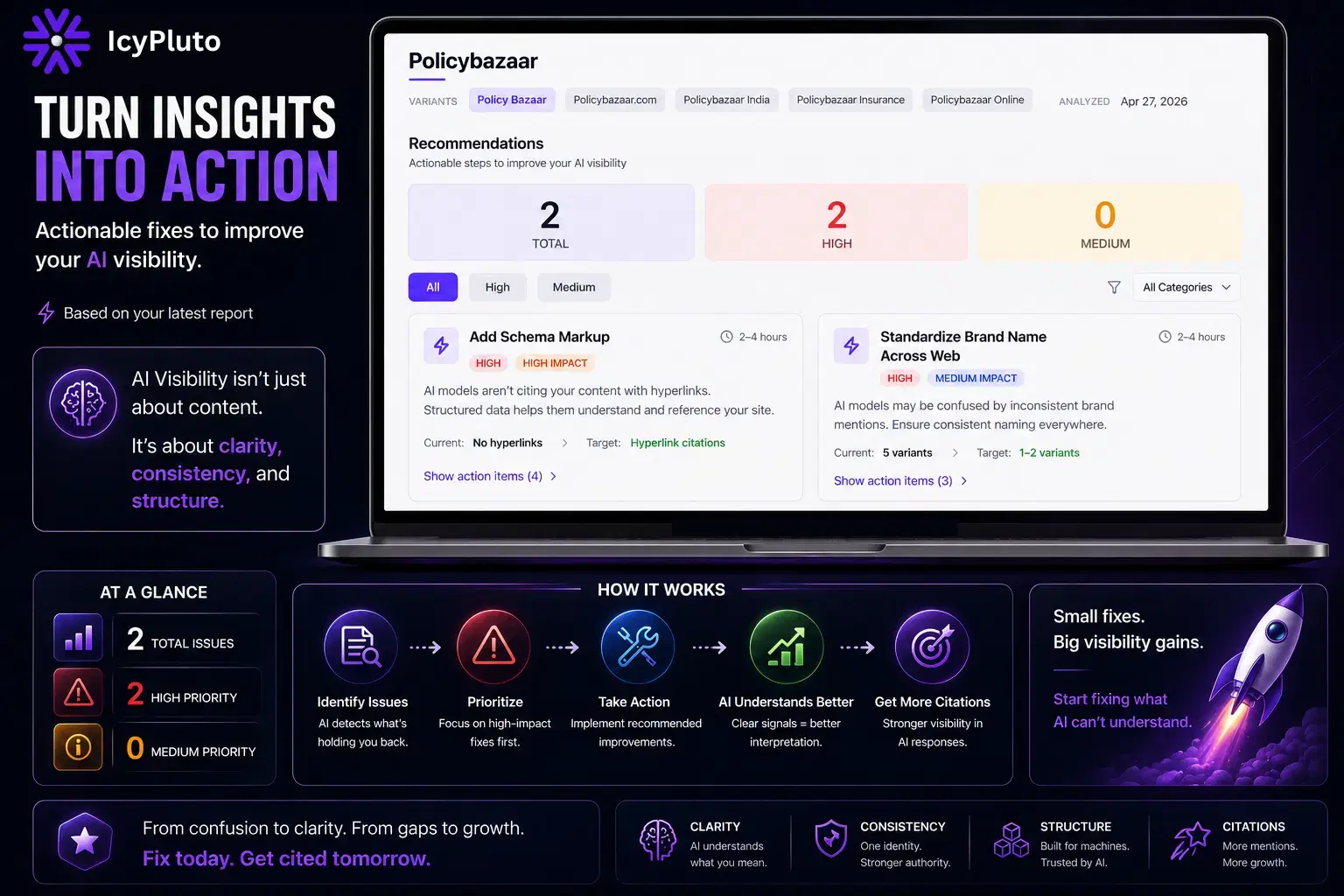
This blog explores how IcyPluto’s Action Feature h...
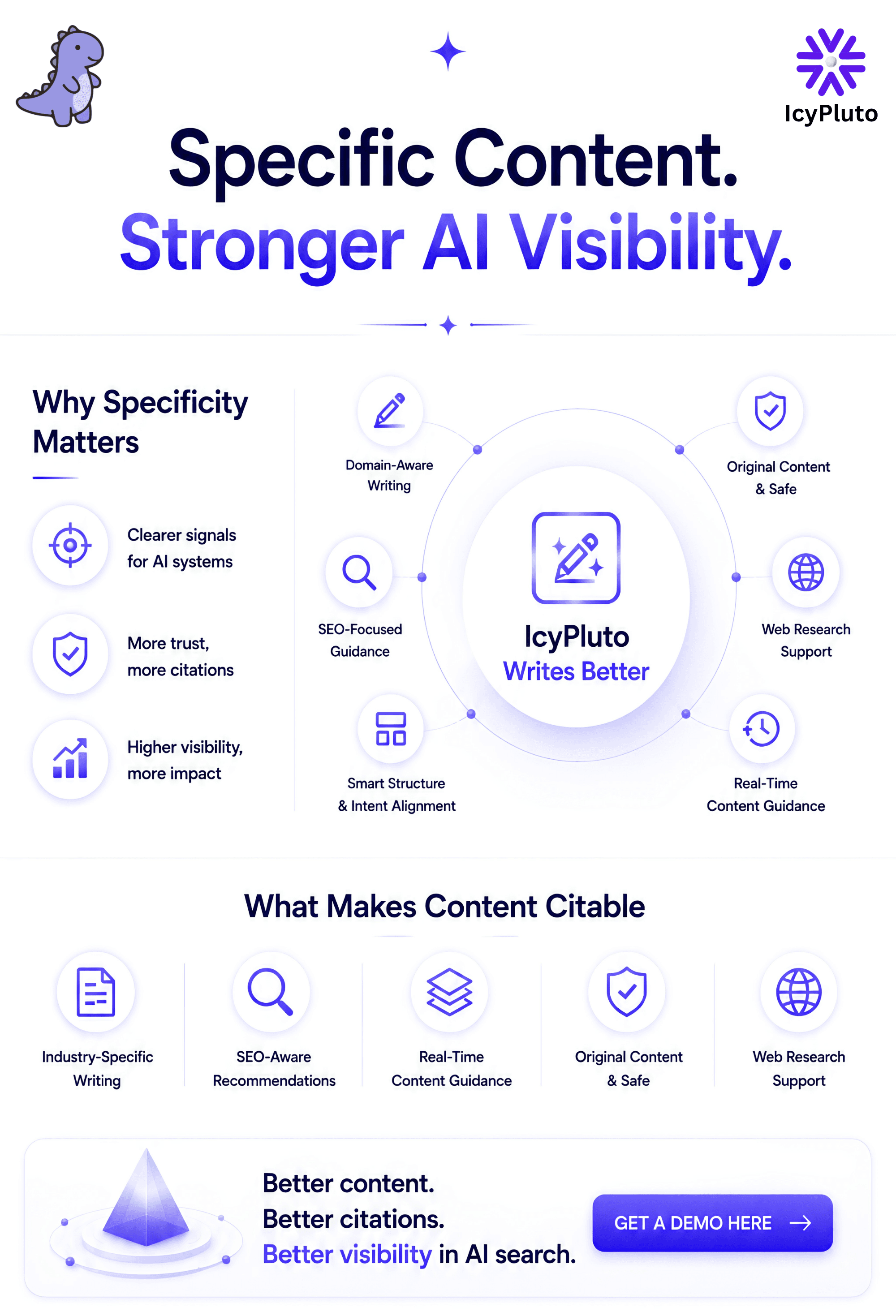
AI SEO writing is getting more specific, and that ...
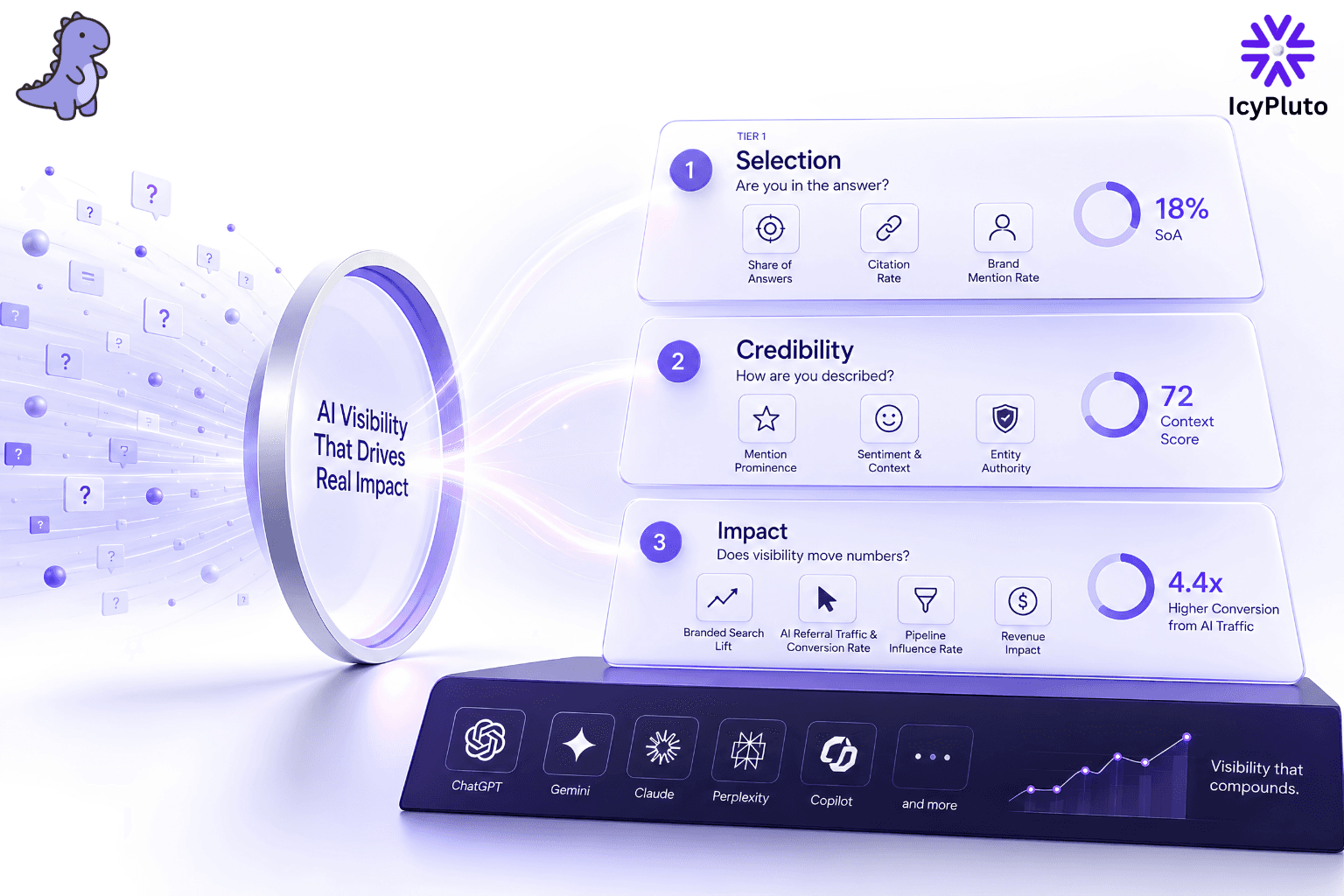
AI search has turned visibility into a numbers gam...
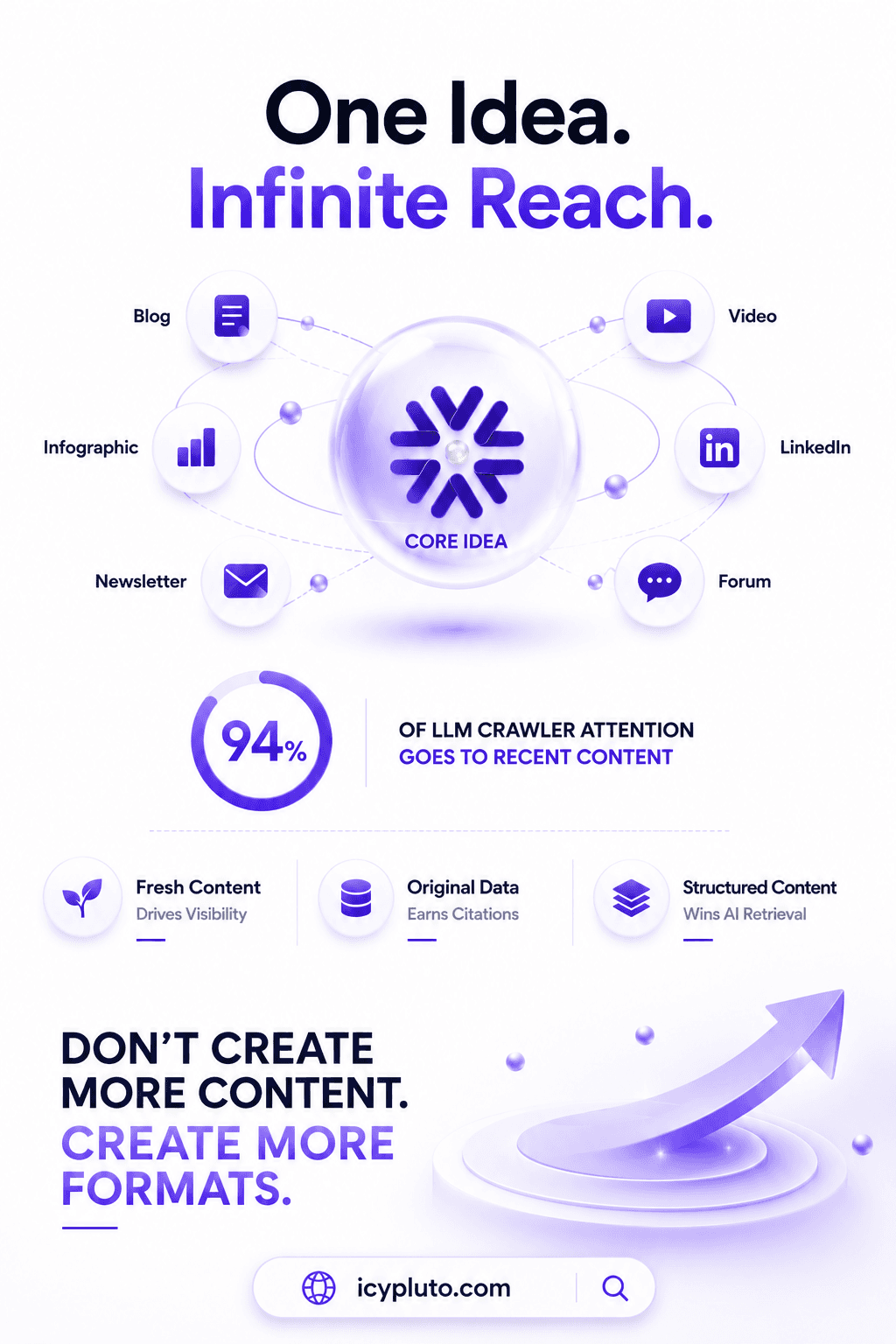
In most cases, when a content team creates a blog post, they consider it complete and move on to the next idea, leaving an untouched, decaying piece of content that will no longer generate new views or provide value to the business.
This is referred to as the one-and-done trap; it may feel great to think that you have done something productive with your content, but since there is no strategy in place to repurpose that content within a couple of months, it may end up as dead flesh in the digital cesspool of irrelevance.
Repurposing is changing your original content into a different format/style so you can use the same content across various platforms/channels. Therefore, when you create a content repurposing map, you will have a sheet that outlines how you will take that original idea (the blog post) and determine how it would be converted into multiple versions for use on different channels.
When you intentionally repurpose your content, it increases its value to your business as a result of driving visibility from both traditional search and AI search for the same core idea.
You have experience working in SEO and have an understanding of multichannel content marketing, but repurposing for AI visibility does require an awareness of how LLMs (like ChatGPT & Google's AI) prioritize certain factors when it comes to their visibility.
The four most important pieces are: content age; original data/statistics; how the content is structured; and lastly, what is the overall authority of your domain.
Fresh content is preferred by LLMs as they show this through data. According to Seer Interactive, 94% of LLM crawler hits come from content published within the last five years. The majority of hits are for content published within the last year.
Therefore, in order to maintain freshness, your content must be updated on a regular basis. New data, new statistics, and new examples should all be added to existing content to keep it current. By staggering when you publish old and new/rebuilt materials, you will have greater freshness signals for each piece of content.
Repurpose old, successful content into new formats by converting successful blog articles into videos that you can embed and upload as separate items to reset your original publication date while maintaining the original authority. Original Data Gets Cited 30 to 40% More Often
LLMs prioritize content with original data and statistics. Content that includes statistics and qualitative statements results in 30 to 40% higher citation rates according to data compiled by Onely.
This makes sense. AI training data predates current trends and recent facts. When someone searches for up-to-date information, the AI looks for trustworthy sources to cite.
Citations are links to sources the AI engine references as it synthesizes answers. You want your brand to be that source.
Feed AI models with original research like benchmarks, surveys, and internal studies. Use first-party data like We analyzed 12 billion emails and found. Include subject matter expert quotes with name, title, and credentials.
Structuring or organizing your content makes it more appealing to large language models (LLMs) than unstructured, random-format pieces. The use of headings, bullet points, tables, definitions, and sequential formats contributes to better structure, which is three times more likely to produce an accurate citation than unstructured content (Snezzi).
Chunking content refers to the process of breaking your content into smaller, manageable units, allowing both readers and search engines to process the information presented.
OpenAI has been transparent about how it processes content. Instead of storing or retrieving entire documents, the LLM separates the document into smaller, overlapping chunks before storing and embedding the chunks within its database. When a user issues a query, the LLM retrieves only the most relevant chunk(s) from the embedded content, rather than the entire document, creating a faster and more accurate response.
No matter how well your content follows AI visibility best practices, LLMs have a bias toward certain domains. Research from Semrush shows major LLM platforms may be rebalancing their citation mix.
Reddit, LinkedIn, and Wikipedia are among the most-cited domains on LLMs overall. However, ChatGPT sharply reduced citations to Wikipedia and Reddit in Q3 2025.
Here is your step-by-step workflow for creating a content repurposing map that drives SEO and LLM visibility.
Every repurposing map begins with one central idea. Choose a topic that aligns with your product or service. It should have clear search demand or reflect real audience questions.
The topic must have enough depth to expand into multiple angles. Think how-tos, comparisons, and FAQs. It should offer opportunities to include insights, data, or expert commentary.
Example topics work well. Industry trends for 2026. Best practices for a specific process. Comparison of competing approaches. These have room for expansion.
Once you define your topic, create a single in-depth piece of content. This primary asset acts as the foundation for all repurposed content.
It should provide enough depth, insight, and structure to support multiple formats. Usually, this is a long-form asset like a blog post, webinar, or video.
Cover the topic comprehensively. Include key questions, subtopics, and use cases. Add original insights, data, or examples to strengthen authority. Structure content clearly with a table of contents, headings, sections, and takeaways.
Before creating your primary asset, break it down into smaller components. Map each to the most suitable format and platform. This is where content expands beyond a single piece.
Identify key elements such as insights, stats, quotes, and questions. Match each element to a suitable format. Quotes become social posts. Stats serve as the basis for infographics.
Choose distribution platforms based on where your target audience is most active. Note specifications like dimensions and character counts required for that platform.
Planning all necessary assets saves time. When you know what you need to create, you can arrange for designers and writers to create them simultaneously. Create and resize images for social platforms as your team writes content.
Create a plan to release content over time. Rather than publishing everything at once, stagger your approach. This helps maintain visibility and keeps topics active across channels.
Publish your primary asset first to establish the core topic. Stagger supporting content over days or weeks to extend reach. Align timing with campaigns, launches, or seasonal trends where possible.
More recent publications receive more hits from AI crawlers. Staggering helps you maintain freshness without creating entirely new content.
Some content is evergreen and rarely needs updates. Other content benefits greatly from frequent edits. How often you edit depends on your industry and content type.
Financial content needs more frequent updates than travel guides and blogs, according to research by Seer Interactive. Update fast-changing content like trends and stats often. Try quarterly to start.
Review more stable content annually. Refresh outdated data, examples, and references. Republish or redistribute updated content to signal freshness to crawlers.
Once content is live, track performance to understand which formats, platforms, and topics deliver the most value. Monitor traffic, engagement, and conversions across formats using tools like Google Analytics.
Identify which content types drive the most visibility. Look for patterns in what gets shared, cited, or reused. Double down on high-performing formats and channels.
Use insights to inform future topics and repurposing strategies. If something isn't performing as expected, try altering it or stopping it completely.
IcyPluto's content repurposing approach transforms a single piece into numerous formats. We do not just publish something; rather, we take what we publish and expand it over time.
To begin, we develop our main topics. We seek main topics that are in-depth and have a demand for search. We create the primary asset that fully covers the topic for that main topic. We use the primary asset as the foundation for all of the repurposed content.
When we create the primary asset, we dissect each type of content into its various forms before creating our primary asset. We have our team find insight, stats, quotes, and questions. These are then matched to the proper formats. For example, quotes will be turned into LinkedIn posts, and Stats will become infographics.
We stagger when we publish content to ensure we maintain a signal of freshness. First, we publish the primary blog. After that, we will publish the supportive content over a period of days or weeks. This allows our topic to continue to be active in each channel without having to create completely new content for the topic.
We establish cycles for content updates based on the speed at which the industry is changing. For example, with how fast AI has been changing, we will update our content every quarter. On the other hand, we will review the content that is created based on stable topics, such as process guides, every year. This will ensure the outdated data is refreshed and republished for freshness signals to be generated.
We track the performance of all of our forms of content. We track traffic, engagement, and conversions on the content we are tracking for each of our types of content. From there, we can determine which content formats have the most visibility. After we have determined the format that does the best, we will put even more emphasis on those formats and channels moving forward.
We use original data & statistics throughout our content. Content with statistics has been shown to get 30-40% more citations. We create content that has first-party data and quotes from Subject Matter Experts (SMEs) with credentials to lend credibility.
The way that we structure content helps with LLM chunking. Each block of content covers one idea (example: one block for location, one block for services). We build a question and answer scaffolding around each block of content with direct, declarative answers to the corresponding question. We also lay out each block according to a consistent pattern of: Context, Evidence, & Takeaway.
We take core ideas and reuse them in Forum Discussions & Social Posts. We distribute content to those sites/platforms that LLMs refer back to most often when they are doing their research. Our goal is to obtain high-authority domain placements for our content through Public Relations and Guest Posting.
The statistics we have on this show it works: Clients see an increase in external mentions of their brand of 40-60%. LLM-referred website traffic has increased by 80% or more. Share of Voice in AI-based search engines has improved significantly.
Content that is not regularly repurposed will eventually rot away and be invisible within a matter of days. On the other hand, content that is intentionally repurposed will create new assets that can provide additional business value to your organization across multiple channels.
Fresh content, original data, structured content, and authoritative domains are preferred by LLMs. In your repurposing map, you should consider all of these four elements.
To begin, start with an overall topic, develop your initial piece of content as a primary asset, break it down into different formats, and publish it in a staggered manner. Define your cycles for updating the content, and measure how it performs.
By using this method, you will maximize the visibility of your original idea through both traditional search engines and AI search engines. Thus, a single core idea can provide you with multiple assets, each of which will receive maximum visibility.