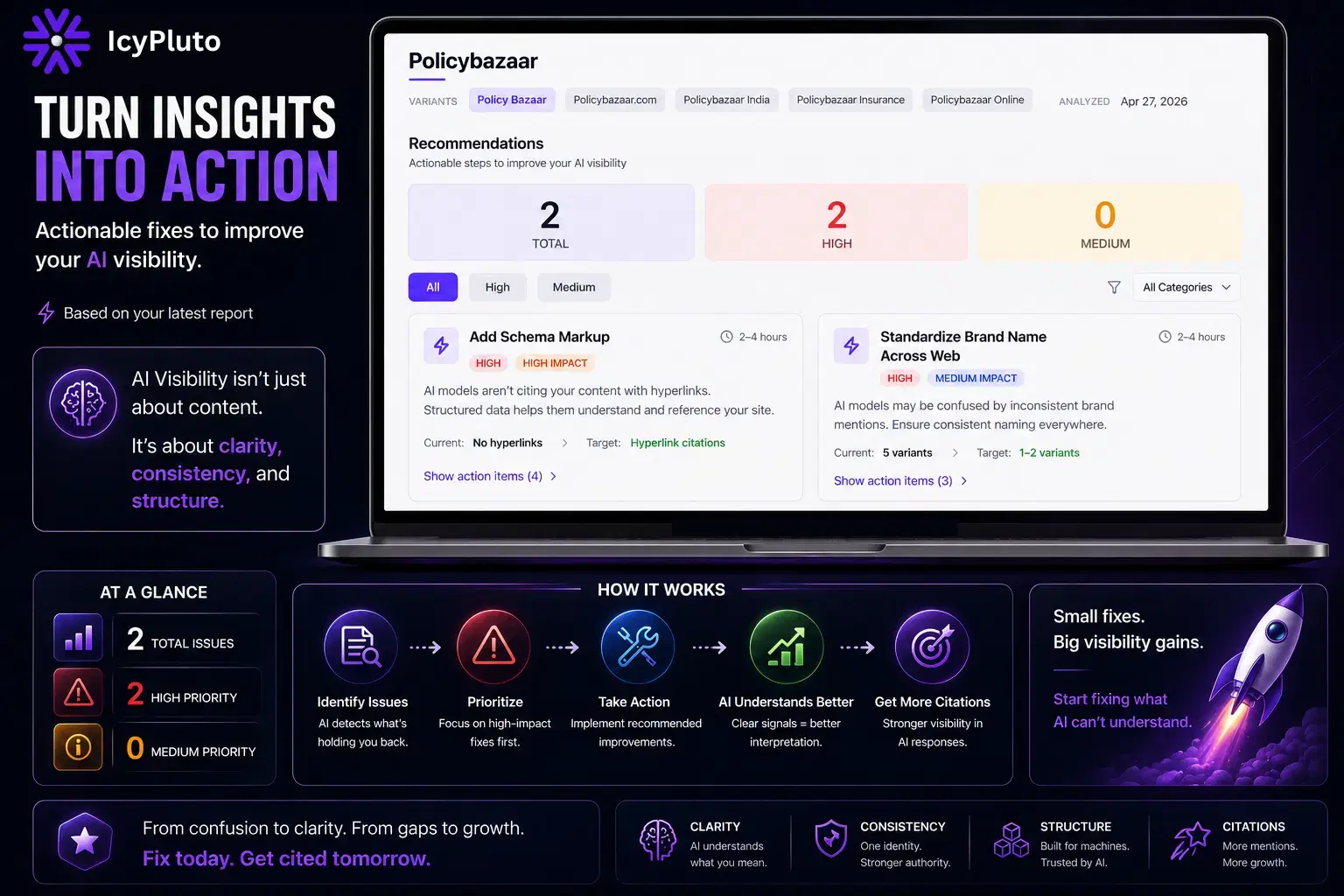
This blog explores how IcyPluto’s Action Feature h...
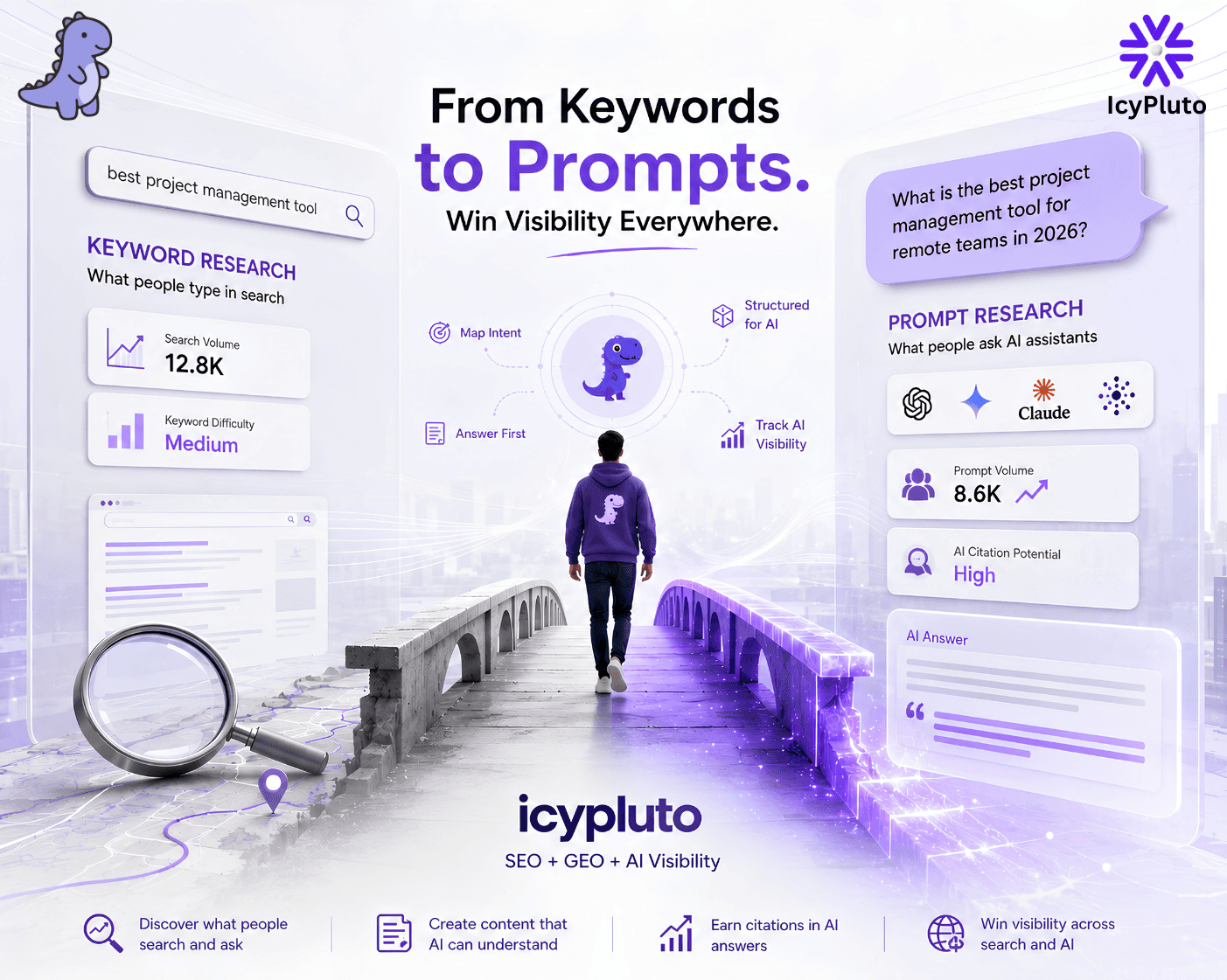
This blog explains how keyword research must now b...
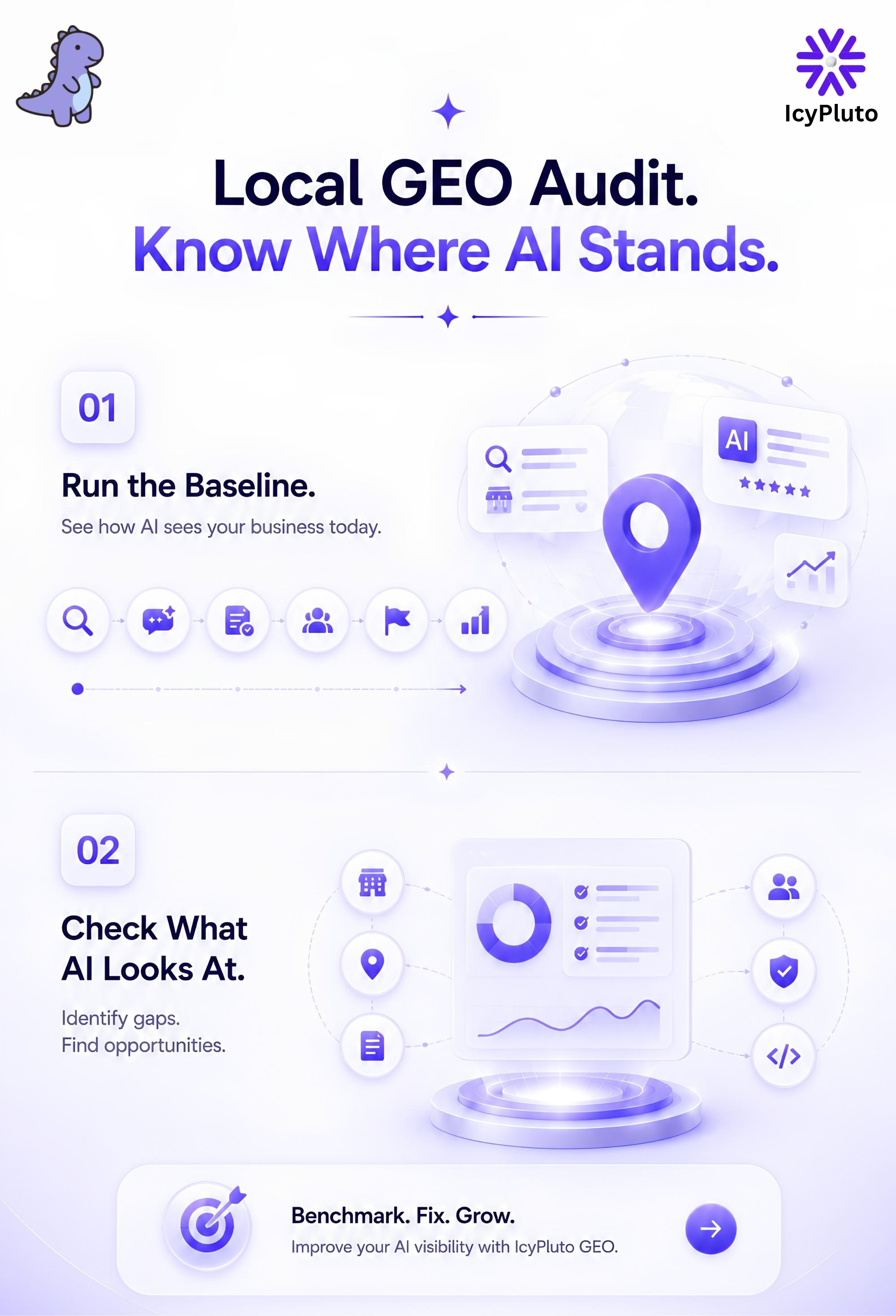
A local GEO baseline audit helps you understand ho...
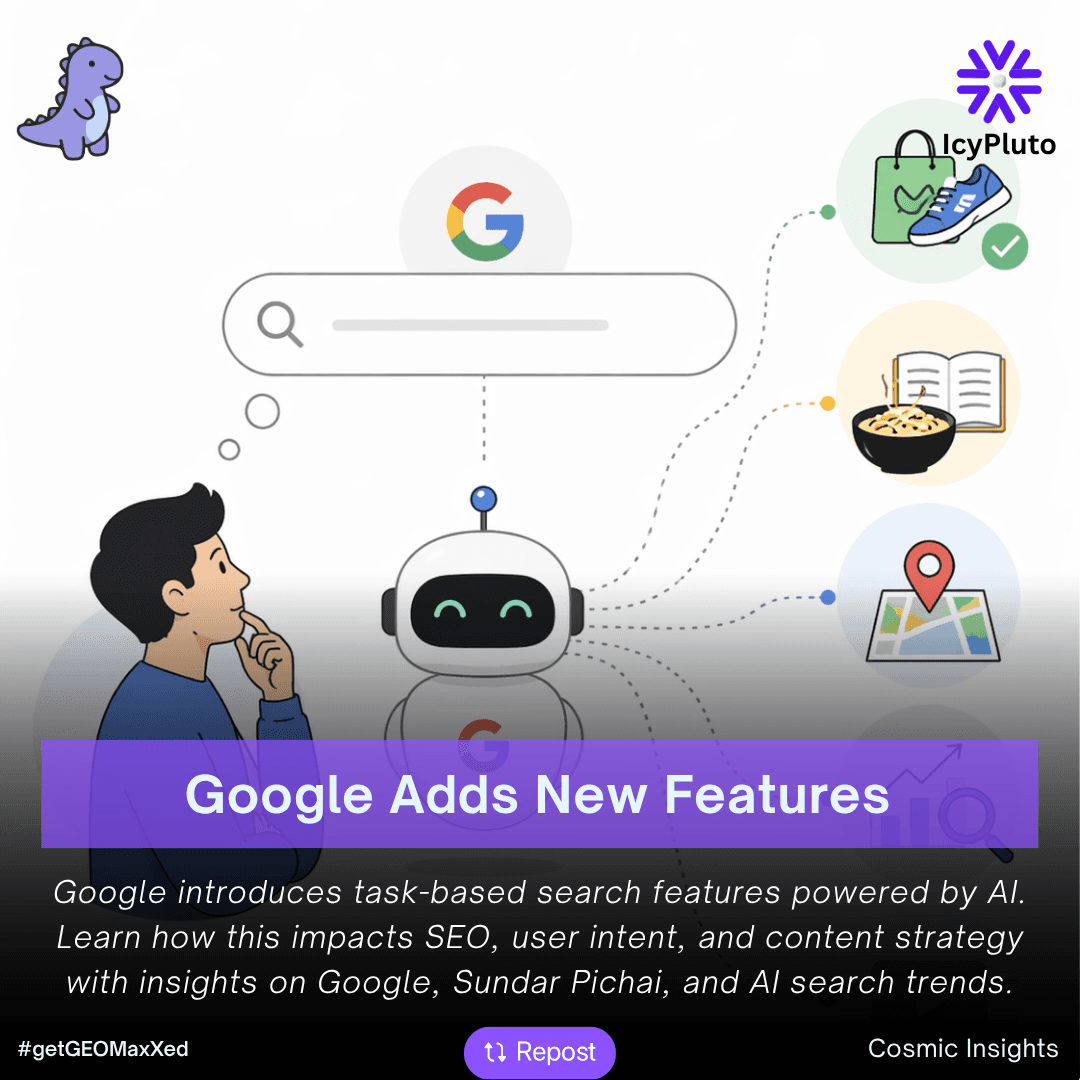
Search is no longer about queries. It’s about completing tasks.
With its latest updates, Google is pushing search into a new paradigm where users don’t just find information, they finish actions. This evolution, highlighted by insights from Search Engine Journal, marks one of the most significant transformations in search behavior over the past decade.
Task-based search integrates AI to guide users through multi-step processes like planning trips, researching purchases, or learning new skills. Instead of returning a list of blue links, Google now structures results into actionable flows.
Data suggests that over 60% of searches are now multi-step journeys, not single queries. This means users expect continuity, context, and assistance across multiple interactions.
This shift is not incremental. It is structural. And it is redefining how SEO works.
Task-based search features are designed to help users complete complex goals by organizing information into guided steps. These features rely heavily on AI models that understand intent beyond keywords.
For example, when a user searches for something like “plan a vacation,” Google may now provide:
Step-by-step planning guides
Curated recommendations
Contextual suggestions based on previous queries
Integrated tools for booking, comparing, and decision-making
This aligns with Google’s broader AI strategy led by executives like Sundar Pichai, who has emphasized the importance of making search more assistive and context-aware.
Research indicates that AI-enhanced search experiences improve task completion rates by up to 45%, compared to traditional search results.
This is the real goal.
Not just delivering information, but enabling outcomes.
Traditional SEO focused on ranking individual pages for specific keywords.
Task-based search changes that entirely.
Now, Google evaluates how well your content contributes to a journey, not just a query. This means isolated blog posts are less effective than interconnected content ecosystems.
Studies show that websites with strong internal linking and topic clusters see up to 34% higher visibility in AI-driven search features.
This is because AI systems prioritize:
Contextual depth
Sequential relevance
Content continuity
In other words, your content must guide users through a process, not just answer a question.
Brands that fail to adapt to this model risk losing visibility, even if they rank well in traditional SERPs.
AI is the backbone of task-based search. Systems developed by Google and influenced by broader advancements from companies like OpenAI and Microsoft are enabling search engines to understand context at a deeper level.
These models analyze user behavior, query history, and semantic relationships to predict what users need next.
For example:
If a user searches for “buy running shoes,” AI may anticipate follow-up needs such as reviews, comparisons, or nearby stores.
This predictive capability is powerful.
Data shows that predictive search features can increase user engagement by 30–50%, as users spend more time within a guided experience.
However, this also means fewer clicks to external websites.
Which brings us to the biggest challenge.
One of the most immediate impacts of task-based search is the reduction in traditional click-through rates.
As Google provides more complete answers within the search interface, users have less need to visit external sites.
Industry estimates suggest that zero-click searches now account for over 65% of total queries.
With task-based features, this number is expected to rise even further.
This creates a paradox:
More visibility within Google, but less traffic to your website.
For marketers, this means success metrics must evolve. Rankings and clicks are no longer sufficient indicators of performance.
Instead, brands must focus on:
Presence within AI-generated experiences
Inclusion in task flows
Influence over user decisions
In a task-based search environment, entities play a critical role. Google relies on its knowledge graph to connect concepts, brands, and individuals.
Mentioning relevant entities such as Google, Microsoft, and OpenAI helps reinforce context and authority. Content that includes recognized entities is up to 38% more likely to be featured in AI-driven results.
This is because entities act as anchors for AI understanding.
However, authority is no longer just about backlinks.
It is about being consistently associated with a topic across multiple contexts.
Brands must build strong entity relationships within their niche to remain competitive.
Winning in task-based search requires a fundamental shift in content strategy.
First, content must be structured around user journeys rather than isolated keywords. This means creating clusters of content that guide users from awareness to decision-making.
Second, clarity and structure are critical. AI systems prefer content that is easy to parse, with clear headings, logical flow, and contextual depth.
Third, comprehensiveness matters more than ever. Pages that fully address a topic are 2.3 times more likely to be included in AI-generated summaries.
Finally, brands must focus on real-world usefulness. Content that includes actionable steps, examples, and practical insights performs significantly better.
This is not about writing more content.
It is about creating smarter content.
The introduction of task-based search features signals a broader transformation in digital marketing.
Brands must move from:
Keyword optimization → Journey optimization
Content creation → Experience design
Traffic generation → Influence building
This shift requires new capabilities, new metrics, and new thinking.
Companies that adapt early will gain a significant competitive advantage. Those that don’t will struggle to maintain visibility in an AI-driven search landscape.
Google’s task-based search features are just the beginning. As AI continues to evolve, search will become increasingly proactive, predictive, and personalized. The ultimate goal is clear: To eliminate friction between intent and outcome.
In this future, the winners will not be those who rank highest. They will be those who are most useful within the user’s journey. And that requires a completely different approach to SEO.