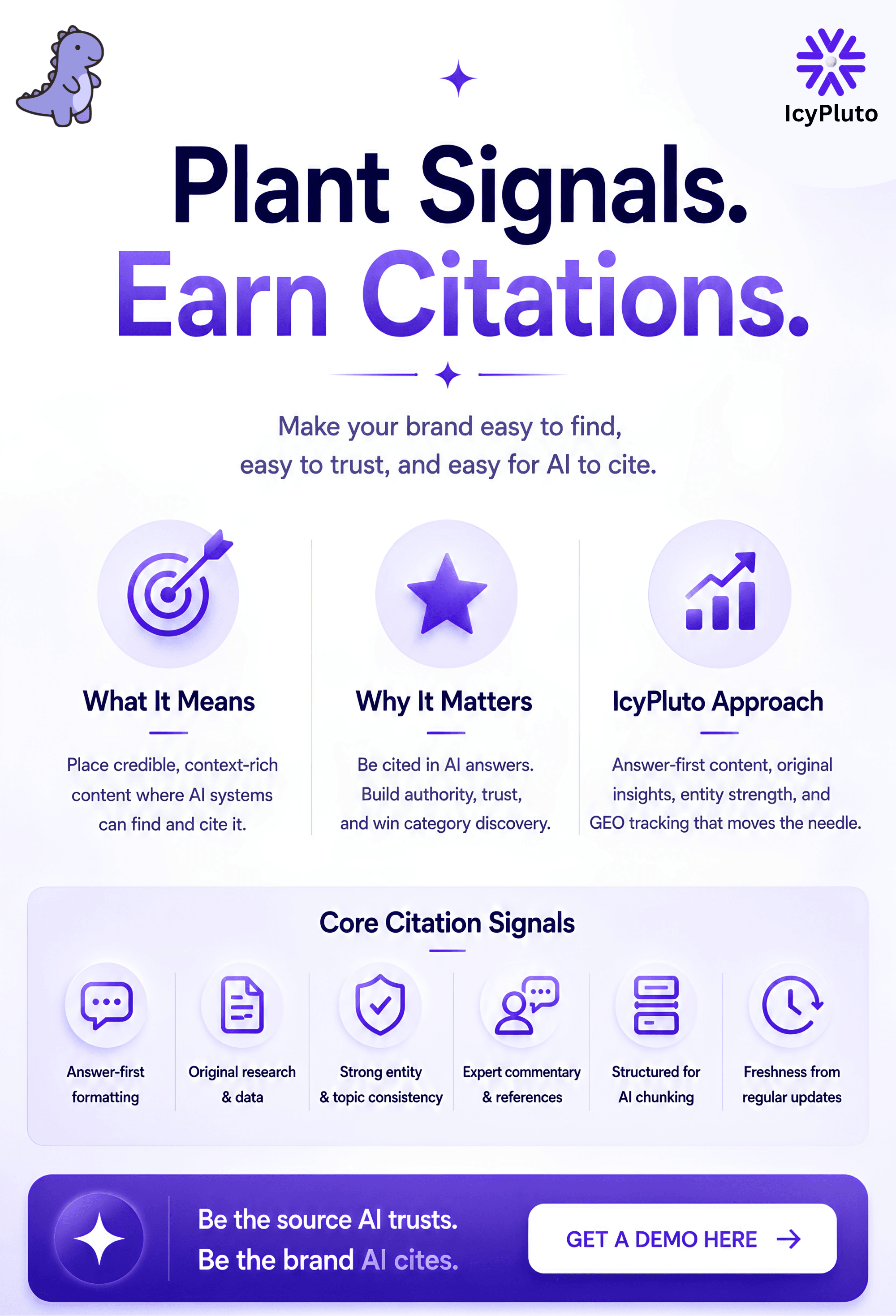
Citation seeding is becoming one of the fastest wa...
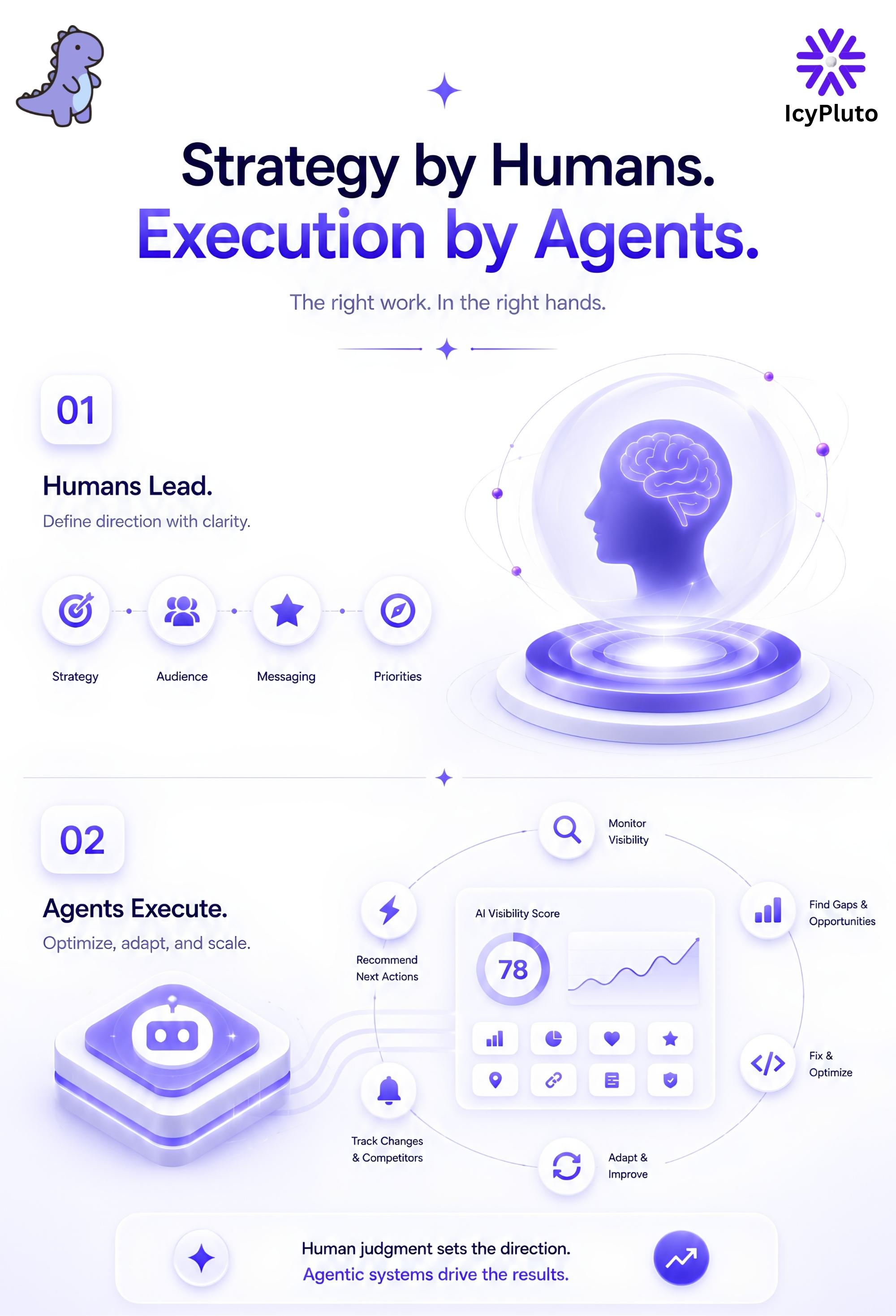
This blog explains how modern marketing teams can ...
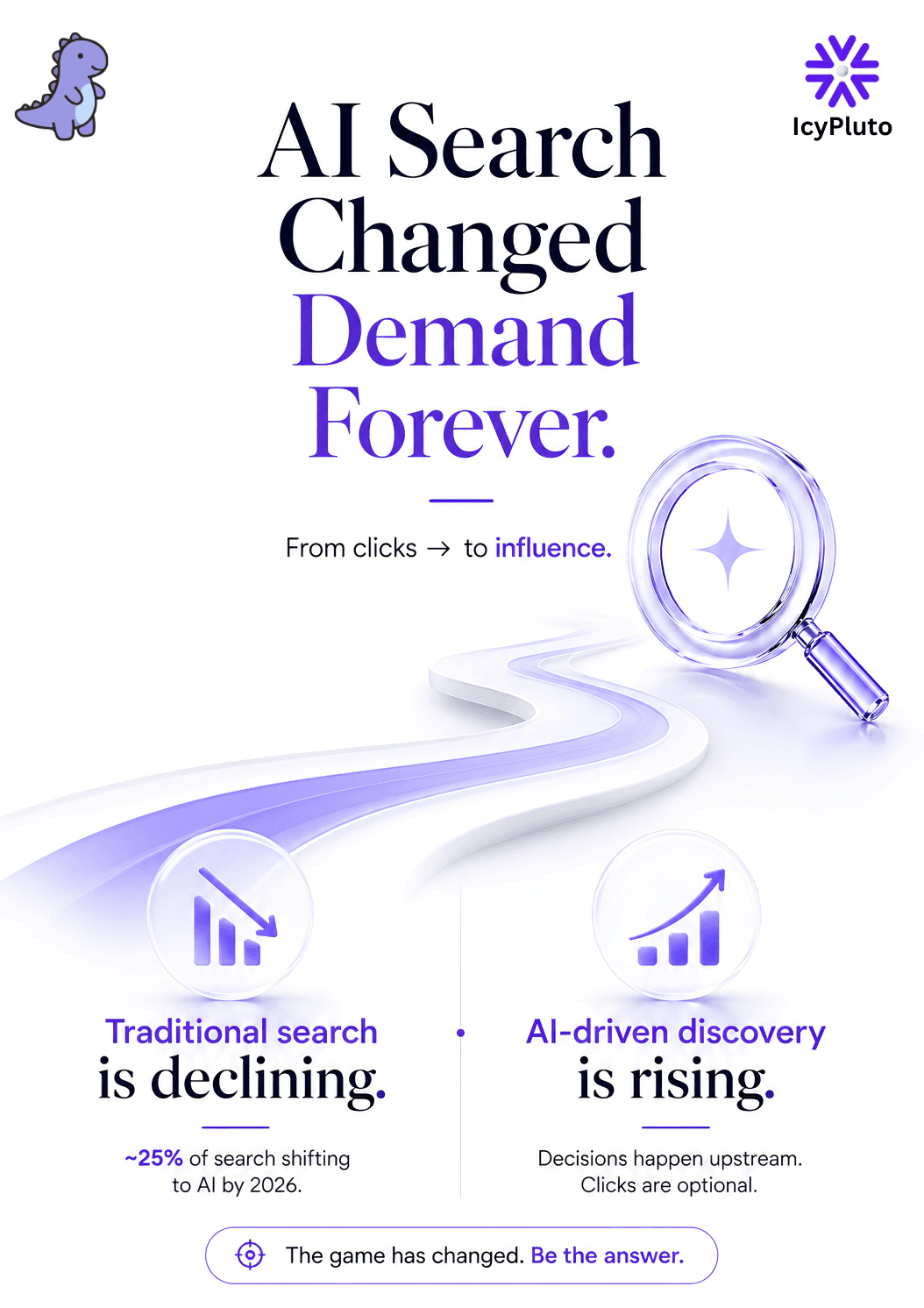
This blog explains why traditional, traffic-focuse...
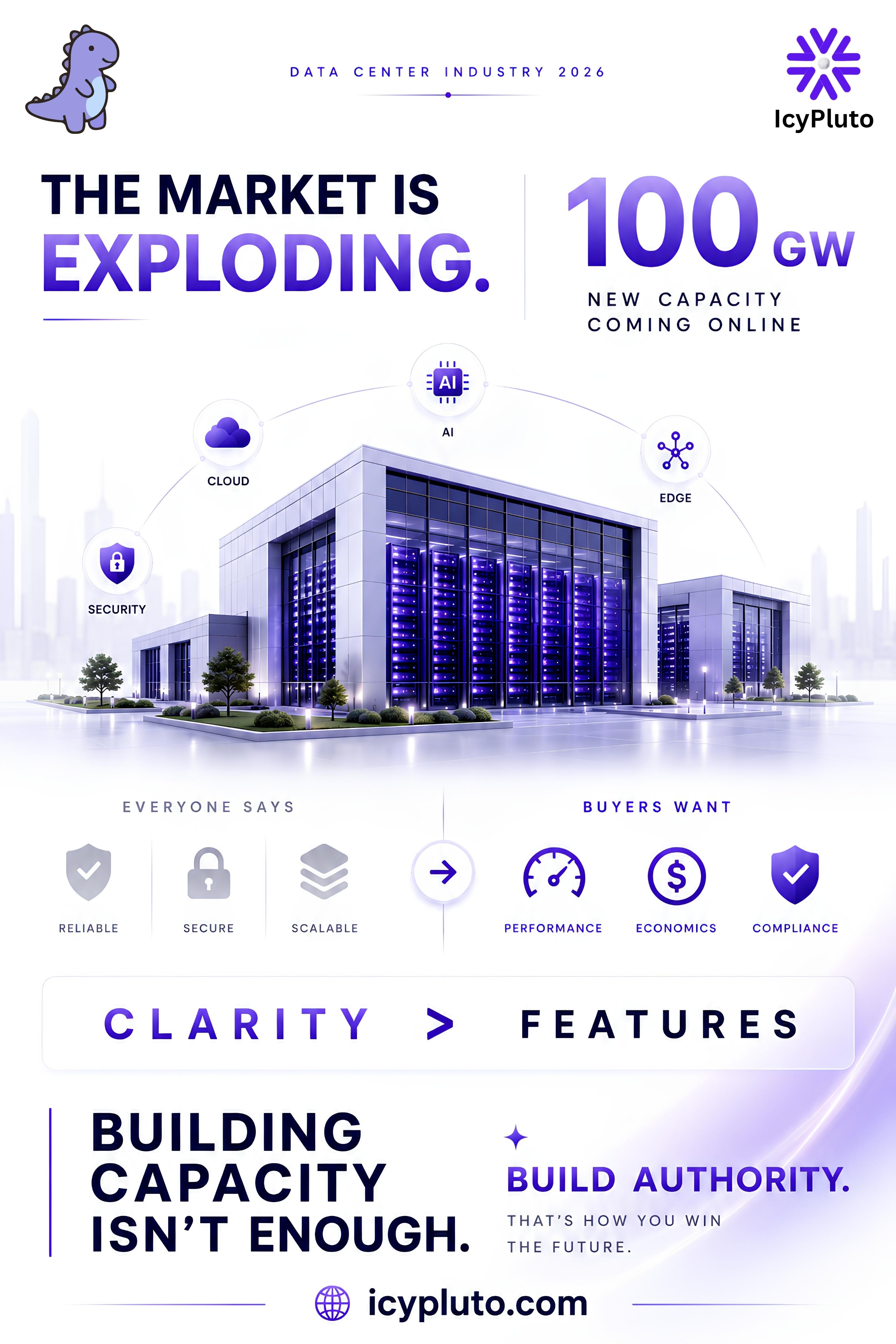
The data center industry is growing at a serious pace, but the way many companies market themselves has not caught up. That creates a strange mismatch: the market is expanding fast, yet a lot of brands still sound almost identical. In a space where buyers are making high-stakes decisions, that is a real problem.
JLL estimates the global data center sector could grow at about 14% CAGR over the next five years, with roughly 100 GW of new capacity coming online during that period. Knight Frank is also forecasting 33 GW of new capacity over the next two years and a 24.6% CAGR over that same period. Those numbers tell you something important: this is not a stagnant market. It is moving quickly, which means weak positioning gets buried fast.
The industry itself is technical, capital-heavy, and highly competitive. That already makes marketing harder than in many other sectors. B2B data centre marketing is especially challenging because the message has to speak to multiple concerns at once: uptime, security, scalability, energy use, compliance, and long-term business value.
That is where a lot of brands fall short. They describe what they offer, but they do not always explain why it matters. They list features, but do not connect them to business outcomes. And in a market that is growing this fast, that kind of generic messaging is easy to ignore.
Many data center companies use the same language: secure, scalable, reliable, future-ready. That sounds polished, but it does not create a reason to choose one brand over another. In a market where many providers offer similar infrastructure categories such as colocation, hyperscale, hybrid cloud, and edge services, differentiation becomes even more important.[databank]
A strong marketing strategy needs to answer a buyer’s real question: what makes this operator better for my use case? If the message cannot answer that clearly, the brand blends into the crowd.
A lot of data center companies are visible only when someone already knows their name. That is not enough. Long-tail keywords are valuable because they are more specific, lower competition, and often reflect stronger intent.
For example, buyers may search for:
data center marketing strategy.
data center content gaps.
data center lead generation.
data center competitive positioning.
B2B data center marketing.
These terms are more useful than broad brand language because they match the way prospects actually research solutions. If a company does not rank for these kinds of searches, it loses traffic before the sales conversation even begins.
Many data center blogs focus on technical features but do not connect them to business impact. That is a problem because buyers care about operational outcomes, not just infrastructure terminology. They want to know how a provider helps with resilience, expansion, compliance, and economics.
This is where content strategy often fails. Without a content plan built around the buyer’s decision process, companies publish information that informs readers but does not move them toward a demo, consultation, or sales call.
In a fast-changing market, the brands that win are often the ones that explain the market better than their competitors do. That matters even more when the industry is shifting toward AI-driven demand, edge infrastructure growth, and geographic expansion into new regions. If the company is not part of the conversation, it risks looking reactive instead of authoritative.[jll]
Thought leadership is not just about opinions. It is about helping buyers understand where the market is going and why the brand is prepared for that future.
Data center buyers do not buy marketing claims. They buy confidence. In practice, that usually means they care about:
uptime and reliability.
scalability.
latency and performance.
energy and power availability.
compliance and security.
location and access.
long-term operating economics.
That is why content and messaging need to be translated from technical language into commercial value. A buyer does not just want “advanced infrastructure.” They want proof that the infrastructure solves a real business problem.
This is where Icypluto can create a meaningful edge. The advantage is not that it adds more content. The advantage is that it makes the brand easier to understand, easier to find, and easier to trust.
Icypluto can help the company stop sounding generic. Instead of repeating the same claims as every other provider, the brand can be positioned around a sharper value proposition, a clearer buyer segment, and a stronger market narrative.
That matters because a crowded market rewards clarity. The company that explains itself best often wins attention first.
Because long-tail keywords tend to be more specific and less competitive, they are a strong way to build visibility with high-intent buyers. Icypluto can use this to create content around the exact questions buyers are asking, not just the broad category name.[yotpo]
That includes searches such as:
data center marketing gaps.
data center content strategy.
data center GTM strategy.
data center lead generation strategy.
data center SEO strategy.
This is how the brand begins to show up earlier in the buyer journey.
The data center industry is growing fast, and that growth creates a hunger for insight. Knight Frank’s and JLL’s forecasts show that the sector is expanding at a scale where strategy, not just infrastructure, becomes a key competitive factor. Icypluto can turn that into content that speaks to market shifts, buyer concerns, and operational decisions.[content.knightfrank]
That gives the brand an authority layer that most competitors do not have.
Good content is not only about traffic. It is about pipeline. Icypluto can shape pages, blogs, and landing content so that they do not just educate, but also move readers toward the next step.
That means clearer CTAs, stronger proof points, tighter messaging hierarchy, and content that mirrors the buyer’s evaluation process.
The data center industry is scaling quickly, but that also means buyers have more options and less patience for generic messaging. When capacity is expanding by tens of gigawatts and demand is being shaped by AI, cloud, and edge infrastructure, brands need a stronger way to stand out. The companies that invest in marketing clarity now will likely benefit from a compounding advantage later.[jll]
Icypluto’s unfair advantage is simple: it helps the brand say the right thing, to the right audience, at the right time.
The data center industry does not just need more promotion. It needs better positioning, better search visibility, and better content that speaks to how buyers actually make decisions. That is the gap Icypluto can close.
If the brand can become the clearest voice in a crowded market, it gains an unfair advantage that competitors will struggle to copy.