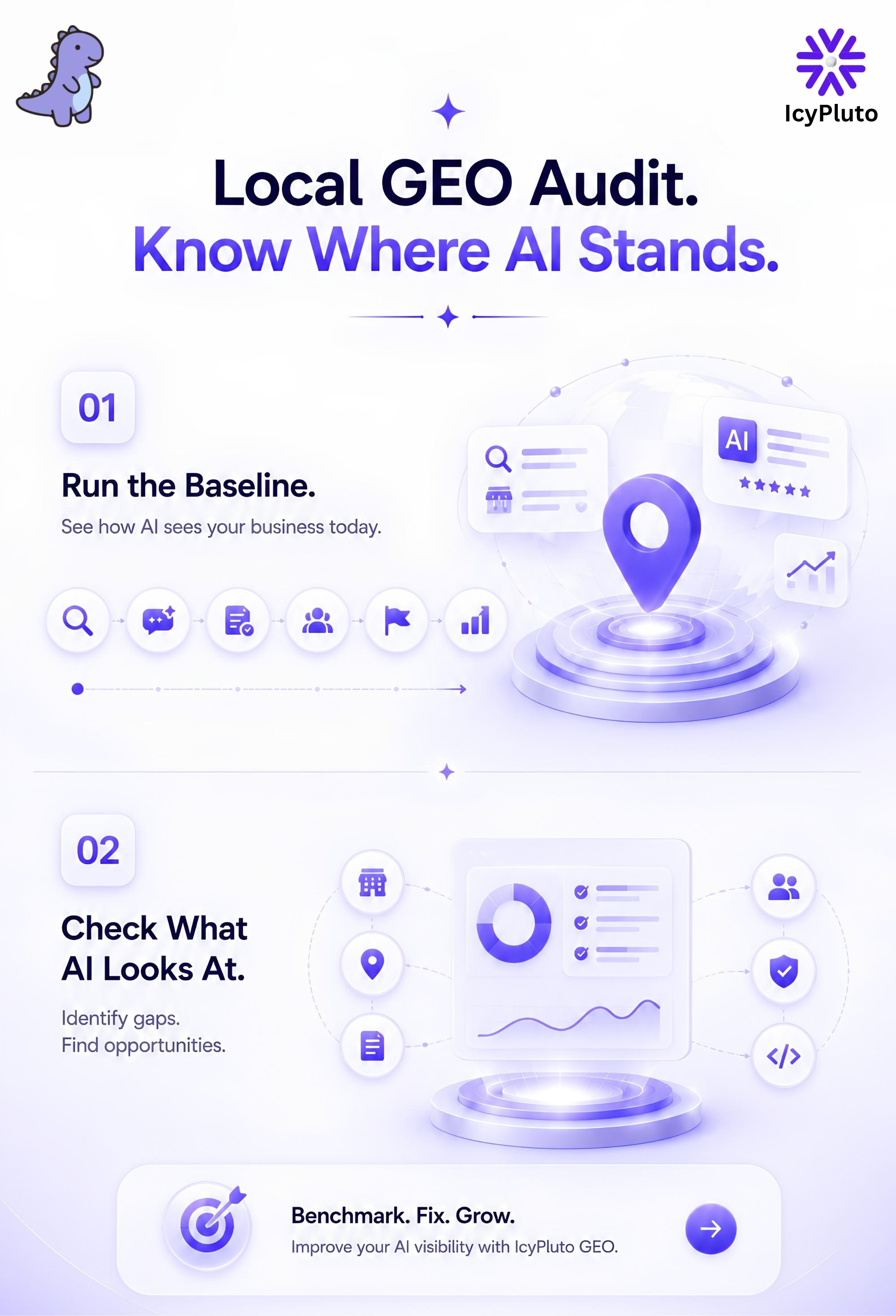
A local GEO baseline audit helps you understand ho...
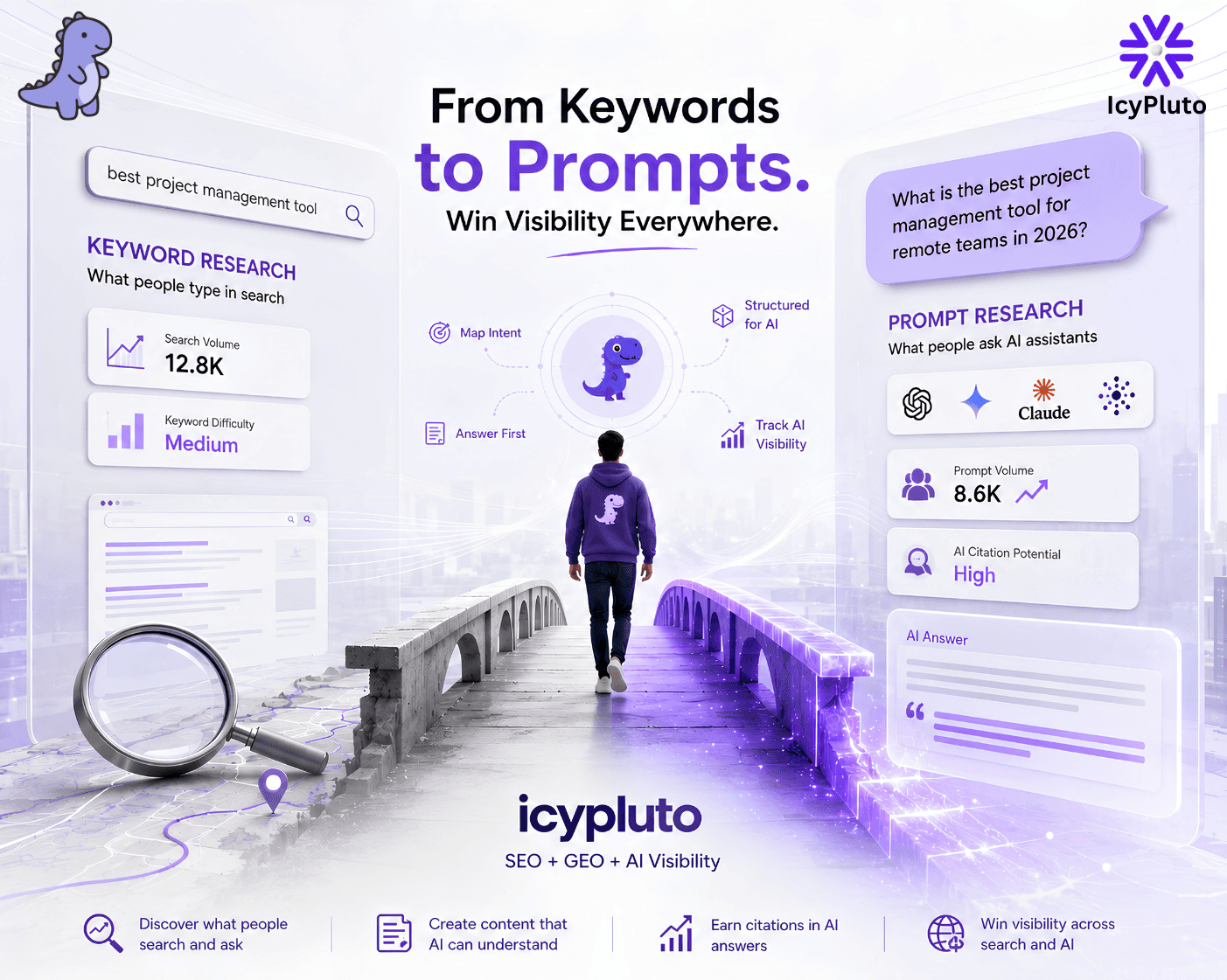
This blog explains how keyword research must now b...
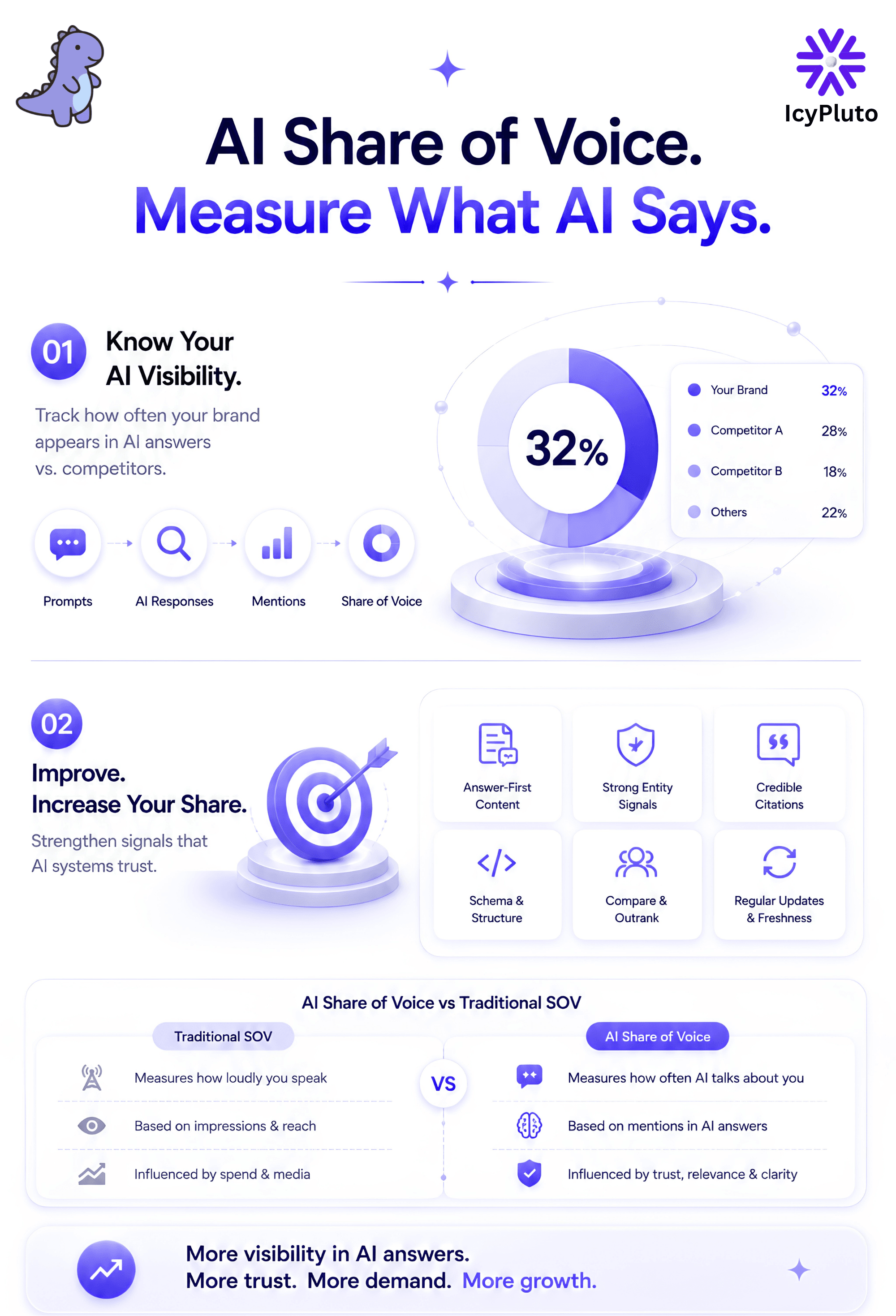
AI share of voice is the new visibility metric bra...
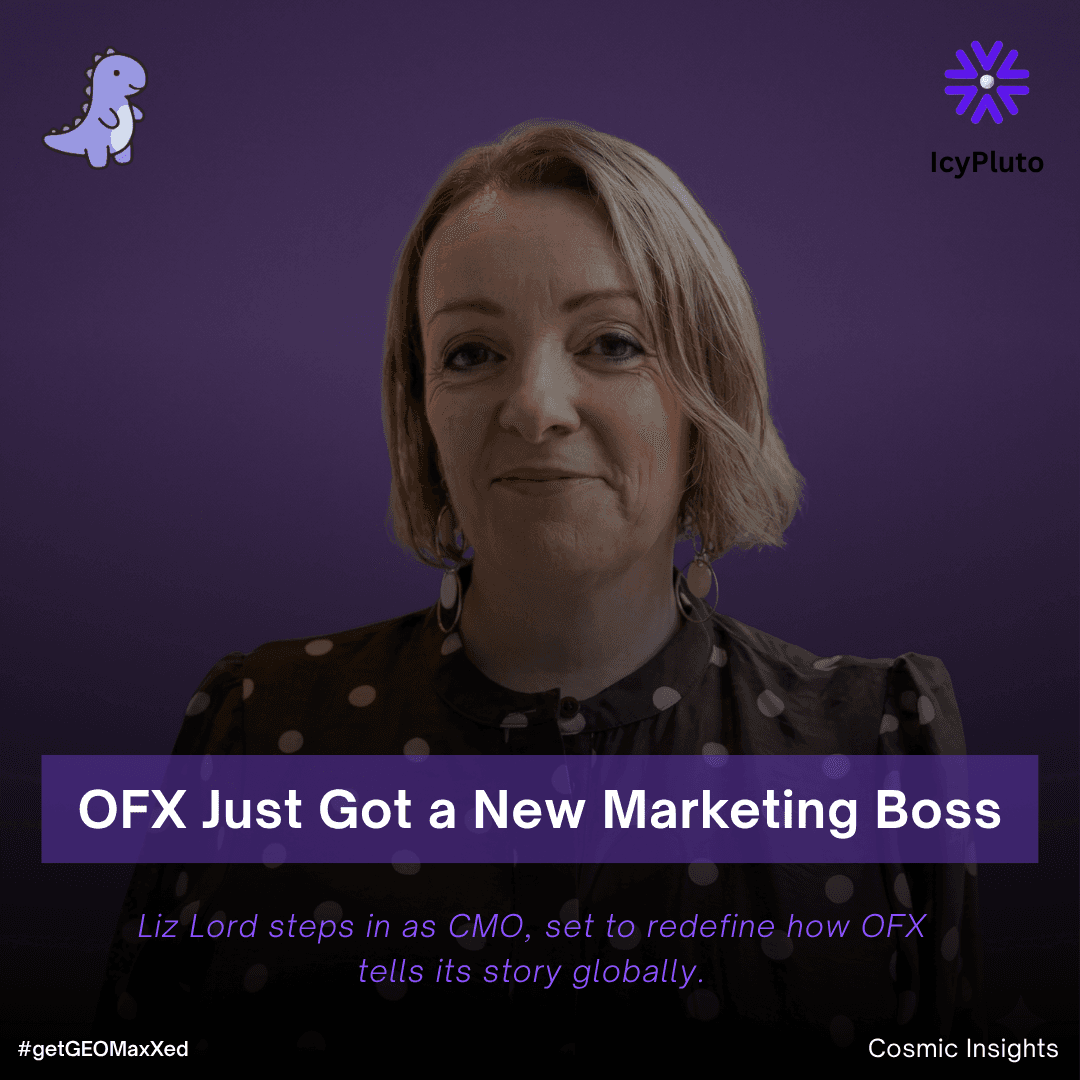
Global financial operations company OFX has officially announced the appointment of Liz Lord as its new Chief Marketing Officer — a move that speaks volumes about where the company is headed. With a career built on transforming digital-first brands and a track record that includes one of the most recognizable names in fintech, Lord steps into the CMO seat at a time when OFX is rewriting its own identity from the ground up.
This isn't just a personnel update. It's a declaration of intent. OFX, long known as a go-to platform for international money transfers, is now aggressively positioning itself as a full-spectrum financial operations partner for businesses worldwide. And with Lord at the helm of its global marketing strategy, the company is making it clear that this transformation deserves to be seen, heard, and felt across every market it operates in.
Liz Lord is not a new face in the world of financial services marketing. Before taking on the CMO role at OFX, she held the same position at PayPal Australia — one of the most widely recognized digital payments brands on the planet. Her tenure there gave her a front-row seat to the intersection of consumer behavior, digital commerce, and brand strategy at scale.
Beyond her time at PayPal, Lord also ran her own marketing consultancy, through which she worked with businesses across different industries, helping them navigate some of the most pressing marketing challenges of the modern era — brand positioning, customer acquisition in cluttered digital environments, and the increasing complexity of multi-channel go-to-market strategies.
What makes her profile so compelling for a company like OFX is not just her resume, but the specific blend of skills she brings to the table. She understands the nuances of financial services as a category — the trust dynamics, the compliance sensitivities, the difficulty of making complex products feel approachable to everyday business users. That kind of institutional knowledge doesn't come quickly, and it's exactly what OFX needs as it scales its business platform to compete in a crowded and sophisticated market.
Her years at PayPal Australia weren't just about brand campaigns and acquisition funnels. They were about understanding what it takes to build credibility in a space where customers are handing over their money and trusting that it gets to the right place, at the right time, in the right amount. That experience shaped a particular kind of marketing mindset — one that balances ambition with precision, creativity with commercial accountability.
Running her own consultancy between major corporate roles also gave Lord a perspective that many senior marketers never fully develop: the ability to think like a business owner, not just a brand custodian. She has had to manage budgets with real stakes, pitch strategies to skeptical clients, and deliver results without the safety net of a large corporate machine backing her up. That kind of independence sharpens instincts — and those instincts are exactly what OFX is betting on now.
To understand why this appointment matters, you have to understand what OFX is building. The company started life as an international payments specialist — a platform businesses and individuals could use to send money across borders more efficiently and affordably than going through traditional banks. That core proposition remains, but it no longer tells the whole story.
OFX is now actively positioning itself as a comprehensive financial operations platform aimed specifically at businesses. Its expanded product suite includes Global Business Accounts, Corporate Cards, Spend Management tools, Accounts Payable automation, and deep integrations with widely-used accounting platforms like Xero and QuickBooks Online. Taken together, these offerings represent a significant leap from simply "moving money across borders" to actually managing how businesses handle their entire financial workflow — from invoicing and approvals to reconciliation and reporting.
This kind of product evolution creates a fascinating and genuinely difficult marketing challenge. OFX has existing brand recognition built entirely around international payments. The word "OFX" in the minds of many business decision-makers still maps to foreign exchange and wire transfers — not necessarily to corporate cards, spend management dashboards, or accounts payable automation.
Changing that perception requires more than a campaign refresh. It requires a sustained, strategic effort to reintroduce the brand to its existing customers while simultaneously building awareness among a new audience of finance teams, CFOs, and operations managers who may never have considered OFX as a platform relevant to their needs. This is precisely the challenge that Liz Lord has been brought in to lead.
The integration with Xero and QuickBooks Online is particularly significant from a marketing perspective. These aren't just product features — they're access points into the daily workflows of millions of small and medium-sized businesses. When your platform lives inside the tools that finance teams use every single day, you stop being a vendor and start becoming infrastructure. Marketing that narrative effectively is a sophisticated undertaking, and it requires someone who genuinely understands both the technical value proposition and the human decision-making dynamics behind B2B software adoption.
Lord didn't mince words when asked about what drew her to the opportunity and what she sees as the core challenge ahead. She pointed directly to the fragmented reality that many businesses are living with today — one where cross-border payments, corporate cards, and expense management all sit in separate, disconnected systems that don't talk to each other, don't reconcile automatically, and create a constant headache for the finance teams trying to manage them.
"Many businesses still manage cross-border payments, cards and expenses in disconnected systems. OFX has a clear opportunity to simplify that complexity," she noted. She also highlighted what she sees as OFX's most genuine competitive differentiator: "The combination of digital capability and human expertise is a genuine point of difference."
That last point is worth dwelling on. In a world where fintech often defaults to "we're fully automated, no human needed," OFX is consciously leaning into the idea that human support still matters — especially when businesses are dealing with large international transactions, compliance questions, or complex multi-currency operations. Making that message resonate in a marketplace obsessed with automation is a nuanced branding challenge that Lord appears ready to own.
Lord has also been direct about her primary objective in the near term: ensuring that customers actually understand the breadth of what OFX now offers. This might sound straightforward, but it's one of the most common stumbling blocks for companies that grow their product portfolio faster than their marketing can explain it.
When your core audience knows you for one thing, and you've quietly built five more things that could dramatically change how they run their business, the marketing gap becomes a real revenue problem. Deals that should have been won aren't, because the right people simply didn't know the product existed. Lord's focus on closing that awareness-to-adoption gap is not just about brand vanity — it's a direct commercial priority with measurable business impact.
OFX is headquartered in Sydney, Australia, but its operational footprint stretches across some of the most commercially significant markets in the world. The company maintains offices in the United States, Canada, the United Kingdom, Ireland, New Zealand, Singapore, and Hong Kong — a geographic spread that reflects both its existing customer base and its ambitions for further international growth.
For Lord, this global presence is both an asset and a complexity. Building brand consistency across markets with different regulatory environments, different competitive dynamics, and different cultural expectations for what "great financial service" looks like is a genuine test of marketing leadership. A message that lands powerfully in Sydney may need significant adaptation to resonate with a finance director in Toronto or a CFO in Singapore.
At IcyPluto, where the world's first AI CMO is already reshaping what marketing leadership looks like, appointments like Liz Lord's carry a particularly interesting signal. They confirm what the most forward-thinking companies in fintech already know: that marketing leadership is no longer just about campaigns and brand guidelines. It's about orchestrating a complex mix of digital capabilities, human insight, product storytelling, and commercial strategy — often simultaneously, often across multiple markets, often in real time.
The intersection of AI-driven marketing intelligence and experienced human leadership is exactly the frontier that IcyPluto was built to navigate. As companies like OFX invest in senior marketing talent to drive platform transformations, the tools and intelligence available to those leaders will increasingly determine how fast and how effectively they can execute. The question isn't whether AI will play a role in the CMO function — it already does. The question is how well human leaders like Lord can harness it to compress timelines, sharpen targeting, and scale brand-building in ways that would have been impossible even three years ago.
OFX's Chief Growth Officer, Josh Goines, was vocal about his excitement over the appointment, and the framing he chose was telling. He didn't just say they found a great candidate. He emphasized the timing.
"We are thrilled to welcome Liz at a pivotal moment in our evolution. Her track record of building standout brands and delivering commercial results, especially in digital transformation and customer acquisition, will be invaluable. It's the right leadership at the right time," Goines said.
"Pivotal moment" is a phrase that gets used loosely in corporate communications, but in this case, it carries genuine weight. OFX is mid-transformation. The product is largely built. The platform is live. The integrations are in place. What's needed now is the go-to-market horsepower to make sure the world actually finds out. That's not a background task — it's the difference between a great product sitting quietly and a platform that actively wins market share.
The emphasis on Goines's title — Chief Growth Officer — is also worth noting. In many organizations, growth and marketing operate in parallel but sometimes misaligned tracks. The fact that the enthusiasm for Lord's appointment is coming from the growth function signals that there's a deliberate strategic alignment being built between acquisition, retention, and brand — which is exactly how modern B2B platforms win.
The appointment of Liz Lord to OFX's CMO seat is part of a broader pattern that has been accelerating across the fintech industry over the past several years. As financial technology companies mature from growth-at-all-costs startups into serious enterprise platforms, they increasingly recognize that brand, trust, and customer education are just as critical to long-term success as product development and technical infrastructure.
For too long, fintech marketing was treated as a performance function — ads, conversions, CAC, LTV. Those metrics still matter enormously, but companies that win the next decade of fintech competition will be the ones that also build genuine brand equity. They'll be the ones whose names come up first when a CFO is evaluating new tools. They'll be the ones that finance teams trust enough to consolidate their operations into a single platform — rather than cobbling together five different point solutions.
OFX has clearly recognized this, and Liz Lord's appointment is its most visible signal yet that it is serious about playing that long game. With a product suite now capable of addressing a genuinely broad range of business financial needs, the company has built the foundation. What Lord is tasked with building is the reputation to match.