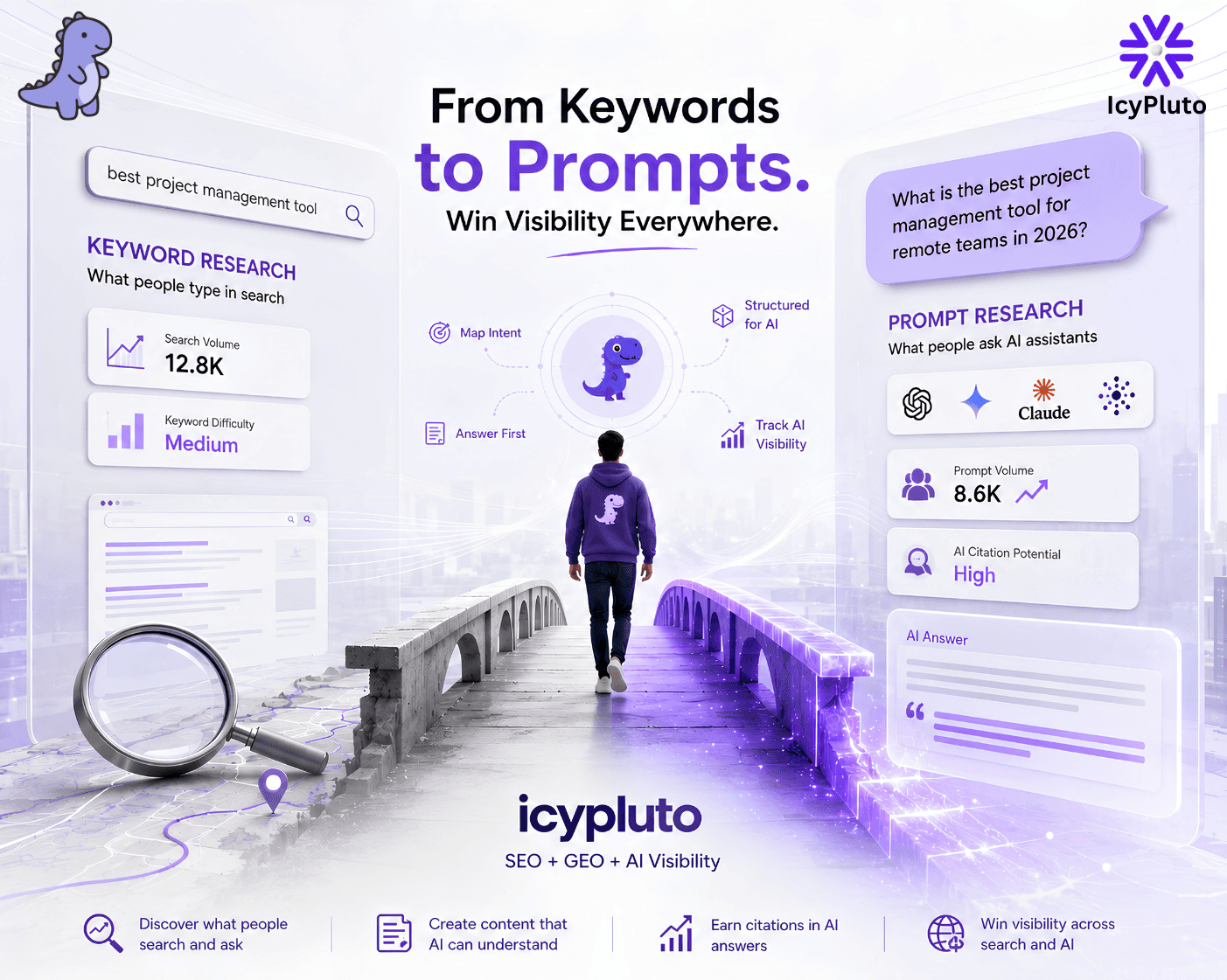
This blog explains how keyword research must now b...
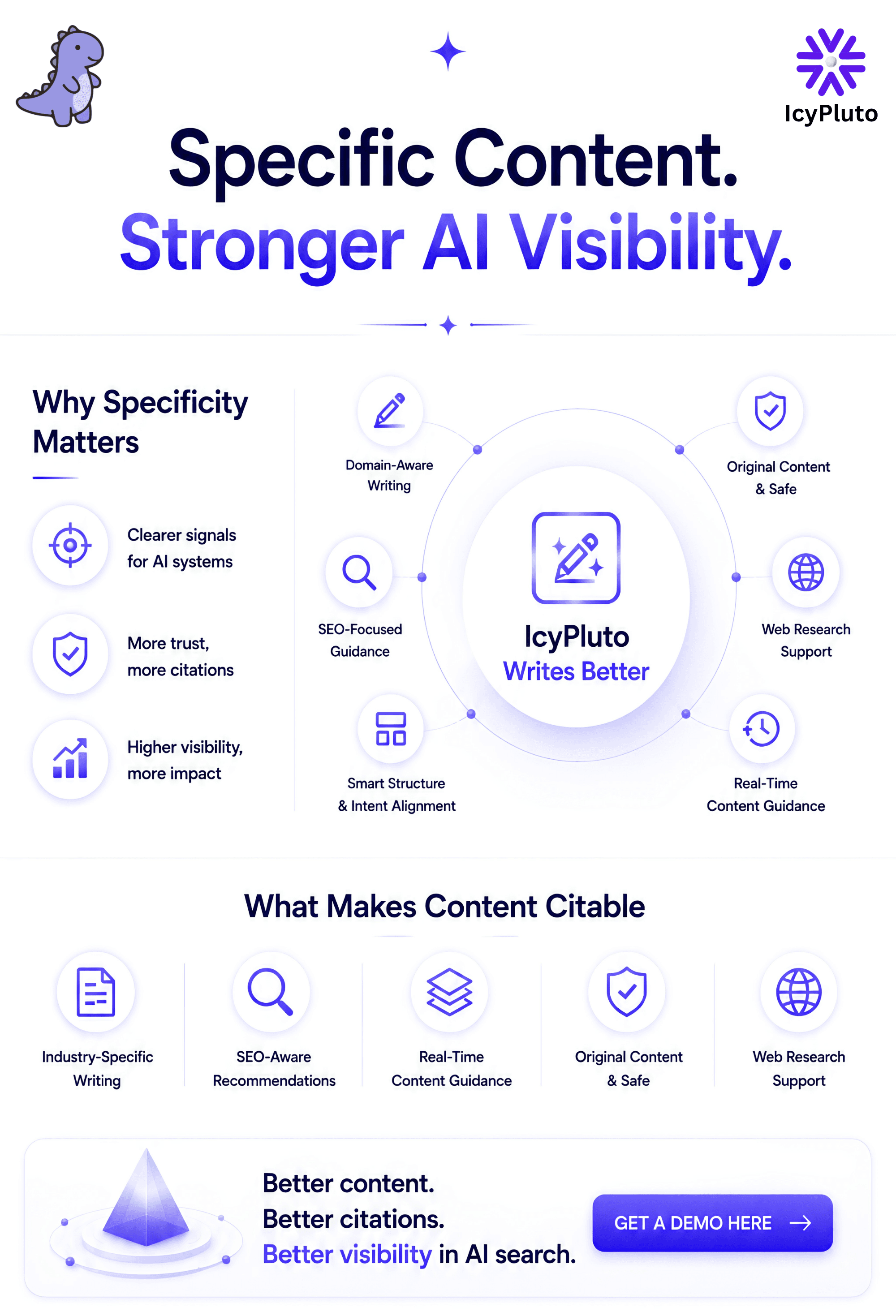
AI SEO writing is getting more specific, and that ...
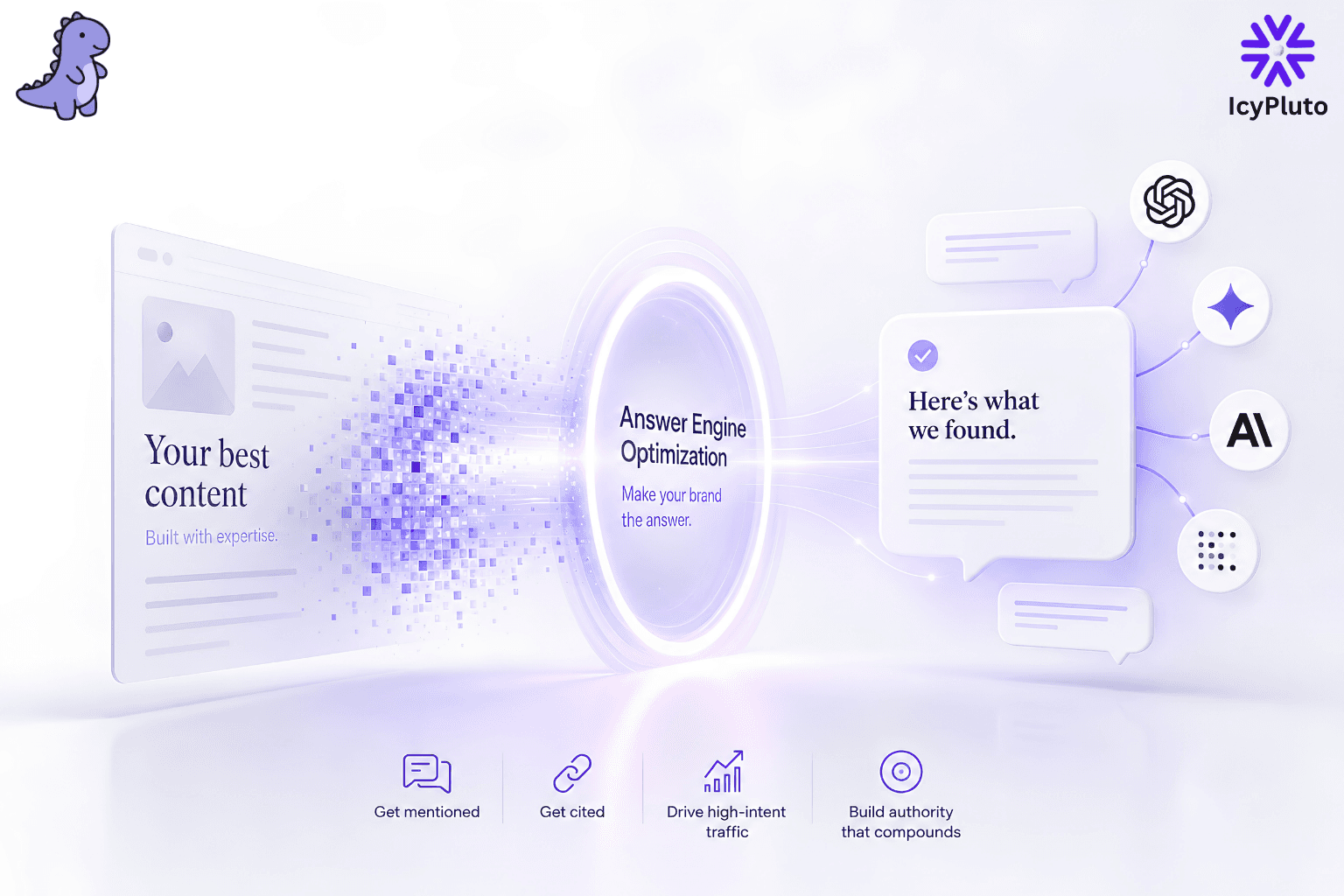
This blog breaks down why Answer Engine Optimizati...
In the rush to embrace artificial intelligence for content creation and SEO, something unexpected is happening. Many brands are starting to sound exactly like their competitors. What was meant to be a powerful efficiency tool is quietly turning into a uniformity machine.
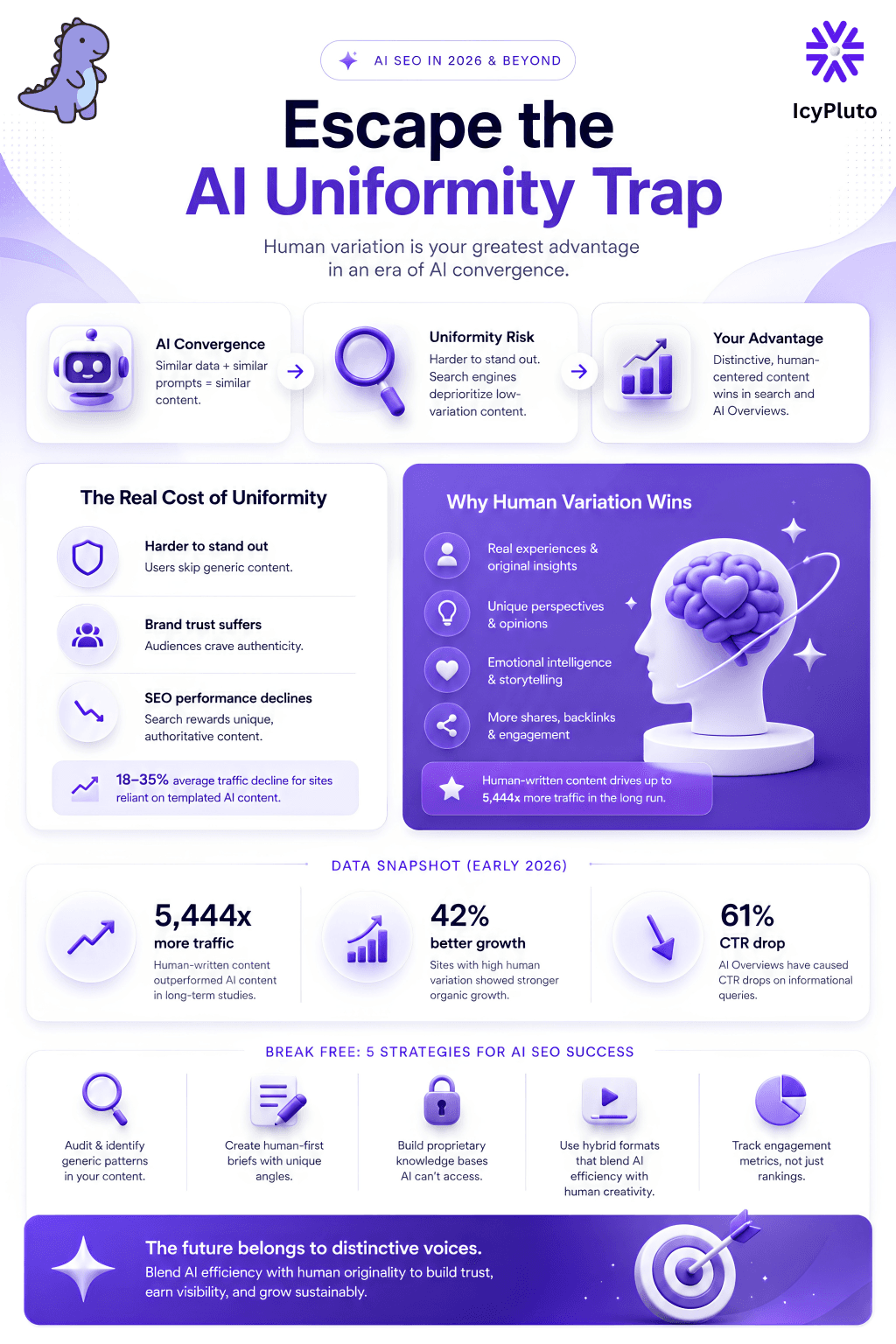
At Icypluto, we have been observing this trend closely. AI convergence - the tendency for different AI systems to produce increasingly similar outputs - is creating what we call the AI Uniformity Trap. Brands that lean too heavily on generic AI-generated content risk losing their unique voice and competitive edge in search results.
Today we explore why this is happening, what it means for AI SEO in 2026 and beyond, and how smart marketers can break free from the trap by embracing human variation and distinctive content strategies.
AI convergence refers to the phenomenon where large language models trained on similar datasets begin to generate content that feels increasingly alike. When hundreds of brands use comparable prompts and tools, the output starts to blend together.
This creates a challenging situation for modern SEO strategy. Search engines are becoming better at recognizing patterns of low-variation content. What once ranked well because it was fast and optimized now risks being deprioritized in favor of more distinctive, authoritative material.
The problem is not AI itself. The issue arises when AI is used as a shortcut rather than a thoughtful assistant. Many teams have fallen into the habit of generating bulk content with minimal human input, resulting in articles that feel interchangeable.
When your content sounds like everyone else's, several problems emerge in the current AI search landscape. First, it becomes harder to stand out in both traditional search and AI Overviews. Users quickly scroll past generic information in favor of sources that offer fresh perspectives or deeper insights.
Second, brand trust suffers. Audiences can sense when content lacks authenticity. In an era where people are increasingly skeptical of AI-generated material, genuine human voice becomes a powerful differentiator.
Third, long-term SEO performance takes a hit. Search algorithms are evolving to reward experience, expertise, authoritativeness, and trustworthiness (E-E-A-T). Content that lacks unique human elements struggles to demonstrate these qualities effectively.
Industry data from early 2026 highlights the growing challenge. According to multiple studies, websites heavily reliant on templated AI content have seen average organic traffic declines of 18-35% in competitive niches. Gartner has projected a 25% decline in traditional search engine volume by the end of 2026 due to AI-powered tools and zero-click searches.
In a world of converging AI outputs, human variation is the ultimate competitive moat in AI SEO. This includes unique personal experiences, contrarian viewpoints, original research, cultural nuance, and emotional intelligence that machines simply cannot replicate consistently.
Human-created content often contains subtle storytelling elements, humor, regional context, and creative leaps that make it memorable. These qualities help content earn shares, backlinks, and sustained engagement - all of which strengthen SEO signals.
Recent studies support this. Neil Patel's analysis of nearly 800 articles found that human-written content drew 5,444 times more traffic than purely AI-produced content over time. Other research shows human-authored pages consistently rank higher and maintain positions longer than AI-generated ones.
So how can you protect your SEO strategy from AI convergence?
Start by treating AI as a research and drafting partner rather than the final author. Use it to gather information quickly and generate outlines, but always have humans add original analysis, case studies, and personal insights.
Focus on creating content pillars built around your team's unique expertise. Share real behind-the-scenes stories, original data from your industry, and thoughtful opinions that challenge conventional thinking.
Invest in multimedia content such as original videos, podcasts, and infographics that showcase human personality. These formats are much harder for AI to replicate authentically.
Build stronger author authority by highlighting real people behind your content. Detailed author bios, consistent bylines, and linked social profiles help establish E-E-A-T signals that AI-generated content often lacks.
At Icypluto, we have developed a systematic approach to identify and reduce content uniformity while amplifying human variation.
We begin with AI Uniformity Audits that analyze large batches of content for repetitive sentence structures, predictable vocabulary patterns, and similar idea flows. Using advanced linguistic analysis, we measure "distinctiveness scores" across content libraries.
We also track AI citation patterns in major AI platforms to see how often our clients' content is being referenced versus generic outputs. This helps us understand real visibility gaps caused by uniformity.
To enhance human variation, we work with clients to:
Inject original research, proprietary data, and real-world case studies
Incorporate personal stories, team insights, and contrarian opinions
Develop unique content frameworks and brand-specific storytelling styles
Create hybrid workflows where AI handles research while humans focus on insight and creativity
This combination of detection and deliberate human enhancement has helped our clients achieve significantly higher engagement and better long-term SEO performance.
Here are some actionable approaches we recommend at Icypluto for avoiding the AI Uniformity Trap:
Conduct regular content audits to identify generic patterns in your library.
Develop a human-first content brief template that emphasizes unique angles and original insights.
Create internal knowledge bases with proprietary insights that AI cannot access.
Experiment with hybrid content formats that combine AI efficiency with human creativity.
Track not just rankings but also engagement metrics like time on page, share rates, and AI citation frequency.
Data Snapshot (Early 2026):
Human-written content outperformed AI content by a massive margin, generating up to 5,444 times more traffic in long-term studies (Neil Patel).
Sites with high human variation showed 42% better organic growth compared to high-AI uniformity sites.
AI Overviews have caused organic CTR drops of up to 61% on informational queries.
As AI tools become more accessible, the real differentiator will not be who can generate content fastest. It will be who can infuse their content with genuine humanity while maintaining strong AI SEO practices.
This shift represents both a challenge and a tremendous opportunity. Brands willing to invest in authentic storytelling and original thinking will stand out dramatically in an increasingly homogenized digital landscape.
At Icypluto, we have made human variation a core part of our content philosophy. We use AI to enhance our process for research, outlining, and efficiency, but we never allow it to replace the unique perspectives our team brings to every piece.
We believe the brands that thrive in the coming years will be those that double down on what makes them human. This means celebrating individual voices, sharing real experiences, and creating content that reflects genuine care for the audience.
The AI Uniformity Trap is real, but it is also avoidable. By choosing authenticity over automation at scale, you can build a sustainable SEO strategy that AI convergence cannot easily erode.
The future of search marketing belongs to those brave enough to sound different - and those smart enough to combine human creativity with intelligent AI assistance.