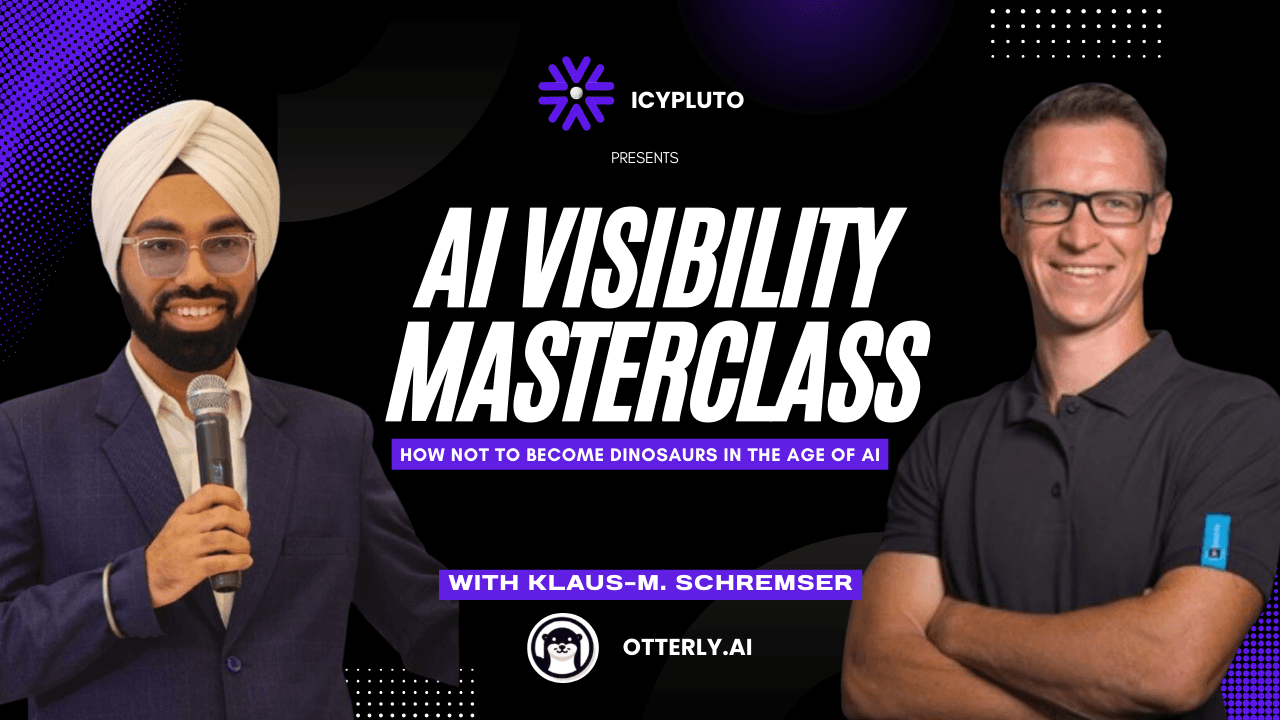
The rules of discovery are changing.
For years, brands fought for rankings on search engines.
Now, the real battle is to appear inside AI-generated answers.
As AI platforms reshape how people search, ask questions, and make decisions, brand visibility is shifting from links to intelligence.
Join us for an exclusive Masterclass by IcyPluto × OtterlyAI, where we break down what actually drives visibility in the AI-first internet, and what’s simply noise.
🎙 Klaus-M. Schremser in conversation with Harneet Singh
💡 Actionable insights on AI discoverability, AI search visibility & future-ready marketing strategies
🚀 Designed for leaders who want to stay relevant as search evolves
Because in the AI era, being visible means being part of the answer.
- •
AI Is Rewriting Discovery: The internet is shifting from traditional search results to AI-generated answers, making visibility inside AI platforms the new battleground for brand discovery.
- •
SEO Is Expanding into GEO: Search optimization is evolving into Generative Engine Optimization, where success depends on being cited and referenced by AI engines, not just ranking webpages.
- •
Brand Visibility Matters More Than URLs: AI systems prioritize entities and brand mentions across the web, meaning reputation, media coverage, and trusted references influence visibility more than individual page rankings.
- •
Prompt Research Is the New Keyword Research: Instead of focusing only on keywords, brands must analyze real user prompts and questions asked in AI tools to understand discovery patterns.
- •
Off-Page Authority Drives AI Citations: Digital PR, media coverage, Wikipedia presence, and discussions on platforms like Reddit significantly increase the chances of being cited in AI responses.
- •
Top-of-Funnel Content Is Losing Traffic: Informational queries are increasingly answered directly by AI, reducing website clicks and pushing brands to focus more on mid-funnel and decision-stage content.
- •
Structured, Data-Rich Content Wins: AI models prefer content that includes statistics, references, comparisons, and clearly structured answers rather than generic marketing copy.
- •
Listicles and Comparison Content Perform Well: Pages like “Top Tools,” “Best Platforms,” and “X vs Y comparisons” often get cited because they contain multiple entities and structured insights.
- •
Semantic Content Beats Keyword Stuffing: AI analyzes meaning and context, so content must answer specific user questions and provide dense, relevant information rather than relying on keyword placement.
- •
Organic Visibility Is the New Goal: Success in the AI era means optimizing for visibility everywhere—search engines, AI assistants, media mentions, and knowledge sources—rather than focusing only on Google rankings.
- •
Early Movers Will Win: The next few years will define digital visibility, and brands that start experimenting with AI-driven discovery, GEO strategies, and AI monitoring now will build a lasting competitive advantage.