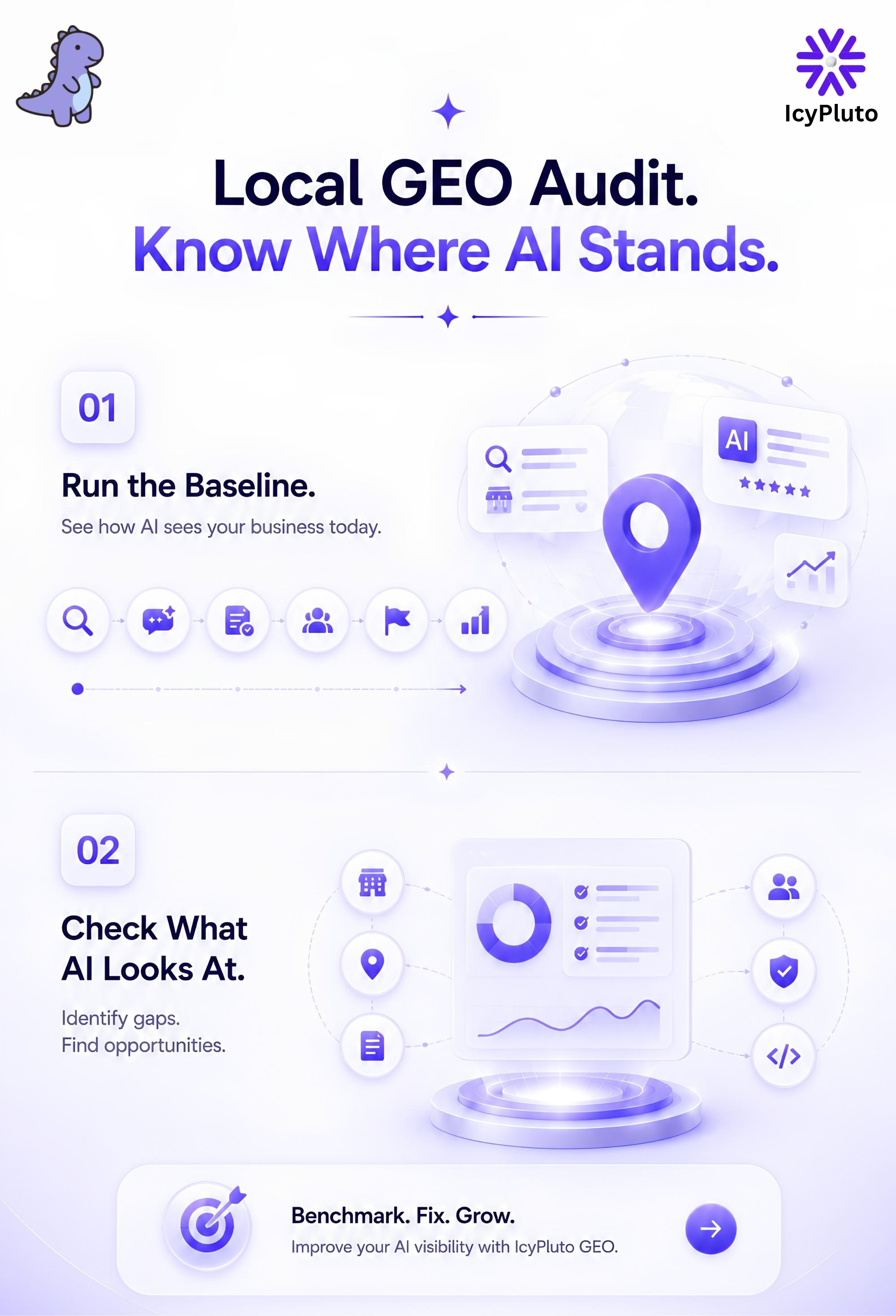
A local GEO baseline audit helps you understand ho...
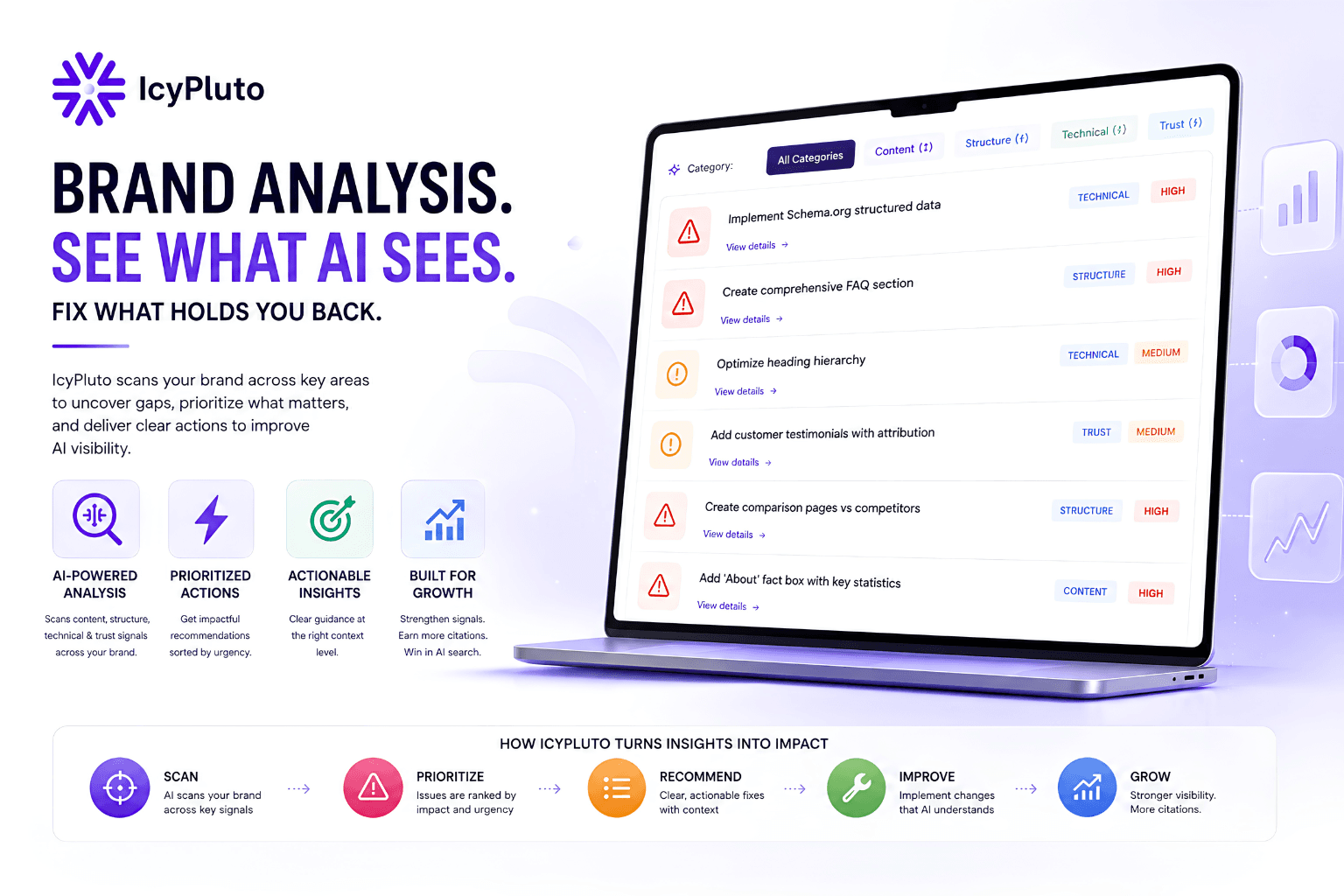
This blog explains why brands are losing visibilit...
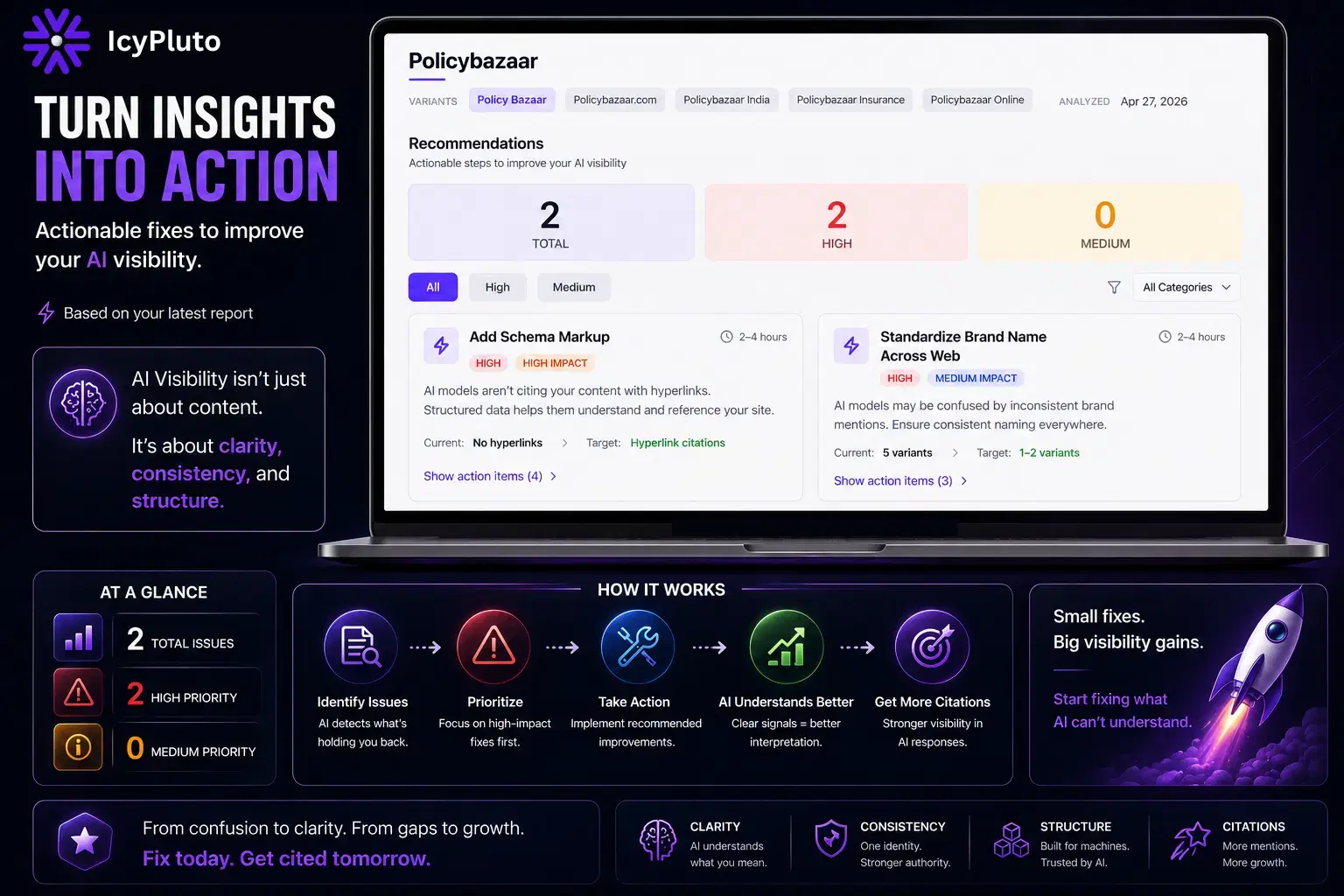
This blog explores how IcyPluto’s Action Feature h...
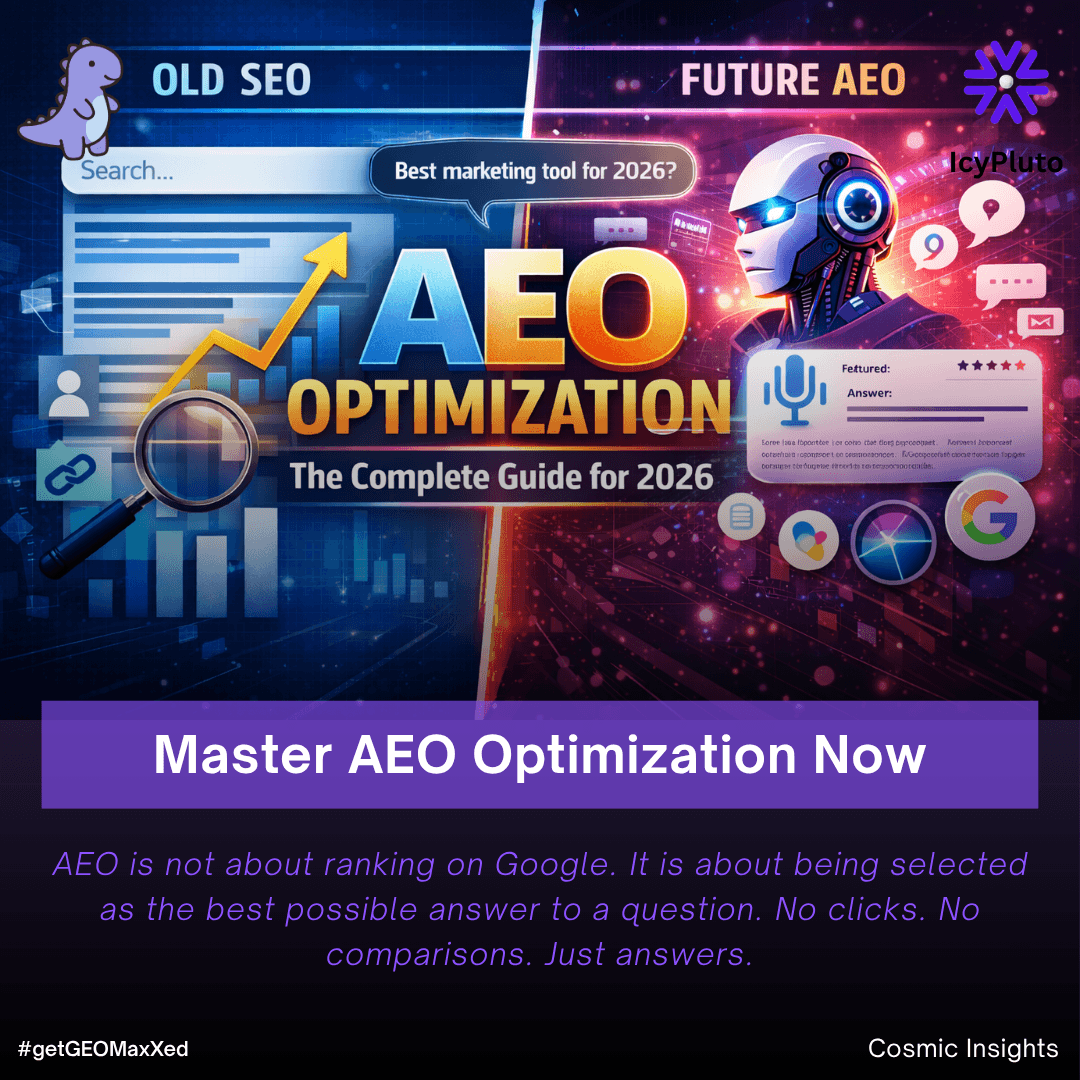
Search is no longer about searching. It is about getting answers.
For years, users interacted with search engines by scanning links, comparing sources, and clicking through websites. Today, that behavior is rapidly disappearing. Users now expect direct, precise answers delivered instantly by AI systems.
Platforms like ChatGPT, Google AI Overviews, and voice assistants are redefining how information is consumed. Instead of asking “where can I find this,” users are asking “just tell me the answer.”
This shift has given rise to Answer Engine Optimization, or AEO.
AEO is not just another marketing term. It represents a fundamental change in how content is discovered, consumed, and trusted in an AI-first world.
Answer Engine Optimization, or AEO, is the process of structuring and optimizing content so that it is directly selected and delivered as an answer by search engines and AI systems.
Unlike traditional SEO, which focuses on ranking pages, AEO focuses on providing the best possible answer to a specific query.
When a user asks a question, answer engines do not display ten blue links. They extract the most relevant, clear, and trustworthy response and present it immediately. AEO ensures that your content is the response.
The goal is simple. Not just to be found, but to be chosen.
Answer engines rely on advanced AI models that understand intent, context, and language at a deeper level than traditional search engines.
When a user submits a query, the system analyzes the meaning behind the question rather than just matching keywords. It then retrieves relevant content, evaluates its clarity and credibility, and selects the best possible answer.
Several factors influence this selection:
Directness of the answer
Clarity of language
Content structure and formatting
Authority of the source
Relevance to user intent
Content that is vague, overly complex, or buried under unnecessary information is less likely to be selected. Answer engines prioritize content that is easy to extract and present instantly.
AEO and GEO are closely related, but they serve different purposes within the same ecosystem.
AEO focuses on answering a specific question clearly and directly. GEO focuses on ensuring your brand is included in broader AI-generated responses.
AEO is about precision. GEO is about presence.
In AEO, the goal is to provide a single, definitive answer. In GEO, the goal is to be cited across multiple answers and contexts.
AEO works at the micro level, optimizing individual responses. GEO works at the macro level, building overall authority and visibility in AI systems.
Together, they form a complete strategy for AI-driven discovery.
The rise of answer engines is not a future trend. It is already shaping how users interact with information. A growing number of searches are now resolved without any clicks because users receive immediate answers. Voice search, mobile assistants, and AI chat interfaces are accelerating this behavior.
For brands, this creates a critical shift.
If your content is not optimized for AEO, you are not part of the answer. And if you are not part of the answer, you lose visibility at the most important moment of user intent.
AEO also impacts trust and conversion. When users receive a direct answer from a trusted source, they are more likely to engage, remember, and act on that information.
In a competitive landscape, being the chosen answer is far more powerful than being one of many options.
Optimizing for AEO requires a different approach than traditional SEO. The focus is on clarity, structure, and intent.
Start by identifying the exact questions your audience is asking. Your content should provide clear, concise answers without unnecessary buildup.
The best AEO content delivers value immediately.
Structure your content around real user queries. Headings should reflect how people naturally ask questions.
This improves both readability and answer engine extraction.
Answer engines prefer responses that are short enough to present quickly but detailed enough to be useful.
Avoid long-winded explanations. Focus on delivering precise information.
Well-structured content increases your chances of being selected.
Best practices include:
Clear headings
Logical flow
Short paragraphs
Defined sections
This makes it easier for AI systems to identify and extract key information.
Schema markup plays a crucial role in AEO.
Implement:
FAQ schema
How-to schema
Article schema
This helps search engines understand your content and improves your chances of appearing in featured snippets and AI responses.
Answer engines prioritize credible sources. Consistently publishing accurate, high-quality content builds trust over time.
Authority signals include:
Expertise in a specific domain
Consistent publishing
Reliable and factual information
AEO and voice search are closely connected. Voice queries are conversational and question-based. Optimizing for natural language improves your chances of being selected as a spoken answer.
A successful AEO strategy begins with understanding user intent. Start by mapping out the most common questions in your niche. Create dedicated content that answers each question clearly and directly. Next, organize your content into clusters. Each cluster should focus on a specific topic and include multiple related questions and answers. Then, enhance your content with structured data and ensure it is easy to read and extract.
Finally, monitor performance by tracking featured snippets, answer box appearances, and AI response visibility.
One of the biggest mistakes is overcomplicating answers. If your content does not provide immediate clarity, it will not be selected.
Another mistake is focusing only on keywords instead of intent. Answer engines prioritize meaning over keyword density.
Ignoring structure is also a major issue. Poorly organized content is difficult for AI systems to interpret.
Consistency matters as well. AEO is not achieved through a single piece of content. It requires ongoing effort and refinement.
Answer engines will continue to evolve as AI advances. Future systems will provide even more personalized, context-aware responses. As this happens, the importance of clarity, authority, and structured content will only increase.
Brands that invest in AEO today will be better positioned to adapt to future changes in search behavior.
Answer Engine Optimization is redefining how content is discovered and consumed.
The shift from searching to answering is already underway, and brands must adapt to remain visible. AEO ensures that your content is not just present, but selected as the best possible answer.
In a world where users expect instant clarity, the brands that succeed will be the ones that deliver it.