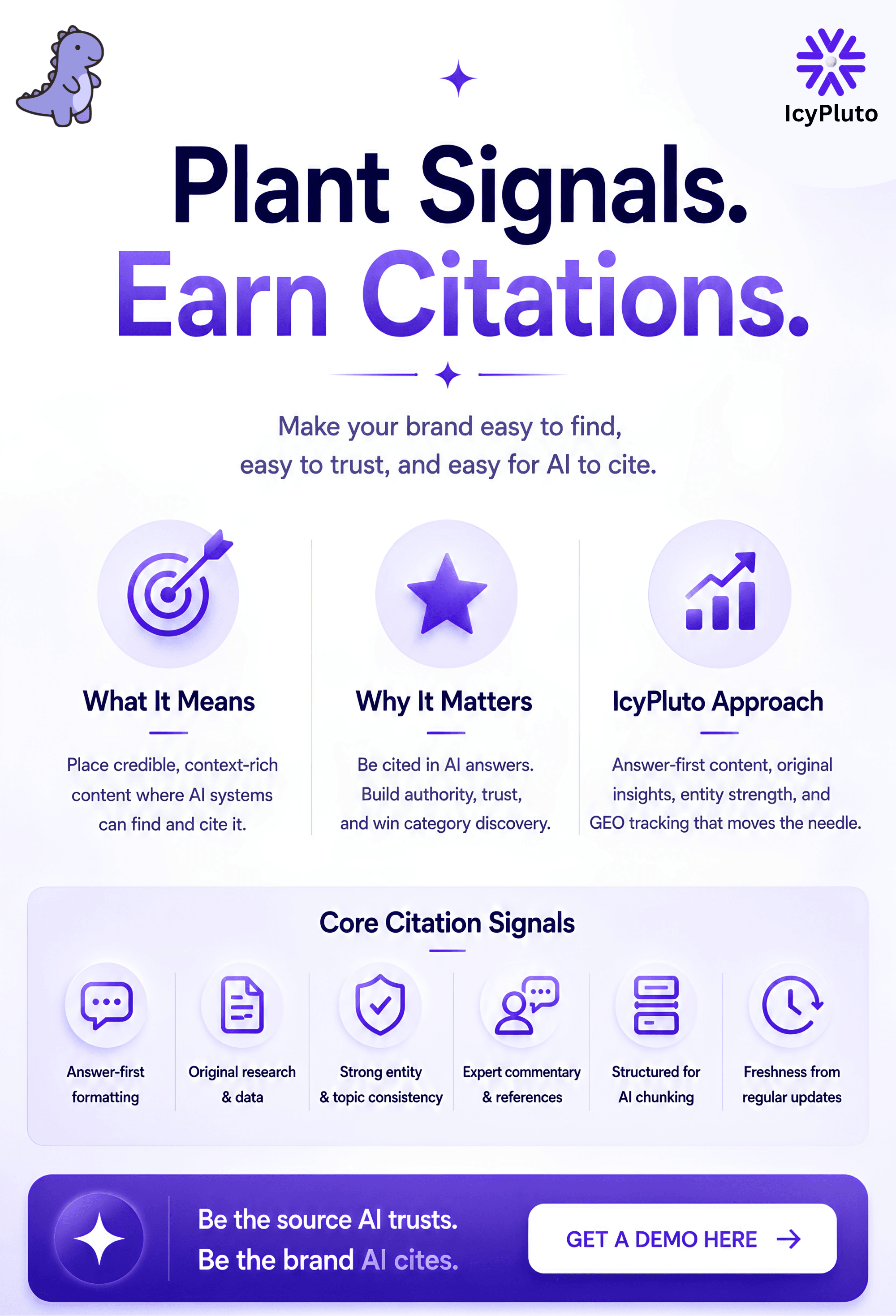
Citation seeding is becoming one of the fastest wa...

This blog explains how keyword research must now b...
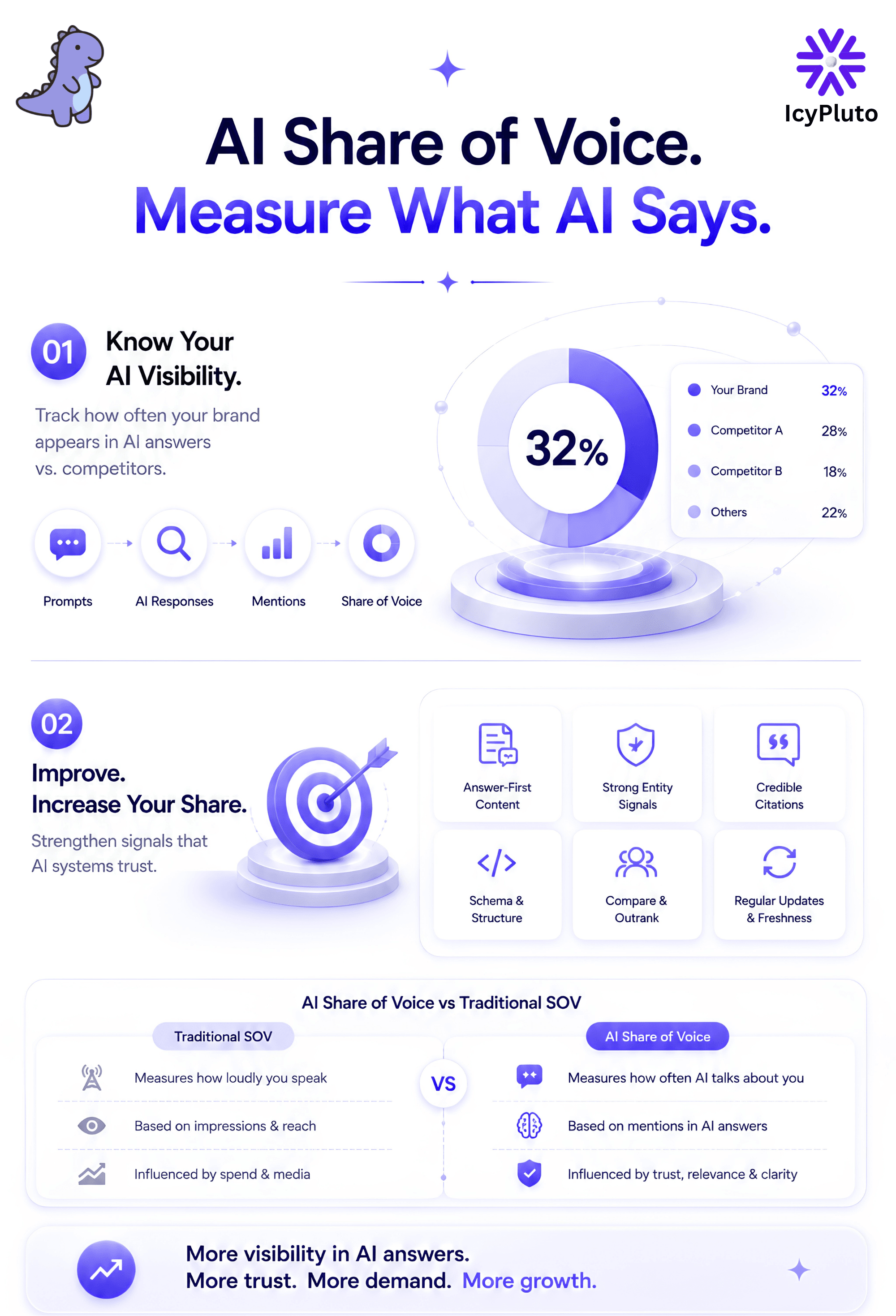
AI share of voice is the new visibility metric bra...
Using intelligence to create content will not damage your search engine optimization. Google evaluates content based on its quality and usefulness to readers, not the method used to produce it. Google has consistently stated this position.
The confusion arises because artificial intelligence and poor content often get mixed up. The actual problem has never been about automated content generation itself. Google penalizes the types of content it has always targeted: shallow, unhelpful, and spam-filled material. The difference is that artificial intelligence tools make producing low-quality content at scale significantly easier. This distinction is crucial to understand.
Long before artificial intelligence writing tools emerged, Google addressed " generated content" in its guidelines. However, Google never penalized content simply because machines created it.
Consider Wise's currency conversion directory as an example. These pages are programmatically generated. They continue to thrive in organic search results without facing penalties. Why? Because they provide value and aren't spam despite being automated.
Google's official guidance on intelligence content reinforces this approach. Google says that using automated tools, including intelligence, becomes problematic only when the primary intent is to manipulate search rankings. When artificial intelligence or automation serves purposes rather than gaming the system, it does not violate Google's policies.
This focus makes sense. Artificial intelligence has driven advances in scientific and medical research. It would be illogical to prohibit the technology from assisting with documentation and communication.
Research conducted on 100,000 selected keywords revealed striking findings. Among the top 20 pages, only 13.5% were purely human-written. The vast majority, 81.9%, incorporated intelligence assistance to some degree, while 4.6% were entirely artificial intelligence-generated. Within that, 81.9% most pages showed moderate to heavy intelligence involvement.
Many content creators already incorporate intelligence into their writing processes. Experimental articles with over 90% intelligence generation have consistently ranked on the first page of search results, demonstrating that search engines do not discriminate against artificial intelligence-assisted content.
Competitive analysis tools can reveal how much artificial intelligence content competitors are using in their performing pages, allowing you to benchmark your approach against successful examples in your industry.
It would be remarkably hypocritical for Google to penalize artificial intelligence-generated content while being one of the web's largest artificial intelligence content producers.
Consider these facts:
- Artificial Intelligence Overviews extract information from sources and rewrite answers using Gemini, appearing on over 20% of search results.
- Artificial Intelligence Mode creates complete conversational responses for users.
- Google has used artificial intelligence to rewrite title tags and meta descriptions in search results for years.
- Gemini generates on-demand content for millions of daily users.
Recent patents even suggest Google may replace landing pages with artificial intelligence-generated content tailored to individual users, particularly for shopping and advertising.
Every modern writing platform now includes built-in artificial intelligence features, such as Google Docs, Gmail, Notion, and Grammarly, among others. The distinction between " intelligence content" and "artificial intelligence-assisted content" has essentially vanished.
Recent surveys show that 87% of content marketers use intelligence in their content creation process. Given the advancement of artificial intelligence tools since that survey, the actual percentage is likely closer to 95% today. Many content creators may not even realize artificial intelligence is embedded somewhere in their workflow.
Artificial intelligence-generated content is already widespread and growing daily. This is simply how content production works. Penalizing it would mean ignoring most of the web and potentially freezing the internet in a 2025 or 2026 state.
This is not just publishers looking for shortcuts. Even the major brands that Google once promoted as the "solution" to quality content are increasingly running on intelligence-generated material.
When competitors use intelligence to produce more content faster, optimized for both traditional search and artificial intelligence citations, avoiding artificial intelligence is not maintaining ethical standards it is falling behind. Once one market participant escalates, others must match the pace. Lose ground. Yet even brands adopting intelligence are not necessarily pulling ahead; they are simply running hard to maintain their current position.
Judging content quality based on whether a human or artificial intelligence wrote it misses the point entirely. What truly matters is whether the content serves its purpose.
Consider instructions for opening a door. Both a human and an artificial intelligence would provide instructions: grasp the handle, turn it, and push or pull. There is no human element that improves these directions. The instructions help readers accomplish the task, or they do not.
When someone follows a tutorial for setting up Google Analytics, they do not wonder about the author's species; they care whether it solves their problem.
Evaluated on effectiveness, human content frequently fails. Countless human-written pages are thin, outdated, useless, or poorly written. Content farms once employed thousands of people to produce millions of such low-quality pages, prompting Google to create the Panda algorithm update specifically to address this problem.
Google acknowledged this reality in its intelligence content guidance. A decade ago, legitimate concerns arose about mass-produced human-generated content. Nobody would have considered it reasonable to ban all human-generated content in response.
Modern artificial intelligence models consistently produce content at an 8 out of 10 quality level. Human content ranges from 2 to 10. This consistency explains why artificial intelligence writing tools gained rapid adoption in business contexts.
Even if Google wanted to penalize intelligent content, reliable detection presents significant obstacles for three reasons:
Artificial intelligence detectors function as statistical models rather than definitive scanners. They provide probability scores, never verdicts, and produce notable false-positive rates.
Artificial intelligence-generated text can be "humanized" through editing, which disrupts any patterns.
Tools like Grammarly modify text in detectable ways, meaning virtually all edited writing now carries some artificial intelligence signature.
However, artificial intelligence detectors serve purposes in competitive research. They can reveal how much artificial intelligence content competitors publish, which models they use, and how that content performs in search results.
Google has issued penalties under its "scaled content abuse" policy, and some cases involved heavy artificial intelligence use. However, examining the details reveals a pattern: artificial intelligence use alone was not the problem.
Recent examples show sites penalized for using intelligence to fabricate human writers, fake bylines, fake biographies, and fake credentials. These were deception penalties, not intelligence penalties.
Other documented cases involve sites publishing intelligence content so rapidly that meaningful human review was clearly impossible, violating Google's Scaled Content Abuse policy. The pattern remains consistent: rapid rises followed by declines stemming from abuse rather than artificial intelligence use itself.