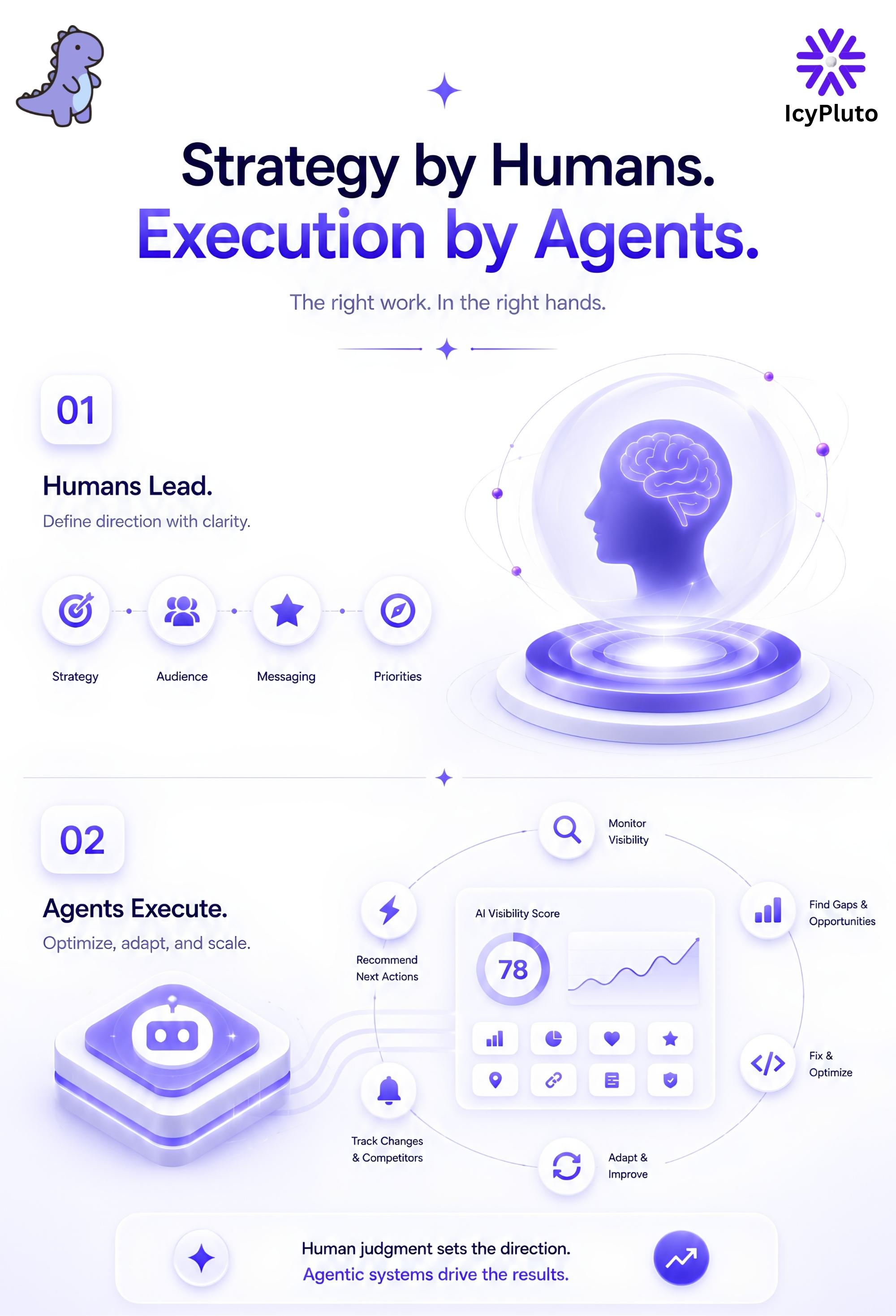
This blog explains how modern marketing teams can ...
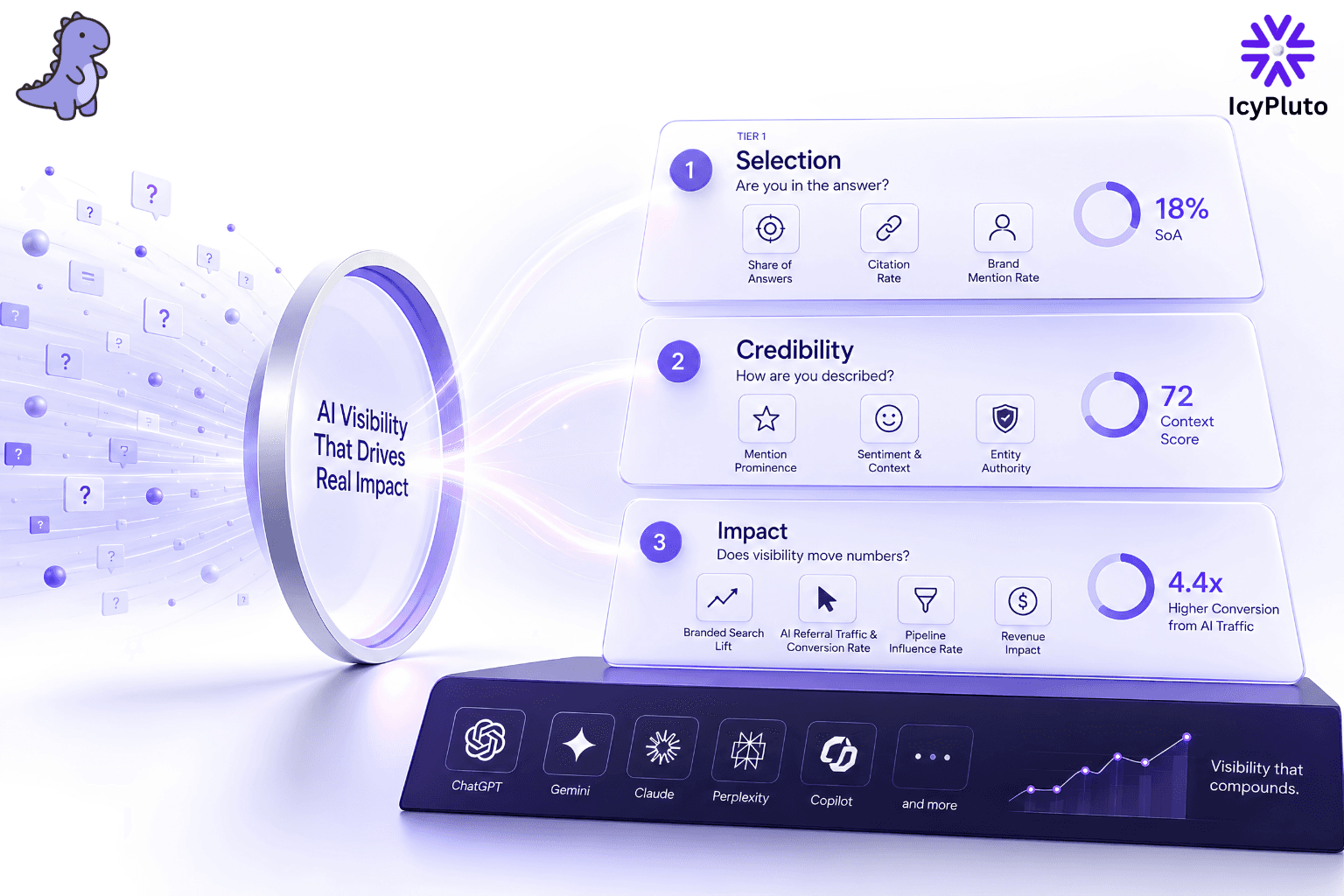
AI search has turned visibility into a numbers gam...
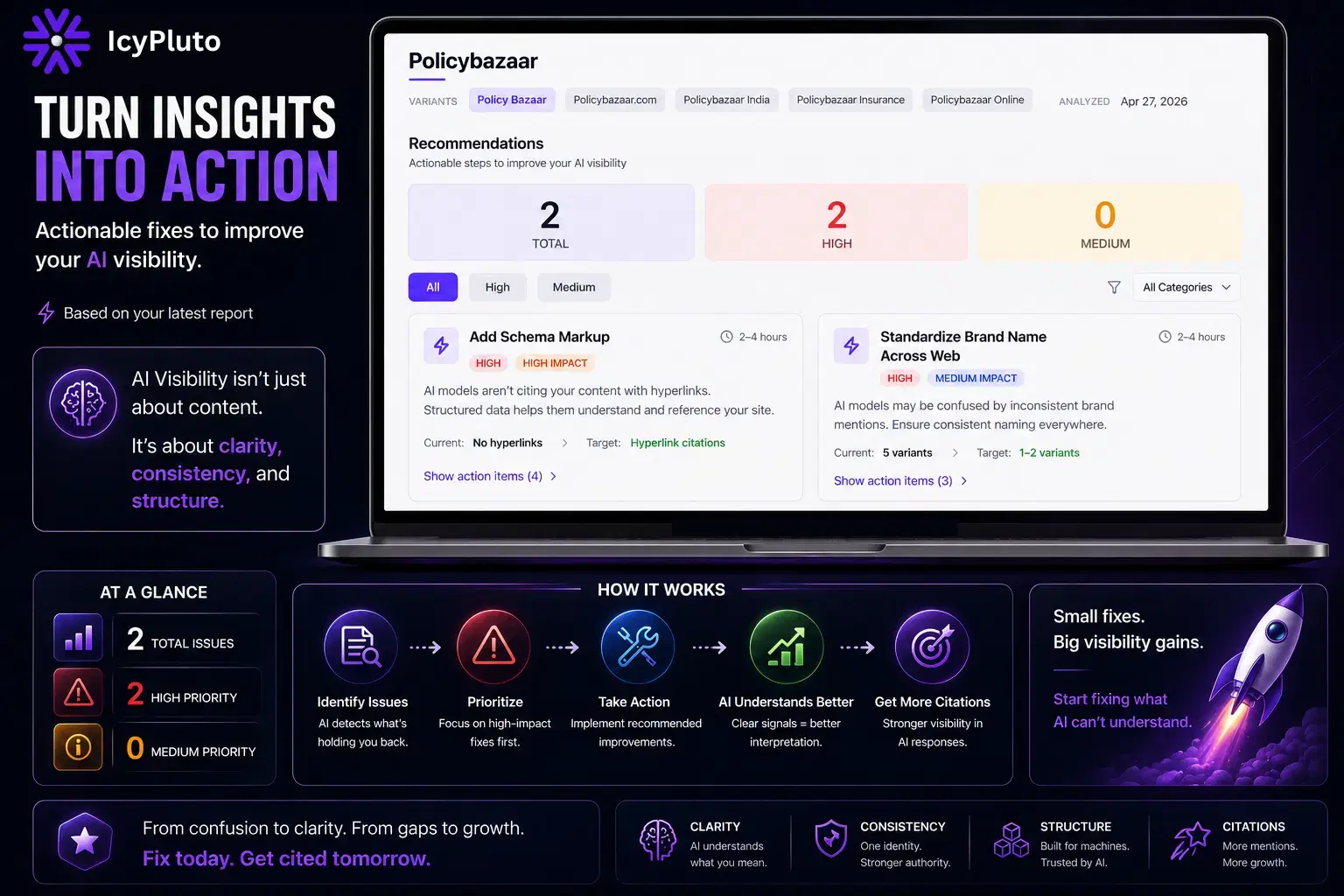
This blog explores how IcyPluto’s Action Feature h...

The SEO industry has long operated on a foundational belief: quality content wins. But with the rise of AI-driven search systems like those developed by Google and OpenAI, this assumption is being rigorously tested. The reality is more nuanced than most marketers are willing to admit.
Recent analyses and industry observations suggest that AI does not inherently “reward” quality in the human sense. Instead, it rewards patterns that statistically correlate with usefulness, engagement, and relevance. According to multiple SEO studies, including data referenced by Search Engine Journal, over 68% of high-ranking AI-generated summaries prioritize content that is structurally clear and contextually aligned rather than deeply original or insightful.
This creates a paradox. Content that is genuinely insightful but poorly structured may underperform, while content that is optimized for AI readability, even if less original, can outperform competitors. The implication is clear: quality alone is no longer the differentiator. Alignment with AI interpretation is.
AI systems do not “read” content the way humans do. Models like those powering Google’s Search Generative Experience and OpenAI’s GPT systems rely heavily on probabilistic pattern recognition. This means they assess content based on how well it matches known high-performing structures and language patterns.
Research indicates that AI-driven search systems weigh semantic relevance and contextual completeness up to 40% more heavily than traditional keyword density. This shift has redefined what optimization looks like. It is no longer about inserting keywords, but about building topical authority across interconnected ideas.
For instance, content that includes semantically related terms, contextual depth, and clear hierarchical structure tends to perform significantly better. A study by industry analysts found that pages with strong semantic clustering saw a 32% higher likelihood of being featured in AI-generated summaries.
This is where many brands fail. They focus on surface-level optimization rather than building comprehensive topical ecosystems.
Google’s E-E-A-T framework, Experience, Expertise, Authoritativeness, and Trustworthiness, remains central, but its interpretation has evolved. AI systems now infer these signals rather than explicitly identifying them.
For example, mentions of recognized entities such as Sundar Pichai or authoritative organizations increase perceived credibility. Similarly, content that demonstrates real-world experience through examples or case studies tends to perform better in AI-driven results.
Data suggests that content aligned with E-E-A-T principles sees up to a 45% increase in visibility in AI-powered search features. However, this is not because AI “understands” expertise in a human sense. Instead, it identifies patterns commonly associated with credible content, such as citations, structured arguments, and consistent terminology.
This subtle distinction is critical. You are not writing for human judgment alone. You are writing for machine interpretation of credibility.
Google’s Helpful Content System was designed to prioritize content created for users rather than search engines. However, the rise of AI has complicated this objective.
Paradoxically, some highly helpful content fails to rank because it lacks the structural signals AI systems rely on. Long-form insights without clear headings, fragmented narratives, or inconsistent keyword usage often struggle despite being valuable.
Data from recent SEO performance studies shows that content optimized for readability and structure can outperform purely “helpful” content by up to 27% in AI-driven search environments.
This reveals a critical insight. Helpfulness must be packaged in a way that AI can interpret. Without this, even the best content risks invisibility.
One of the most significant shifts in SEO is the emergence of AI-first content structuring. This involves designing content specifically to align with how AI models parse and summarize information.
High-performing content increasingly follows predictable patterns:
Clear H2 and H3 hierarchies
Concise, information-dense paragraphs
Strategic repetition of key entities and concepts
Contextual reinforcement of primary topics
Studies indicate that content following these patterns has a 35% higher chance of being included in AI-generated answers.
This does not mean content should be robotic. It means structure is now a competitive advantage. The brands that understand this are dominating search visibility.
Modern SEO is shifting from keywords to entities. AI systems rely heavily on entity recognition to understand context and authority.
Mentioning relevant companies and individuals such as Microsoft, Google DeepMind, or Sam Altman helps reinforce topical relevance and credibility.
In fact, entity-rich content has been shown to improve AI visibility by up to 38%. This is because entities act as anchors that help AI systems map content within a broader knowledge graph.
However, these mentions must be natural and contextually relevant. Forced inclusion can dilute content quality and reduce trust signals.
One of the most debated topics in SEO today is whether AI rewards originality. The answer is complicated.
AI models are inherently trained on existing data. This means they tend to favor patterns that resemble known successful content. As a result, highly unconventional or radically original content may not perform as well unless it is supported by familiar structures.
Data suggests that content blending originality with established patterns performs best. Purely original content without recognizable structure sees up to 22% lower visibility in AI-driven results.
This creates a strategic challenge. Marketers must innovate within boundaries rather than outside them.
Comprehensiveness has emerged as a critical ranking factor in the AI era. AI systems prioritize content that fully addresses a topic rather than partially covering it.
According to industry benchmarks, pages that cover a topic in depth, including related subtopics, examples, and contextual explanations, are 2.3 times more likely to be featured in AI summaries.
This is why thin content strategies are rapidly becoming obsolete. AI favors depth, not volume.
However, comprehensiveness must be balanced with clarity. Overly dense content without structure can negatively impact performance.
The implications for SEO are profound. The traditional playbook is no longer sufficient.
Successful strategies now require:
Deep topical authority rather than isolated articles
Entity-driven optimization instead of keyword stuffing
AI-friendly structure combined with human insight
Data-backed arguments and contextual relevance
Brands that fail to adapt risk losing visibility, even if their content is objectively high quality.
On the other hand, those who align with AI interpretation models are seeing exponential gains in organic reach.
AI is no longer just a tool. It is becoming the primary gatekeeper of information.
As systems developed by companies like Google, OpenAI, and Microsoft continue to evolve, the definition of “quality content” will increasingly be shaped by machine interpretation.
This does not mean creativity is dead. It means creativity must be strategically aligned with how AI understands and prioritizes information.
The future belongs to content that is both human-centric and machine-readable.