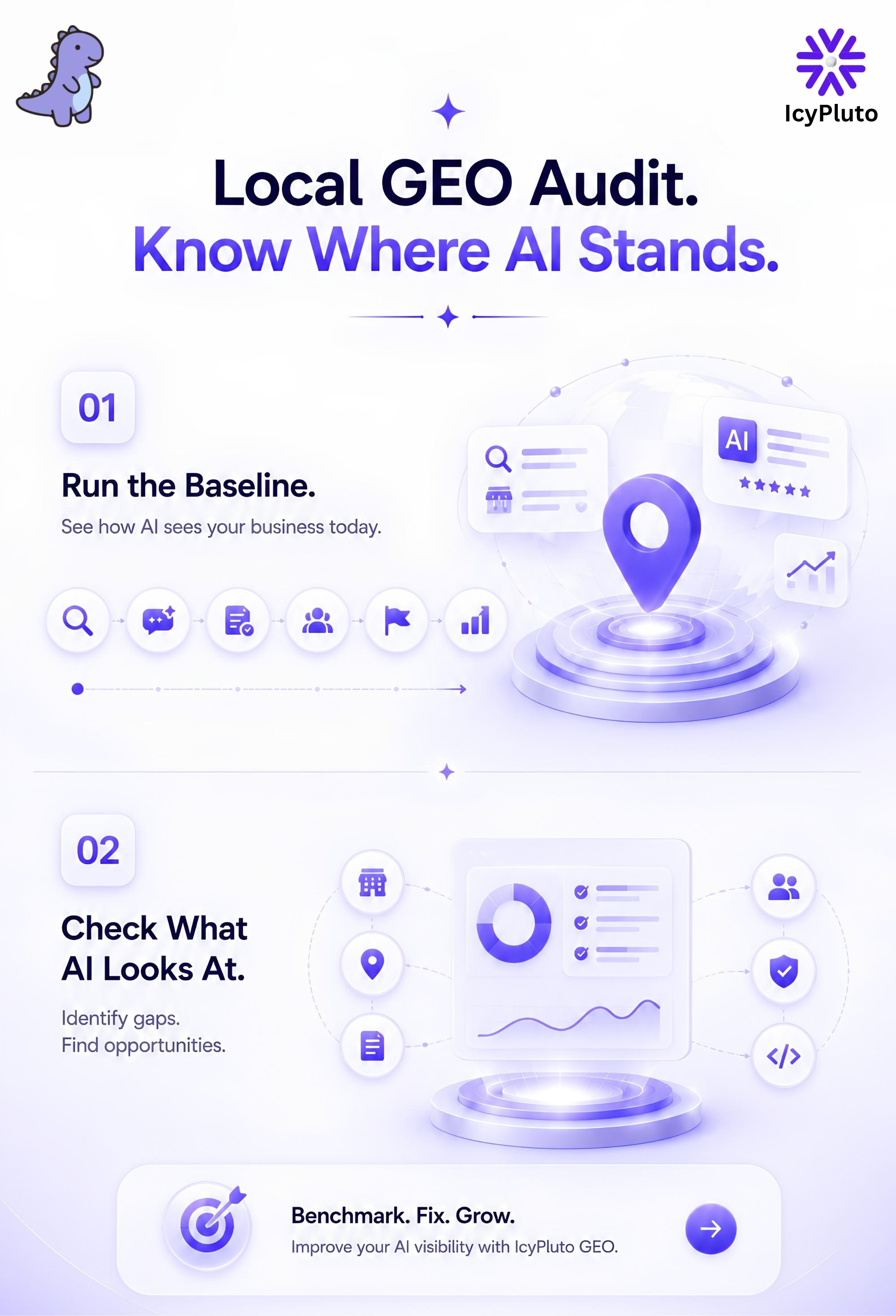
A local GEO baseline audit helps you understand ho...
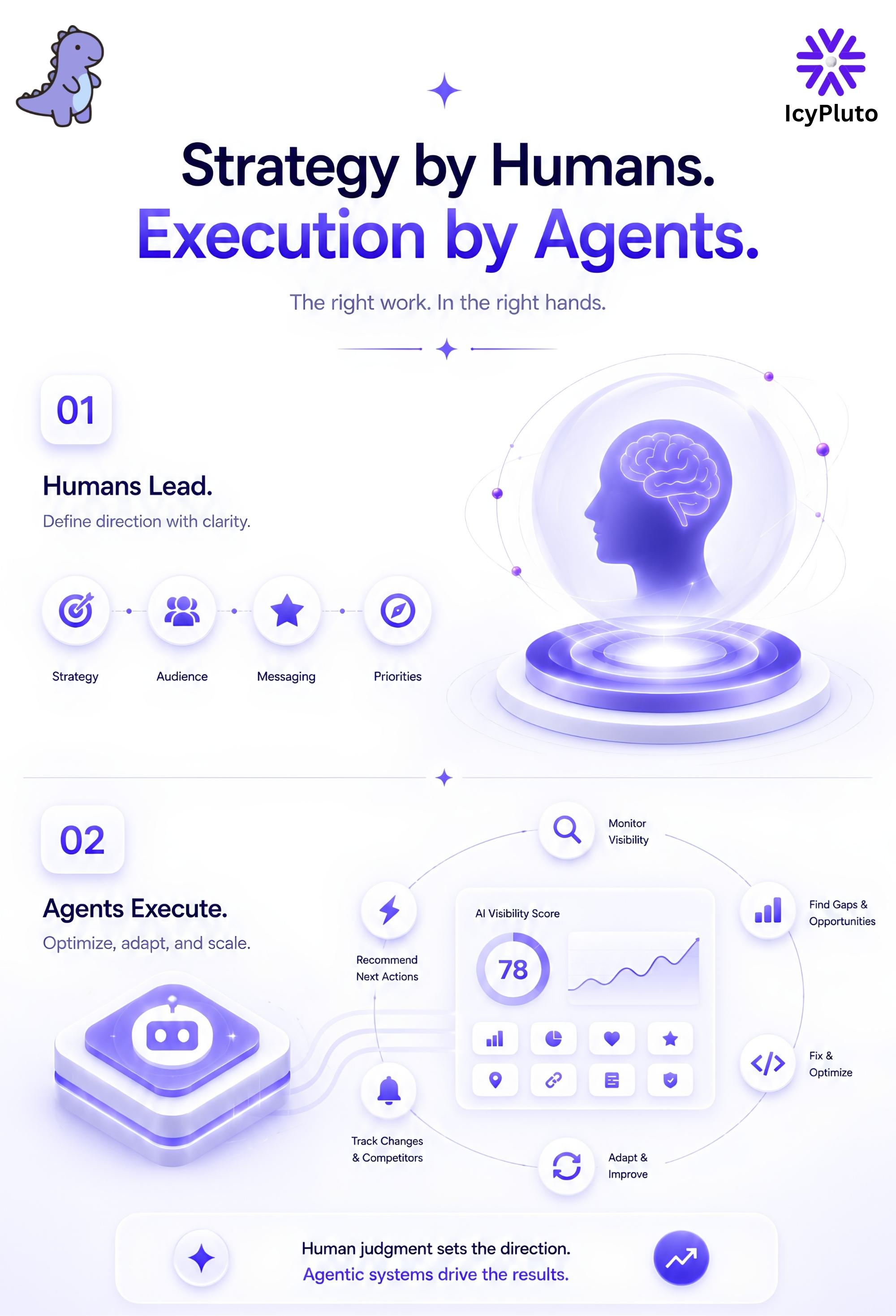
This blog explains how modern marketing teams can ...
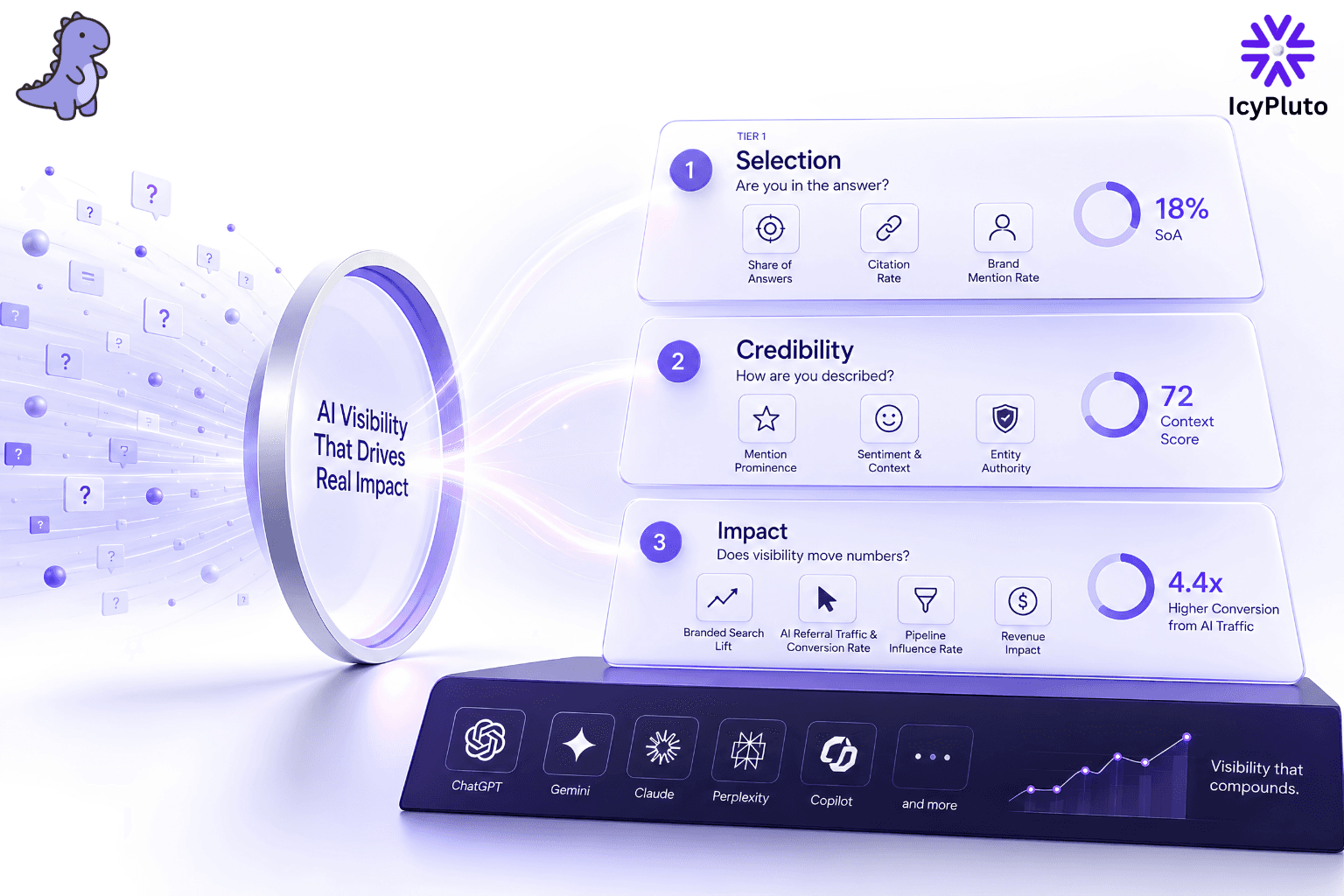
AI search has turned visibility into a numbers gam...
The AI search landscape just had one of its most significant shake-ups since ChatGPT first redefined how people interact with information online. According to fresh data from SE Ranking, which tracked over 101,000 websites with Google Analytics installed, Google Gemini has officially surpassed Perplexity as a source of referral traffic to external websites — and the speed at which this shift happened has left the industry stunned.
At IcyPluto, where we sit at the intersection of artificial intelligence and marketing strategy as the world's first AI CMO, we've been watching this transition closely. The numbers tell a story that every brand, content creator, SEO professional, and digital marketer needs to hear — and more importantly, act on. AI-driven traffic is no longer a footnote in your analytics dashboard; it is becoming one of the most consequential channels to monitor in 2026.
Let's start with the raw data, because it is genuinely staggering.
Between November 2025 and January 2026, Google Gemini more than doubled its referral traffic to websites, recording a 51% increase in December followed by a 42% increase in January — a combined gain of approximately 115%. To put that in context, before those releases, Gemini's referral traffic had been mostly flat for eight months, growing at roughly 4% per month from January through October 2025. The leap to nearly 47% monthly growth represented roughly a 12x acceleration from its prior pace.
So, what triggered this dramatic change?
The timing aligns almost perfectly with the rollout of Google's Gemini 3 models, with the key moment being Gemini 3 Flash becoming the default model across both the Gemini app and Google's AI-powered search. Once this model started powering more of Google's AI interfaces, traffic began climbing almost immediately.
This is a textbook case of how a single product update — when deployed at scale across an ecosystem as large as Google's — can completely rewrite the competitive map overnight. Brands that had optimized their content for Gemini visibility rode that wave. Those that hadn't, missed it entirely.
Perhaps the most headline-worthy data point from this report is the complete reversal of the Gemini-Perplexity dynamic. In January 2026, Gemini sent 29% more visitors to websites than Perplexity globally. In the U.S., the gap was even wider at 41%. Just five months earlier, in August 2025, the situation was the complete opposite — Perplexity was sending nearly three times more visitors than Gemini.
That is a breathtaking shift in competitive positioning in less than half a year. Perplexity, which had been celebrated as the scrappy challenger redefining search with its citation-backed answer engine format, has now been leapfrogged by a platform that was barely registering in referral traffic reports earlier in 2025.
Earlier data from SE Ranking had placed Gemini at just 6.4% of AI traffic, with modest growth in the first four months of 2025 — a surprising lag given Google's dominance in traditional search. The fact that this same platform has now overtaken Perplexity globally is a reminder that in the AI space, momentum can turn faster than anyone anticipates.
It would be premature to declare Gemini the new king of AI referral traffic. ChatGPT still generates about 80% of all AI referral traffic to websites. Even after a noticeable decline from its October 2025 peak — with an 8% drop in November and an 18% drop in December — it retains an overwhelming lead.
ChatGPT's lead over Gemini narrowed from roughly 22x in October 2025 to approximately 8x in January 2026 — a 29% reduction in the gap in just three months. That's still a massive difference, but the direction of travel is unmistakable.
From IcyPluto's vantage point as an AI-native CMO platform, this kind of data is critical for shaping how brands think about their visibility strategy. If you were allocating 100% of your AI content optimization budget toward ChatGPT visibility, you may be leaving meaningful referral traffic from a rapidly growing Gemini on the table.
The SE Ranking findings don't stand alone. Similarweb's January data showed a similar pattern when measuring direct visits to chatbot sites: ChatGPT's traffic share fell from 86% to 64% over the past year, while Gemini rose from 5% to 21%. The two datasets measure slightly different things — SE Ranking tracks referral clicks sent to external websites, while Similarweb tracks direct visits to AI platform sites — but both confirm the same direction of travel.
This convergence of data from multiple independent sources gives us a high degree of confidence that what we are seeing is a genuine market shift, not a statistical anomaly.
Before we get carried away with the excitement of Gemini's rise, let's ground this conversation in reality. All AI platforms combined still account for only about 0.24% of global internet traffic as of January 2026, up from 0.15% in 2025. Meanwhile, Google sends 345 times more traffic to websites than ChatGPT, Gemini, and Perplexity combined.
Traditional organic search is not going anywhere anytime soon. Anyone telling you to abandon your SEO strategy in favor of pure AI optimization is selling you a false choice.
That said, the growth trajectory of AI traffic is what demands attention. AI traffic grew seven times since 2024, jumping from just 0.02% to 0.15% of global internet traffic. And by January 2026, it had already climbed to 0.24% — a 1.6x increase in a single year. If this growth rate continues on even a similar trajectory through the end of 2026, AI referral traffic will start appearing in a much more meaningful way in analytics reports across every industry.
Here's what makes AI referral traffic genuinely exciting for marketers, even at these currently small volumes: the quality of the visitors it sends.
According to Ahrefs data, visitors from AI search platforms generated 12.1% of signups despite accounting for only 0.5% of overall traffic — meaning AI search visitors convert 23 times better than traditional organic search visitors.
Why? Because AI search users typically land on websites further along in the decision-making journey. People use AI to research options, compare features, and narrow down choices before clicking through. By the time someone clicks a link suggested by Gemini or ChatGPT, they already have a significant level of intent and trust — two things that are extraordinarily difficult to manufacture through traditional paid or organic search.
Conversion rate data from Seer Interactive further reinforces this point: LLM traffic has higher conversion rates than organic traffic, with ChatGPT at 15.9%, Perplexity at 10.5%, and Gemini at 3%, compared to Google's organic conversion rate of 1.76%.
At IcyPluto, we believe this conversion quality differential is going to be one of the defining arguments for AI visibility investment over the next 12 to 18 months. You don't need a massive volume of AI-referred visitors to generate meaningful business outcomes — you need the right ones.
The data we've unpacked above carries clear strategic implications for brands, publishers, and marketing teams navigating this rapidly shifting terrain. Here is how IcyPluto recommends thinking about it.
One of the biggest mistakes we see brands make is lumping all AI traffic into a single bucket and either ignoring it entirely or optimizing for just one platform — usually ChatGPT. Gemini's explosive growth over the past two months proves why this is a dangerous oversimplification.
As the data from SE Ranking makes clear, the AI traffic market is not as set in stone as many might have thought. Gemini isn't catching up overnight, but it's starting to find traction — and the lesson we all need to learn is not to put all our eggs in one basket. Monitor multiple LLMs, pay attention to updates, and adapt your strategy as needed.
At IcyPluto, our AI-powered CMO framework is built specifically for this kind of multi-platform visibility monitoring. We track how brands appear across ChatGPT, Gemini, Perplexity, Claude, and other major AI surfaces — giving you the intelligence you need to stay visible as the landscape evolves.
Gemini's surge is not independent of Google's broader ecosystem — it is a direct product of it. The catalyst was the Gemini 3 Flash model becoming the default across both the Gemini app and Google's AI Mode for Search, and traffic climbed almost immediately. Brands that were already showing up in Gemini's responses caught that wave. Brands that weren't missed it entirely.
This reinforces a principle that IcyPluto has championed from the beginning: traditional SEO and AI visibility are not competing priorities — they are deeply intertwined. Content that ranks well in Google's organic results is also more likely to be cited by Gemini. Structured, authoritative, well-sourced content is the foundation for visibility across both dimensions.
However, there are nuances to how Gemini surfaces content compared to traditional Google Search. Gemini shows preference patterns similar to Google AI Overviews but with distinct weighting of authority signals. Brands need to understand these signals and actively optimize for them — not just assume that a Page 1 ranking translates automatically into AI citation visibility.
Here's a practical, immediate action step: open your Google Analytics right now and check your referral traffic sources. If you've been tracking Perplexity as a referral source, Gemini may have already overtaken it in your analytics. It's worth checking before your next reporting cycle.
Many marketing teams set up their analytics tracking based on the AI platform landscape as it existed six to twelve months ago. Given how dramatically that landscape has shifted, there's a good chance your current reporting framework isn't capturing the full picture. In GA4, navigate to Reports > Acquisition > Traffic Acquisition, switch the primary dimension to Session Source/Medium, and filter for AI platform referrers. Make sure you're looking beyond just ChatGPT.
Zoom out far enough, and what the SE Ranking data is really showing us is the early stages of a fundamental restructuring of how traffic flows across the internet.
For the past two decades, the answer to "how do people find websites?" was essentially: Google Search, with occasional contributions from social media, email newsletters, and direct navigation. That model is being complicated — not replaced, but complicated — by the emergence of AI platforms as a new category of traffic source.
AI platform visits grew 28.6% between January 2025 and January 2026 in the U.S. across desktop and mobile combined. Yet AI referrals to external sites over the same period remained relatively flat — suggesting that more people are using AI platforms more often, but they are not always clicking through to other websites at a higher rate. The platforms are retaining attention, not distributing it.
This is the critical tension at the heart of AI-era marketing. AI platforms are extraordinarily good at answering questions — which means they are also extraordinarily good at keeping users within their own interfaces rather than routing them elsewhere. The clicks that do make it through to external websites are therefore more valuable, more intentional, and more conversion-ready than ever before.
For brands, this creates both a challenge and an opportunity. The challenge is that AI platforms may answer your customers' questions without ever sending them to your website. The opportunity is that if your brand is the one cited, referenced, or recommended in those AI-generated answers, the visitors who do click through are among the most qualified you will ever receive.
This is precisely the problem that IcyPluto was built to solve. As the world's first AI CMO, IcyPluto helps brands build the kind of authoritative, structured, and strategically positioned content that earns citations across the major AI platforms — turning AI search from an invisible black box into a measurable, manageable growth channel.
At IcyPluto, we see this data as one of the clearest signals yet that the era of AI-driven traffic is not a future possibility — it is a present reality that demands strategic attention today.
The Gemini story is particularly instructive. A platform that had been largely flat for eight months exploded with 115% growth in just two months — triggered by a single product launch. That kind of velocity has no precedent in traditional search. No algorithm update in Google's history ever moved the needle that fast for a single traffic source.
This tells us something important about the nature of competition in the AI search space: it is winner-take-most, highly responsive to product launches, and capable of reshaping market share in weeks rather than years. The brands that win in this environment are not the ones that wait to see where things settle — they are the ones building AI visibility infrastructure right now, so they are positioned to catch every wave as it comes.
Whether Gemini continues its ascent, whether ChatGPT regains lost ground, or whether a new entrant disrupts both, the underlying principle remains constant: your brand's visibility across AI platforms will increasingly determine how, when, and whether your customers find you.
IcyPluto is here to make sure they do.