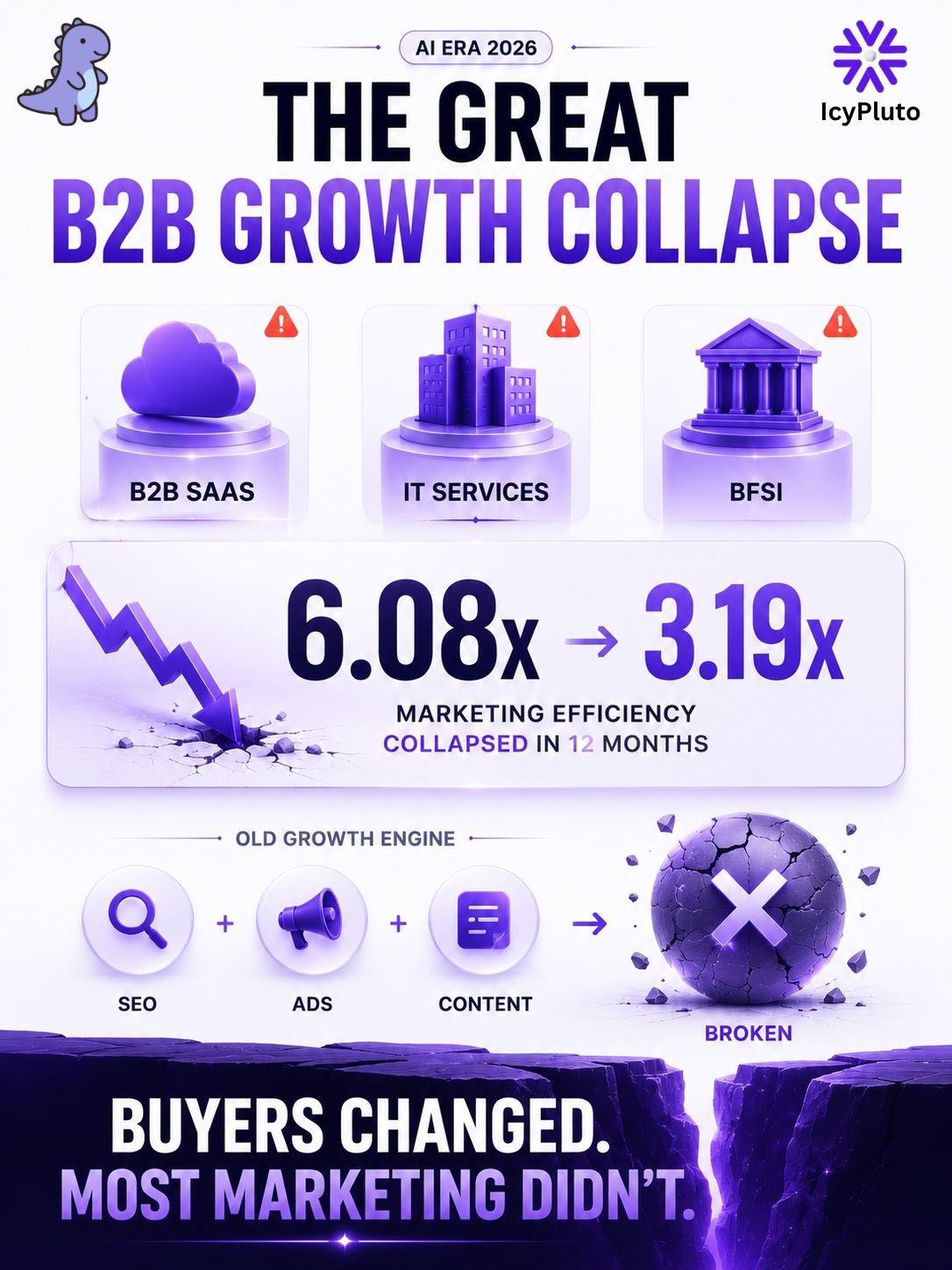
This hard-hitting blog reveals why IT, B2B SaaS, a...
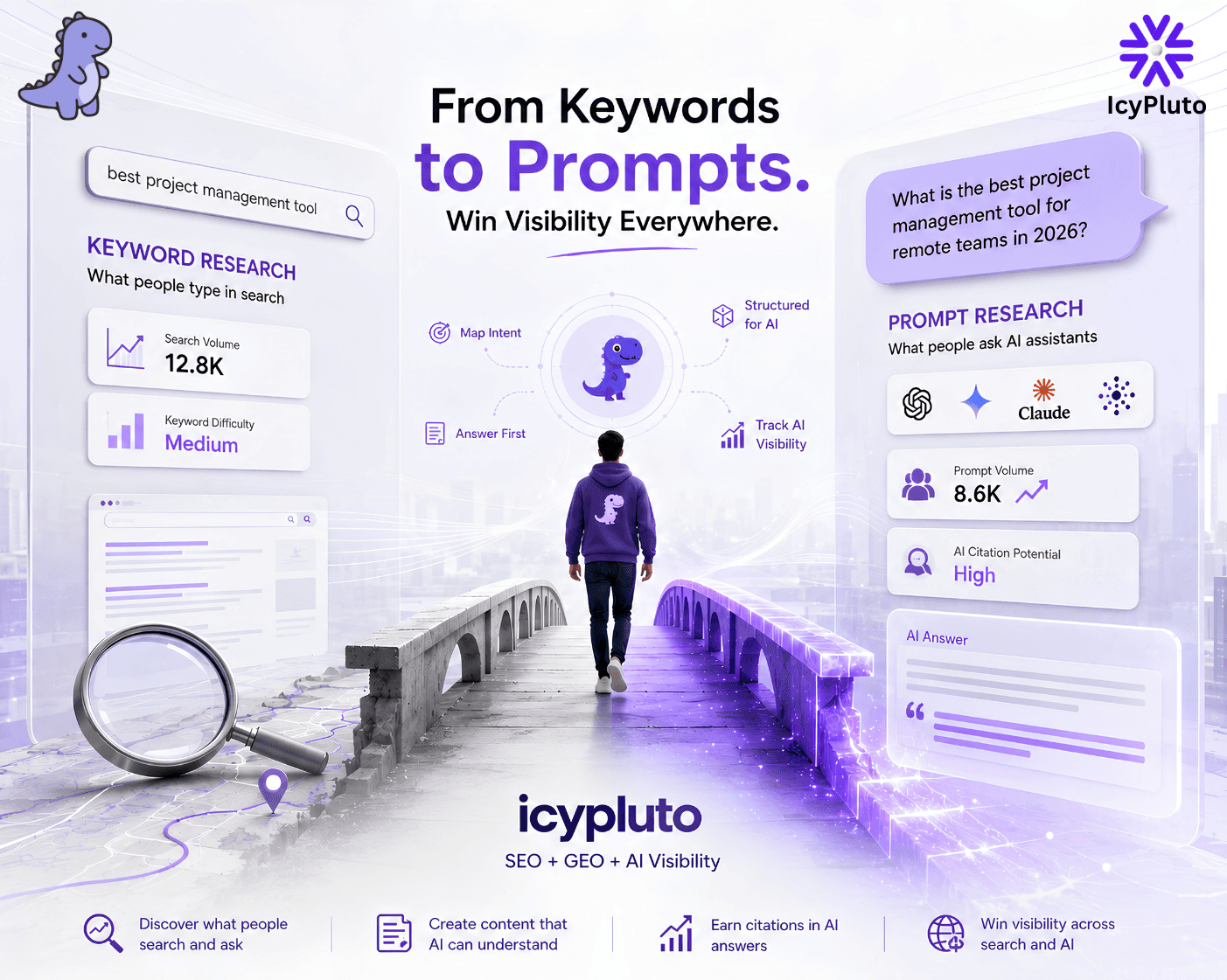
This blog explains how keyword research must now b...
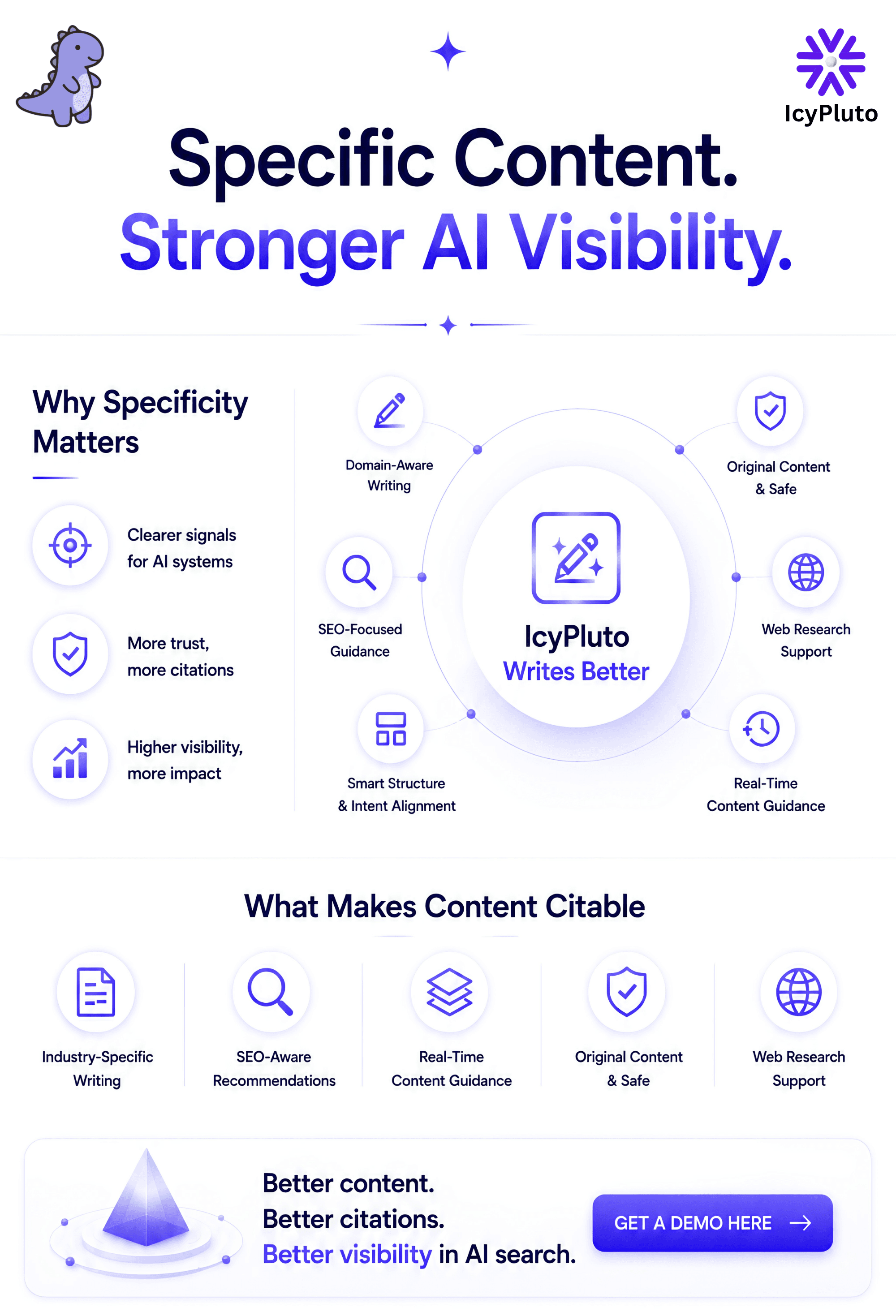
AI SEO writing is getting more specific, and that ...
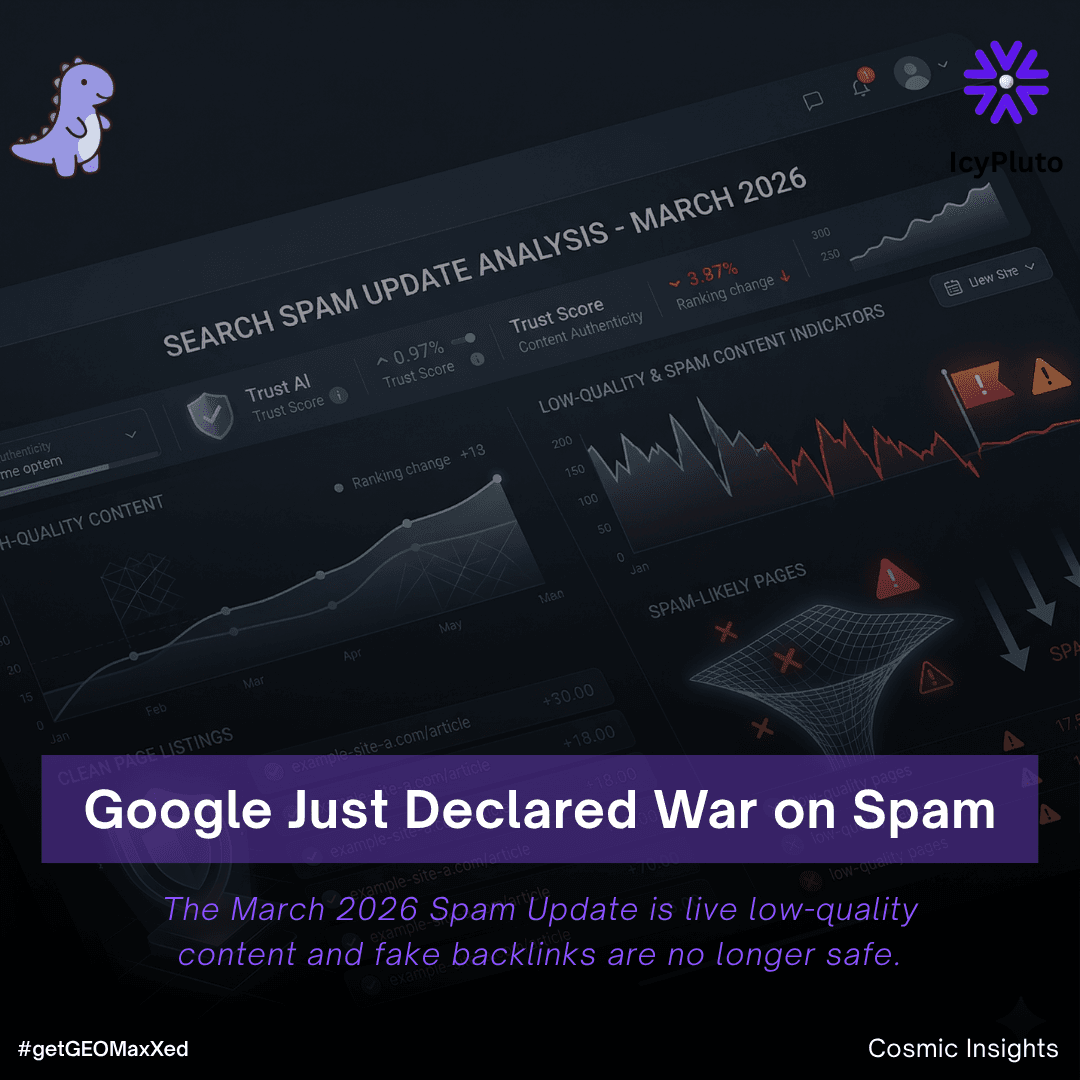
The digital marketing world woke up to a significant development on March 24, 2026, when Google officially launched its March 2026 Spam Update — the first spam-focused algorithm update of the year. Whether you're running a personal blog, an e-commerce store, or managing large-scale digital campaigns, this update carries real consequences for your search visibility. At IcyPluto, where AI-powered marketing intelligence sits at the heart of everything we do, staying ahead of algorithm shifts isn't just smart — it's survival.
Let's break down everything you need to know about this update, who it affects, and most importantly, what you should do next.
Not all Google algorithm updates are created equal. Some shake the very foundation of how content is ranked; others take a more surgical approach. The March 2026 Spam Update falls firmly in the latter category — it's designed to identify and penalize websites that violate Google's spam policies, rather than causing sweeping changes across all search results.
Google confirmed the rollout via the Search Status Dashboard at 12:18 PM PDT on March 24, 2026, and further acknowledged it through the Google Search Central LinkedIn account, stating:
"Today we released the March 2026 spam update to Google Search. This is a normal spam update, and it will roll out for all languages and locations. The rollout may take a few days to complete."
This marks the second announced Google algorithm update of 2026, coming hot on the heels of the February 2026 Discover Core Update. For context, the previous spam update before this was the August 2025 Spam Update, which ran from August 26 through September 22 — a grueling 27-day rollout that many SEO professionals described as one of the most disruptive in recent memory.
One detail that immediately stands out about the March 2026 update is the predicted short rollout window. Google estimates it will "take only a few days to complete," a sharp contrast to the August 2025 update that dragged on for nearly four weeks. However, shorter doesn't mean softer. A compressed timeline can mean faster, more concentrated ranking shifts — sites that are flagged could see their visibility drop almost overnight. The December 2024 spam update, for comparison, wrapped up in just seven days and still caused notable turbulence across multiple niches.
So while the update may be brief, its impact on non-compliant websites can be immediate and severe.
Here's where things get particularly relevant for marketers and content creators in 2026. While Google has not released a detailed technical breakdown of what this specific update targets, community intelligence and historical patterns paint a very clear picture.
Based on what SEO professionals are already observing across the industry, the March 2026 Spam Update is expected to crack down on:
Scaled AI-generated content — Pages that were created using AI tools in bulk, without sufficient editorial oversight, human experience, or original perspective
Thin and low-value pages — Content that exists purely to chase keywords without offering any real depth, insight, or utility to the reader
Manipulative link-building tactics — Spammy backlinks, link farms, and artificial authority-building schemes
Expired domain abuse — The practice of purchasing expired domains with strong backlink profiles and repurposing them for unrelated or low-quality content
It's impossible to discuss the March 2026 Spam Update without addressing the elephant in the room — AI-generated content. Over the past few years, AI writing tools have flooded the internet with content that looks polished on the surface but offers little genuine value. Google has been quietly tightening its grip on this for a while, and spam updates have increasingly become the enforcement mechanism.
As one industry expert noted on LinkedIn, "With this update, it's clear that shortcuts and spammy tactics are getting harder to sustain. The focus is shifting even more toward relevance." This is a signal that if your content strategy still revolves around volume over value, the walls are closing in.
At IcyPluto, we've always championed the philosophy that AI should amplify human creativity, not replace it — and updates like this only reinforce why that approach is the only sustainable one in the long run.
To understand why these updates are so effective — and why trying to game the system is increasingly futile — you need to understand the technology behind them. Meet SpamBrain: Google's proprietary, AI-powered spam detection system.
SpamBrain doesn't rely on simple rule-based filters. Instead, it uses machine learning models trained on vast datasets to identify patterns and behaviors associated with manipulative practices. Every time Google releases a spam update, it's essentially releasing an upgraded version of SpamBrain — one that's better at spotting violations and catching new types of spam it hasn't seen before.
SpamBrain looks at a wide range of signals that go far beyond just keyword stuffing or dodgy backlinks. It evaluates:
Content authenticity — Is this content written for humans, or is it designed to trick search engines?
Link naturalness — Do the links pointing to a page represent genuine editorial endorsements, or do they look bought or manufactured?
Behavioral patterns — Does the site engage in cloaking, showing different content to Google's crawler versus what real users see?
Domain history and context — Has this domain shifted topics suddenly, or does it have a suspicious registration history?
What makes SpamBrain particularly formidable is its ability to learn continuously. Even if a spam tactic isn't captured by one update, future improvements will eventually catch it. The system is essentially in a constant state of evolution — which means staying ahead of it requires genuine quality, not clever workarounds.
A lot of website owners panic whenever they hear the word "update," assuming any shift in Google's algorithm is automatically catastrophic. But it's important to distinguish between the two main types of updates: spam updates and core updates. They operate very differently and affect different types of sites.
FeatureSpam UpdateCore UpdatePrimary TargetSites violating spam policiesAll types of sites, quality-focusedScopeNarrow — penalizes policy violationsBroad — affects wide range of rankingsTypical ImpactPenalty-driven, visibility lossCan cause both gains and lossesRecovery PathFix violations → gradual recoveryImprove overall content qualityRollout DurationUsually days to a couple of weeksOften 1–2 weeks or more
In simple terms, a spam update is more like a law enforcement sweep — it's looking for rule-breakers and removing their unfair advantages. A core update, by contrast, is more like a judicial reform — it changes the criteria used to evaluate everyone.
For the average legitimate website following Google's guidelines, the March 2026 Spam Update should not cause meaningful disruption. The sites that should be worried are those that have been gaming the system in some way — whether through artificial links, hollow AI content, or deceptive practices.
If you've woken up this week to a sudden drop in organic traffic, rankings, or impressions, the March 2026 Spam Update could be to blame. But before drawing any conclusions, it's important to diagnose correctly.
Google Search Console remains the single most reliable free tool for understanding algorithm-related traffic shifts. Here's what to look for:
Performance Report — Check your total clicks and impressions over the past 7–14 days. Look for a sudden dip that correlates with March 24, 2026 onwards
Coverage Report — Look for any new crawl errors, manual actions, or indexing issues that may have appeared around the update date
Manual Actions — If Google has issued a manual spam penalty (separate from algorithmic changes), it will appear explicitly in the Manual Actions section of Search Console
It's equally important to cross-reference traffic data with tools like Google Analytics and third-party platforms to confirm whether dips are isolated to organic search or affecting all channels. If it's purely organic, and the timing lines up with the update window, that's a strong indicator of algorithmic impact.
Correlation doesn't always mean causation. Before blaming the spam update, rule out other possibilities like:
Seasonality and expected fluctuation
Technical issues like site downtime or broken pages
Manual actions unrelated to spam
Changes in competitor rankings pushing you down
If your site has taken a hit, don't despair — recovery is possible. But it requires patience, a clear strategy, and a genuine commitment to quality. Google explicitly states that "making changes may help a site improve if our automated systems learn over a period of months that the site complies with our spam policies."
The most critical step is an honest content audit. Go through your pages and ask yourself: Does this actually help my reader? If a page exists purely to rank for a keyword but offers nothing unique, nothing practical, and nothing that couldn't be found on a dozen other sites — it needs to be either improved significantly or removed.
At IcyPluto, our AI-powered intelligence tools are built to help brands create content strategies that are rooted in real audience intent — not keyword chasing. This kind of data-driven, human-centric approach is exactly what protects brands from algorithm volatility.
If your site has accumulated backlinks from low-quality, irrelevant, or clearly artificial sources, now is the time to address them. Use tools like Google's Disavow Tool to signal to Google which links you do not want associated with your site. Be careful and conservative with this tool — improperly disavowing good links can hurt rankings.
The principle here is simple: earn links, don't buy them. Content that genuinely informs, entertains, or solves problems will attract backlinks naturally over time. That's the only link-building strategy with a long shelf life.
Google's quality evaluator guidelines place enormous weight on E-E-A-T — Experience, Expertise, Authoritativeness, and Trustworthiness. While these aren't direct ranking signals in the traditional sense, they inform the kind of content that Google's systems consistently reward. A few practical ways to strengthen E-E-A-T include:
Adding clear author bylines with credentials and bios
Citing reputable sources and linking to credible external references
Keeping your content regularly updated to reflect the latest information
Earning coverage and mentions from established publications in your niche
For brands operating in the AI and marketing technology space — like IcyPluto, COSMOS' First AI CMO — the March 2026 Spam Update is both a challenge and an opportunity.
The challenge is clear: as AI content floods the web, Google is getting sharper at distinguishing the hollow from the helpful. The opportunity, however, is equally significant. For brands that have always prioritized quality, authenticity, and genuine audience value, this update is a competitive equalizer — it levels the playing field against those who were cutting corners.
IcyPluto's vision has always been about wisdom-powered AI — combining the timeless principles of great marketing with the precision and scale of artificial intelligence. In a world where Google is increasingly sophisticated at rewarding real value, that philosophy doesn't just make brand sense. It makes algorithmic sense too.