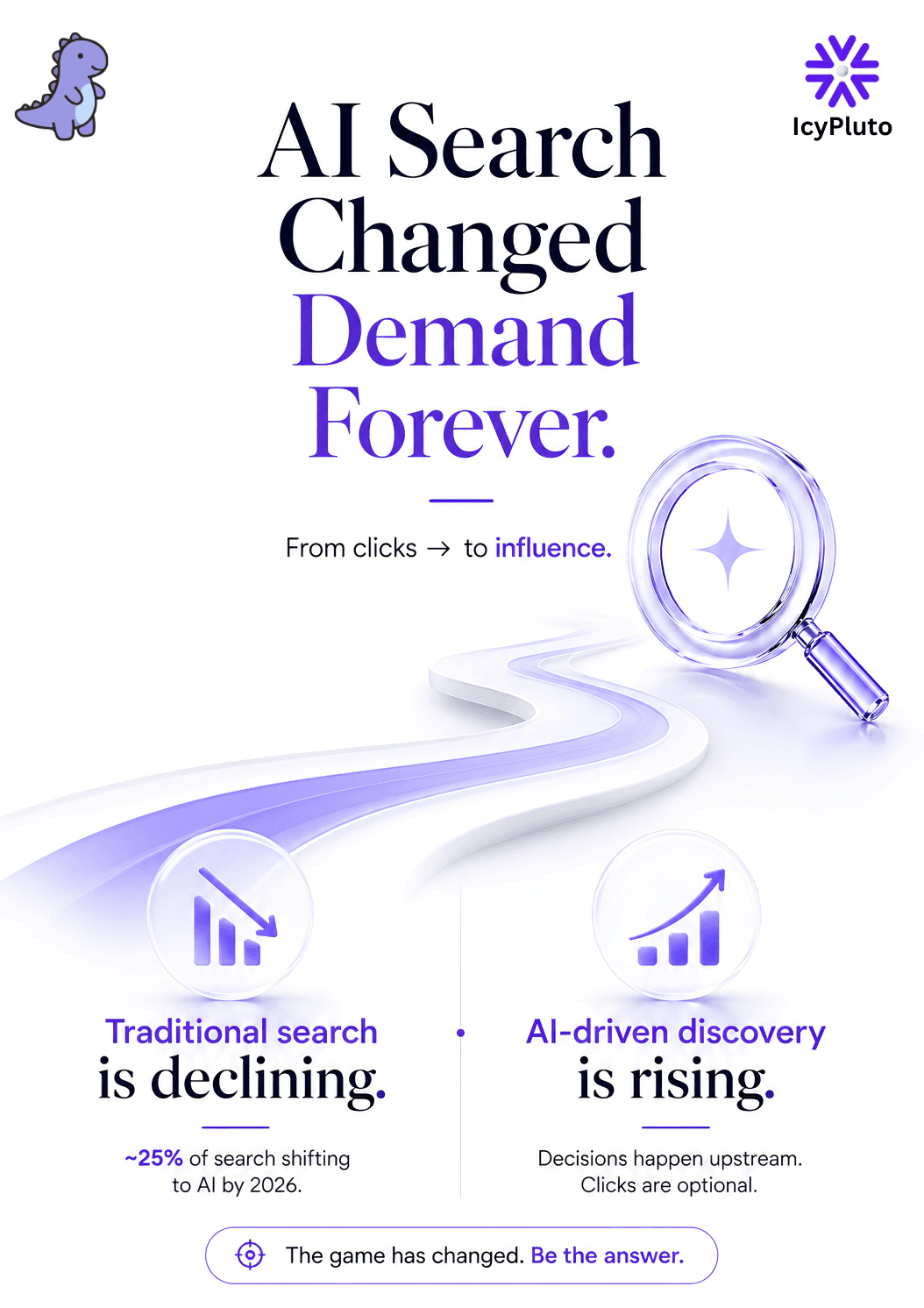
This blog explains why traditional, traffic-focuse...
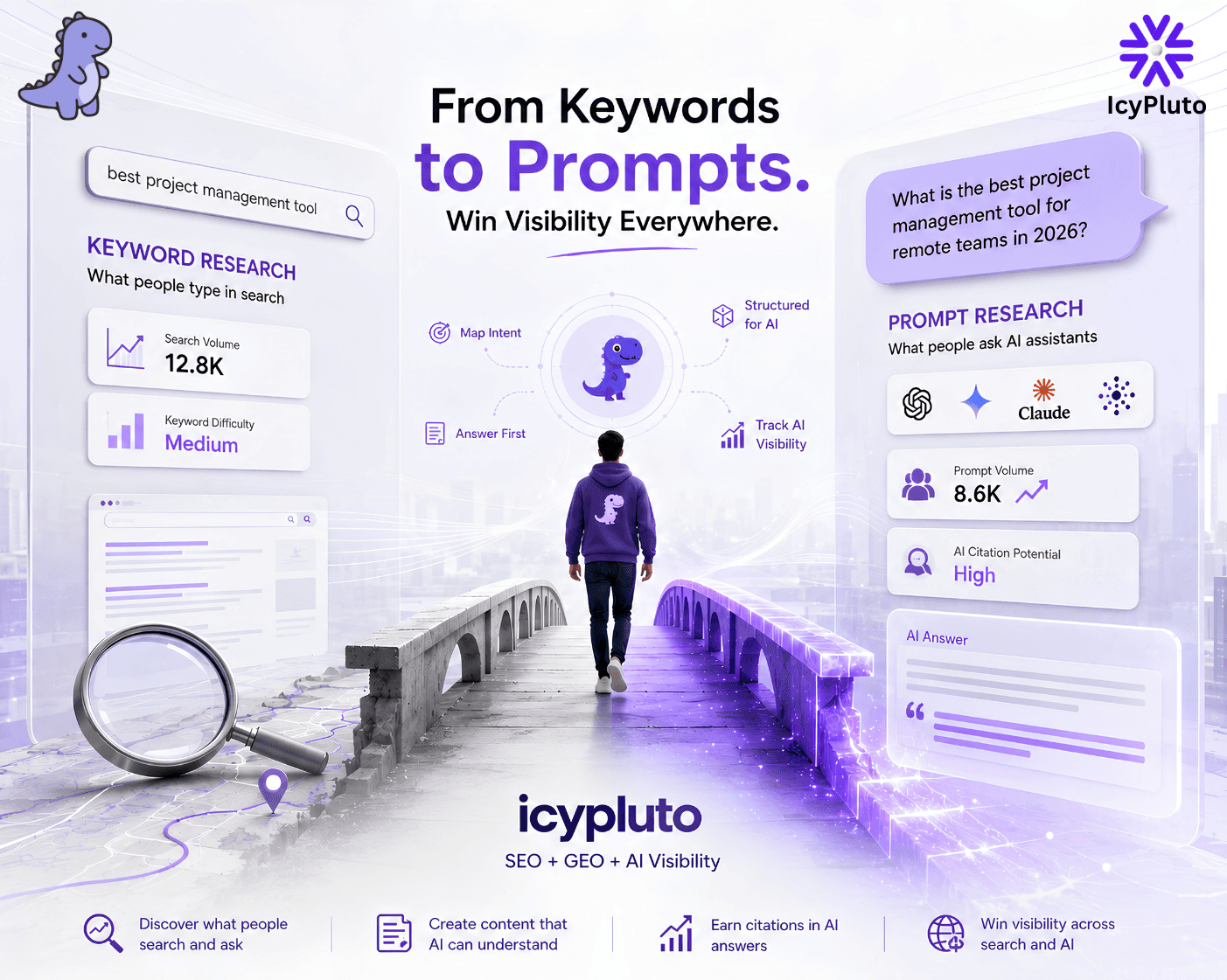
This blog explains how keyword research must now b...
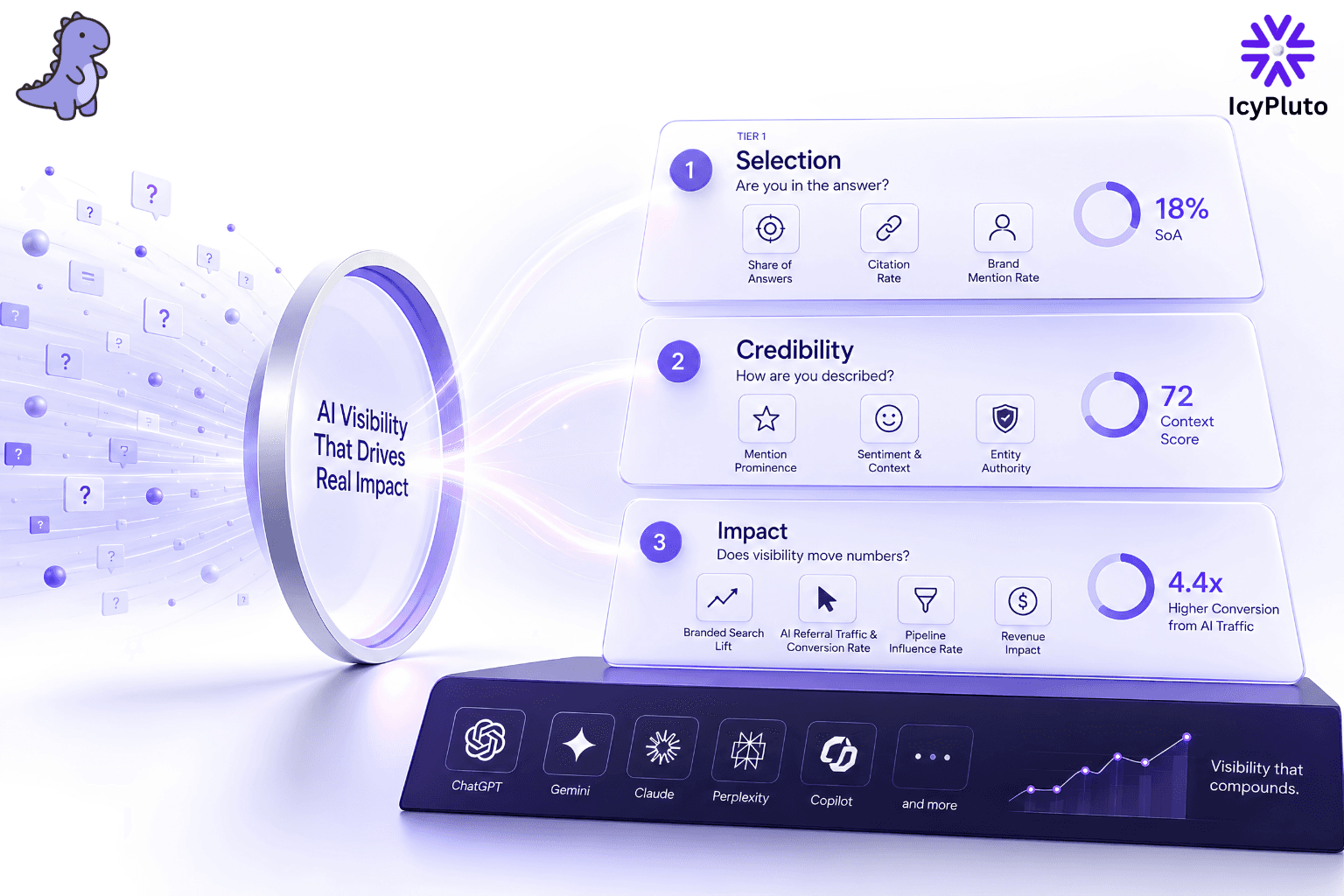
AI search has turned visibility into a numbers gam...
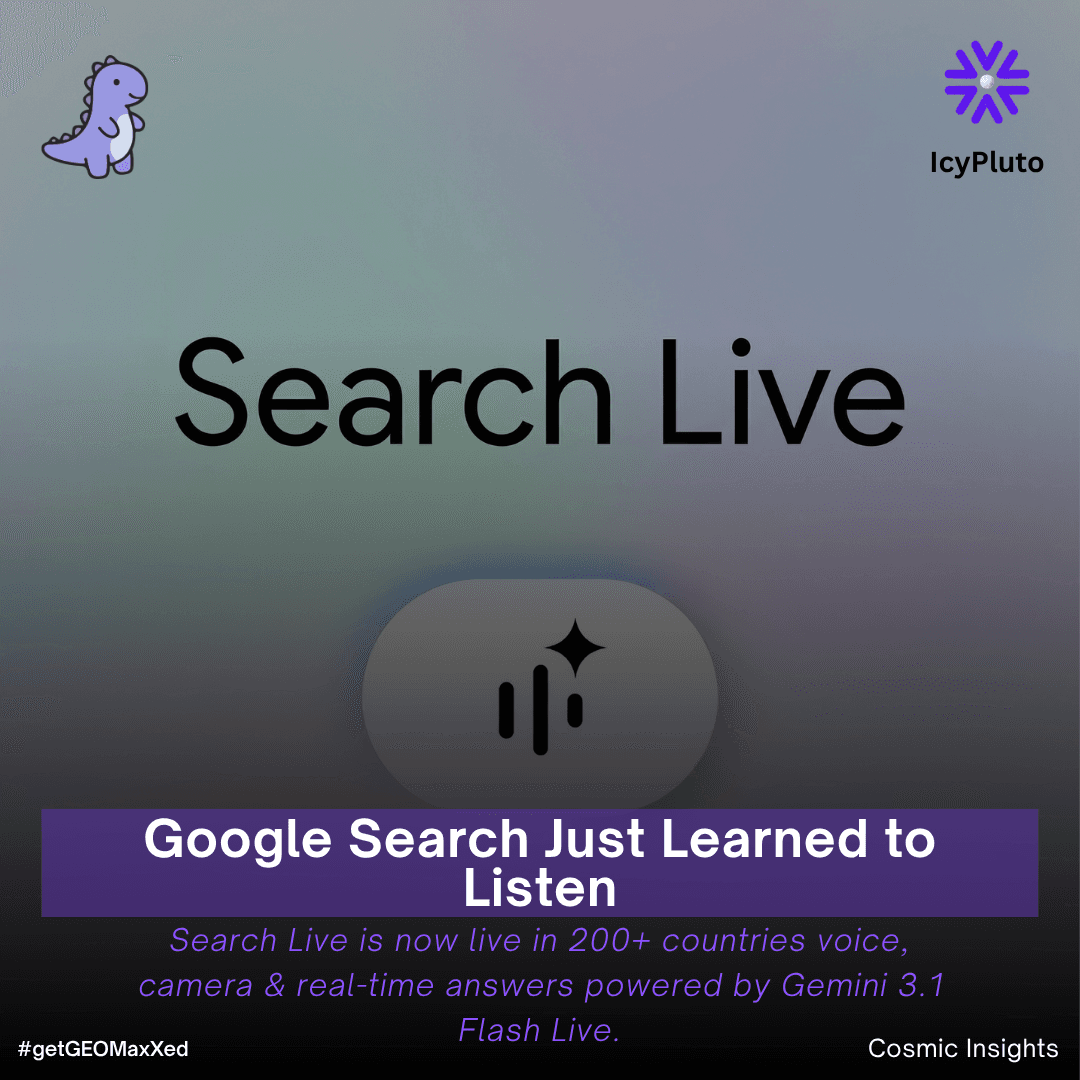
The way people interact with Google Search is changing — fast. Gone are the days when you had to carefully type out every query and sift through a list of blue links to find what you needed. Google has now made its Search Live feature available to users in more than 200 countries and territories, powered by its most advanced audio model to date: Gemini 3.1 Flash Live. This isn't just a feature rollout — it's a fundamental shift in how humans talk to machines, and how machines talk back.
At IcyPluto, where we sit at the intersection of AI innovation and marketing intelligence as COSMOS' First AI CMO, we believe this development carries enormous implications for brands, digital marketers, SEO professionals, and content creators everywhere. Here's everything you need to know — and why it matters more than you might think.
Before diving into what's new, let's take a step back and understand what Search Live actually is — because for many users outside the U.S., this is the first time they're encountering it.
Search Live is a feature embedded within Google's AI Mode that transforms the search experience from a text-based query system into a real-time, spoken conversation. Instead of typing something into a search box, you simply speak your question out loud. Google responds with an audio answer, and you keep the conversation going with follow-up questions, clarifications, or new directions — just like you would in a real dialogue with a knowledgeable friend.
But it doesn't stop at voice. Search Live also integrates camera input, turning your phone's lens into a live window for AI-powered understanding. You can point your camera at a broken appliance, a product label, a piece of code, a menu in a foreign language, or anything else you want to understand — and Search Live will interpret what it sees and respond intelligently. This multimodal capability — combining voice, vision, and real-time web intelligence — represents one of the most meaningful leaps in search UX in over a decade.
For context, Search Live was initially launched exclusively in the United States. For months, it remained a U.S.-only feature while Google refined its technology, gathered feedback, and built infrastructure for a larger rollout. That wait is now over.
On March 25, 2026, Google officially announced the global expansion of Search Live, making it accessible in every country and territory where AI Mode is currently active — that's more than 200 markets around the world. This includes regions across Asia, Europe, Latin America, Africa, the Middle East, and beyond — a truly global deployment.
Users can access Search Live directly through the Google app on both Android and iOS. To get started, simply open the Google app and tap the Live icon located just beneath the search bar. From there, the experience launches into a real-time, voice-based interaction powered by Gemini's latest audio intelligence. For Google Lens users, there's a new "Live" tab appearing alongside the Translate option, making it easy to switch into a conversational camera mode on the fly.
This accessibility across both major mobile platforms ensures that the vast majority of smartphone users globally can benefit from Search Live — regardless of which ecosystem they're in.
This expansion didn't happen overnight. Google has been deliberately building toward this moment through a series of incremental updates:
June 2025: Search Live officially launched in the United States
July 2025: Google added video input capabilities to Search Live
December 2025: The feature was upgraded to run on the Gemini 2.5 Flash Native Audio model
March 2026: Full global expansion powered by the brand-new Gemini 3.1 Flash Live model
Each update expanded what the feature could do and broadened who could use it. The March 2026 rollout marks the culmination of this roadmap — bringing the complete, most capable version of Search Live to the world stage.
At the heart of this expansion is a model that deserves its own spotlight: Gemini 3.1 Flash Live. Google describes it as its highest-quality audio and voice model to date, and the benchmarks and feature set back that claim up convincingly.
One of the most significant improvements Gemini 3.1 Flash Live brings is the quality and naturalness of dialogue. Earlier models sometimes felt robotic — responses that lacked rhythm, tone variation, or the ability to follow the natural flow of a conversation. Gemini 3.1 Flash Live addresses this head-on with improvements in pitch, pace, and expressiveness. The model is built to sound less like a voice assistant reading a script and more like an informed, conversational counterpart.
Background noise filtering is also dramatically improved. Whether you're in a busy café, a crowded marketplace, or a noisy street in New Delhi, the model is better equipped to isolate your voice and focus on your query without picking up distractions from the environment.
Another landmark capability of Gemini 3.1 Flash Live is its extended conversation context — the model can now follow a conversation thread for twice as long as its predecessor. In practical terms, this means you can have longer, more complex interactions without the AI "forgetting" what was said earlier in the conversation. Whether you're troubleshooting a multi-step technical issue, exploring a research topic in depth, or planning a detailed trip, the model stays with you — retaining context, building on previous responses, and delivering more coherent answers throughout.
Perhaps the most transformational aspect of Gemini 3.1 Flash Live for a global audience is its inherent multilingual design. Unlike previous models that required users to manually switch language settings, 3.1 Flash Live supports more than 90 languages natively. You simply speak in the language you're most comfortable with, and the model understands and responds accordingly — no configuration required.
This means a user in Japan can speak in Japanese, a user in Brazil can query in Portuguese, and a user in India can seamlessly shift between Hindi and English — all without touching a settings menu. This kind of frictionless multilingual capability is a game-changer for global search accessibility.
What makes Search Live genuinely different from existing voice assistants — whether Siri, Alexa, or even earlier versions of Google Assistant — is the multimodal architecture that combines audio, visual, and web-based intelligence simultaneously.
With Search Live's camera integration, users can do something that was previously the domain of science fiction: have a live conversation about what they're physically looking at. Point your phone at a rash and ask if it looks concerning. Show it a restaurant menu you can't read. Hold it up to a circuit board and ask what component is missing. Aim it at a piece of art and ask for context and history.
Google Lens already had powerful image recognition capabilities, and the "Live" tab integration now layers a real-time conversational interface on top of that vision technology. The result is a seamless experience where visual context and voice query combine to produce answers that wouldn't be possible with text alone.
An important distinction that sets Search Live apart from a pure voice assistant is its integration with live web data. When you ask a question, you don't just get a spoken answer — you also receive relevant web links on screen. This means you can listen to the audio summary while simultaneously having access to source material for deeper exploration. It's the best of both worlds: the speed and convenience of voice with the depth and credibility of web references.
From an IcyPluto perspective — and from the viewpoint of every brand or marketer who cares about where and how their audience discovers them — the Search Live global expansion is a signal that cannot be ignored.
The global rollout of Search Live will accelerate a behavioral shift that has been building for years: the migration toward voice-first search patterns. As more users in more countries get comfortable speaking to Google rather than typing, the nature of search queries will change. Voice queries tend to be longer, more conversational, and phrased as natural questions rather than keyword fragments. For example, instead of searching "best running shoes Mumbai" a user might now ask, "What are the best running shoes for flat feet that I can buy in Mumbai under 5,000 rupees?"
This has direct implications for SEO strategy. Content that answers natural language questions in a clear, conversational structure will be better positioned to surface in AI Mode and Search Live responses. At IcyPluto, this is precisely the kind of AI-aligned content intelligence that COSMOS is built to help brands navigate.
For e-commerce brands and consumer product companies, camera-based search opens a powerful new discovery channel. When a user points their phone at a competitor's product and asks Google about it, the brands and content that are best optimized for multimodal AI search will appear in the response. This demands a new layer of visual SEO — structured data, rich alt-text, high-quality product imagery, and AI-readable metadata — that many brands haven't prioritized yet.
As Search Live becomes a normalized behavior globally, traditional keyword-based search volume will continue to fragment. Users who previously generated five separate keyword searches to research a product decision may now conduct a single five-minute spoken conversation with Search Live. For marketers tracking performance through keyword data, this shift demands new measurement frameworks — ones that account for AI Mode impressions, voice-driven discovery, and conversational query attribution.
This is where platforms like IcyPluto's COSMOS become critical infrastructure for modern marketing teams: providing the AI-native intelligence needed to stay visible, relevant, and competitive in a world where search is no longer just a keyword game.
Beyond the consumer-facing features, Google has also made Gemini 3.1 Flash Live available to developers in preview through the Gemini Live API in Google AI Studio. This opens the door for third-party applications, enterprise tools, and innovative startups to build on top of the same audio intelligence powering Search Live.
Developers can use the model for a wide range of real-time dialogue applications — from AI-powered customer service bots to educational tutoring systems, live translation tools, accessibility aids, and far beyond. The low-latency, audio-to-audio architecture makes it particularly well-suited for applications that demand rapid, naturalistic conversational response.
Additionally, Gemini 3.1 Flash Live is being rolled out across Gemini Live, Gemini Enterprise, and Search Live, making it a foundational model across Google's entire conversational AI product suite — not just a single feature upgrade.
Google's expansion of Search Live to 200+ countries with Gemini 3.1 Flash Live isn't a one-off announcement it's a declaration of direction. The search giant is telling the world that the future of search is conversational, multimodal, and real-time, and it's investing at scale to make that future a global present.
There are still open questions worth watching. How will adoption rates differ across markets? Will voice search behavior in India, Brazil, or Nigeria look significantly different from its U.S. patterns? How will advertisers adapt their strategies as more queries move into AI Mode? And as Search Live becomes a primary discovery surface, how will Google balance monetization with user experience?
These are the questions that forward-thinking marketing organizations and AI-native platforms like IcyPluto need to be asking right now, before the market has fully caught up. The brands that build for this new reality today will be the ones that own the conversation tomorrow.
At IcyPluto, we're not just watching this transformation we're helping brands navigate and thrive in it. COSMOS, the world's first AI CMO, is designed for exactly this kind of moment: when the rules of discovery, engagement, and visibility are being rewritten in real time.