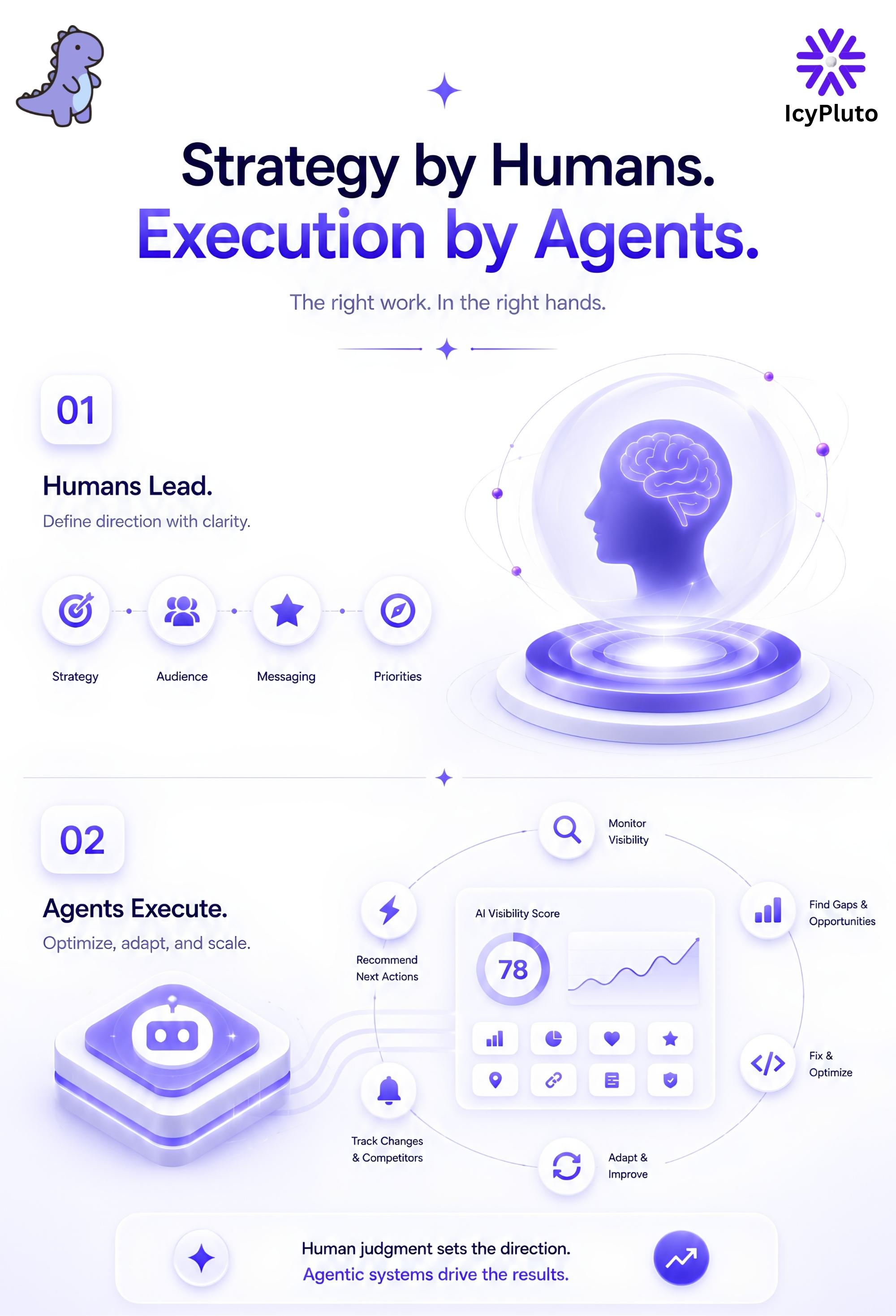
This blog explains how modern marketing teams can ...
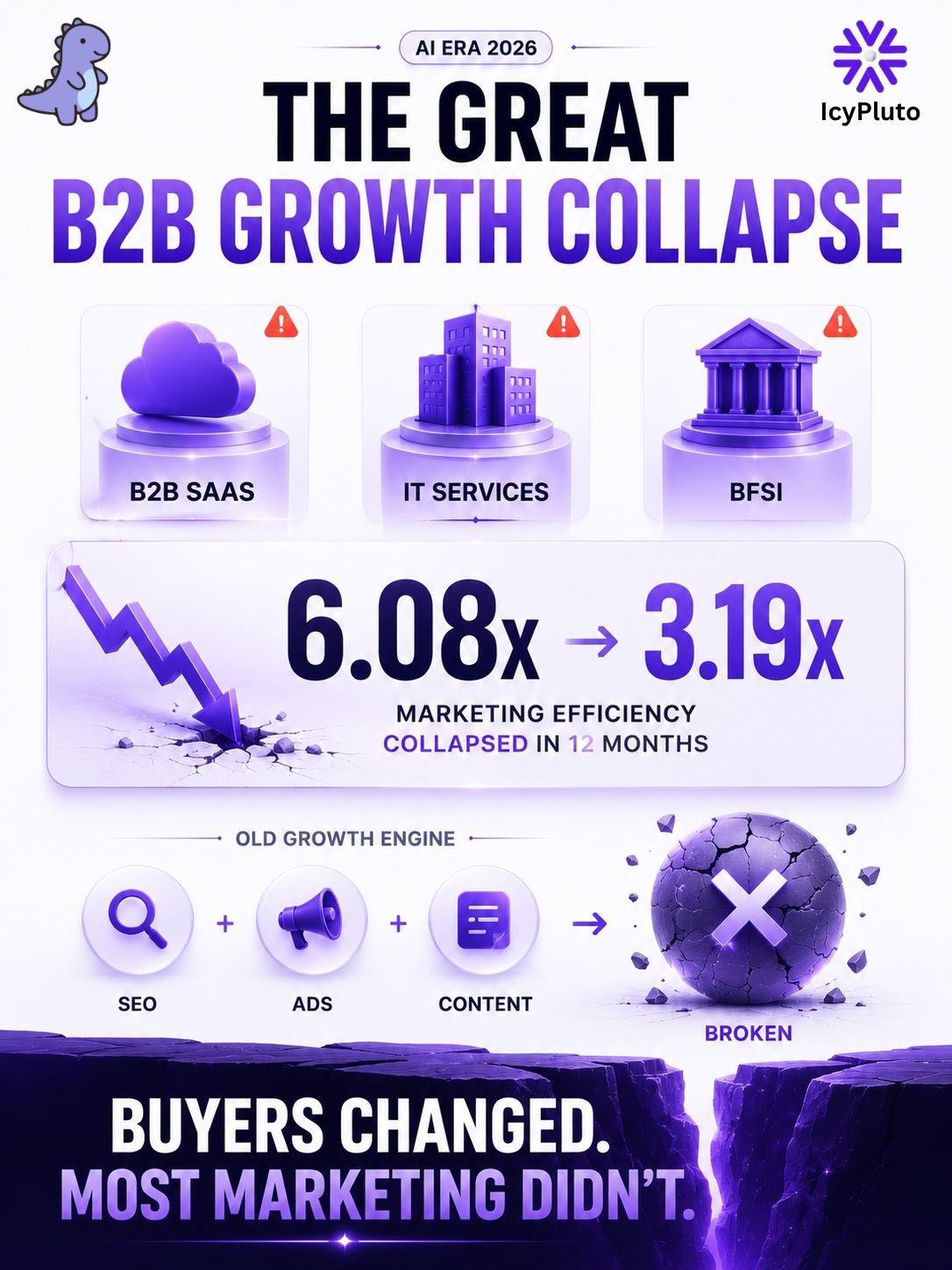
This hard-hitting blog reveals why IT, B2B SaaS, a...
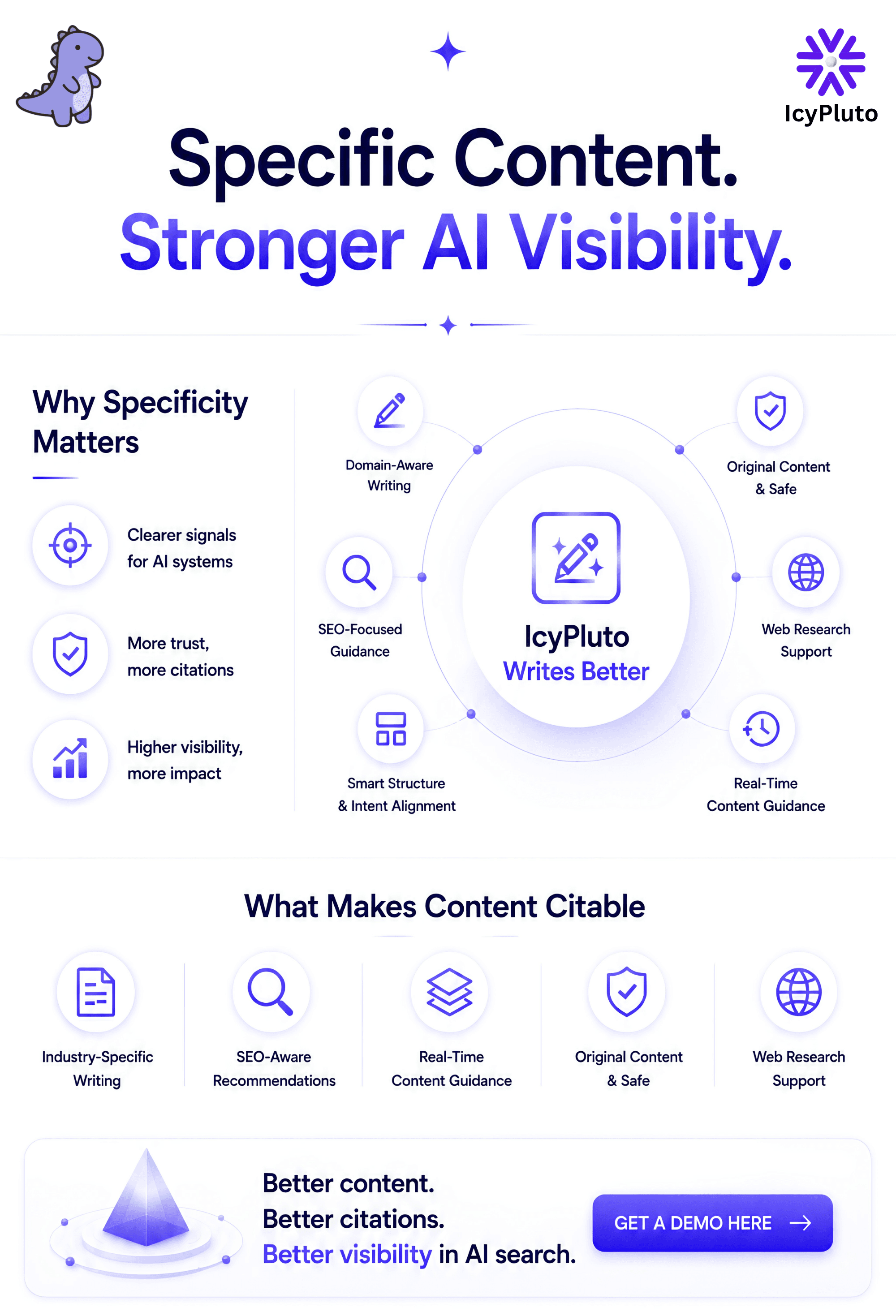
AI SEO writing is getting more specific, and that ...
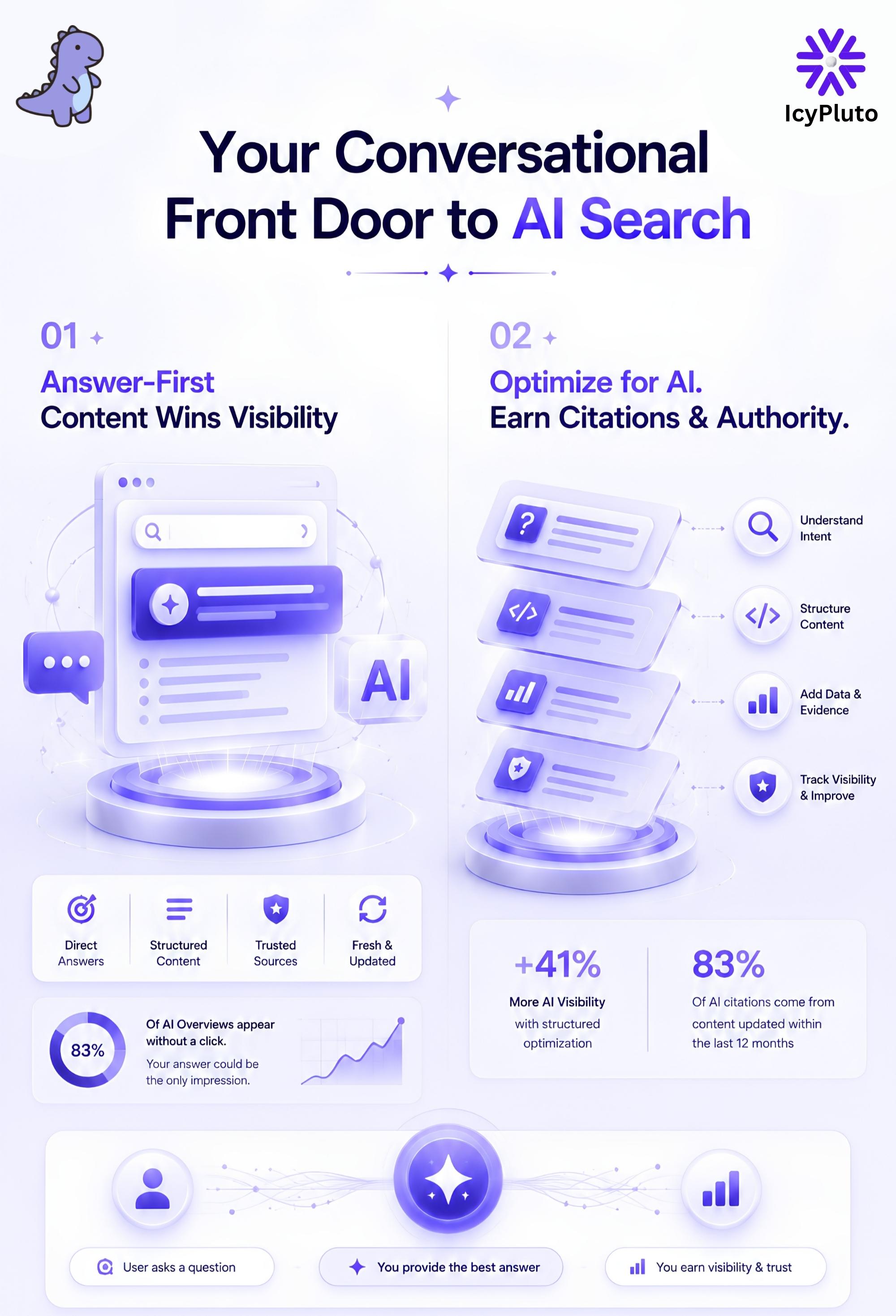
Search has shifted from keyword matching to direct answers, and that change is reshaping how content gets discovered. Google’s AI Overviews and AI assistants increasingly resolve queries without sending users to a website, which makes answer-ready content more valuable than ever. At the same time, B2B research behavior is moving into AI chatbots, with 51% of B2B software buyers now starting vendor research there, up from 29% in April 2025.
That shift is why the idea of a conversational front door matters. Your website is no longer just a destination; it is often the first point of contact in a research journey that begins with a question and ends with a decision. If your content is structured to answer that question clearly, you can win visibility even when the click does not happen immediately.
A conversational front door is content that feels like the first helpful response a user receives. Instead of forcing people to dig through generic paragraphs, it gives a direct answer up front, then expands into supporting detail. This approach aligns with how people now ask questions in natural language across search engines, voice search, and AI tools.
It also changes your website's role. Rather than acting like a static brochure, it behaves more like an assistant that understands intent and responds in a useful, structured way. That is exactly why content optimization now needs to include readability, structure, freshness, and clarity of answers, not just keyword placement.
Answer engines matter because users increasingly want the answer itself, not a list of links. Zero-click search has become the norm in many cases, with 58.5% of U.S. Google searches ending without a click, and that rate rises to about 83% when an AI Overview appears. In this environment, visibility inside the answer is often more valuable than a traditional blue-link ranking.[searchlab]
This is also where answer engine optimization becomes a competitive advantage. Academic research from Princeton, Georgia Tech, and IIT Delhi found that structured optimization methods can boost AI citation visibility, with statistics showing 41% increases in visibility and 40% in source citations. In simple terms, well-structured content is easier for AI systems to reuse, cite, and surface.[omnibound]
AI systems do not just scan for a keyword and stop. They look for clarity, relevance, structure, and extractable answers that match user intent. Research published through the GEO framework shows that readability, fluency, and citation-ready formatting all improve the chance of being surfaced in AI-generated answers.
Freshness also plays a major role. One 2026 analysis found that 83% of AI citations for commercial and evaluation-stage queries came from pages updated within the past 12 months, and pages not refreshed quarterly were three times more likely to lose citations. That means content optimization is not only about how you write, but also how often you review and update what you publish.[omnibound]
Answer engines reward content that is easy to interpret and easy to reuse. That usually means question-led headings, concise opening answers, and a logical hierarchy that helps AI quickly understand the page. It also means using schema, FAQs, and supporting examples to strengthen the page’s structure.
The most useful content signals are often simple but consistent. A page that answers the main query directly, supports its answer with evidence, and keeps its language clear is more likely to be cited than a page that hides its point behind long introductions. Research also suggests that 44.2% of citations come from the first 30% of content, which makes the opening section especially important.[omnibound]
Content optimization is the bridge between good writing and visible search performance. It ensures that content is easy to read, easy to extract, and aligned with the way users and AI systems process information. In an answer engine model, optimization is not just about density or placement; it is about usefulness, structure, and clarity.
This matters because AI search favors content that appears to be an answer. Studies cited in 2026 found that pages with sequential heading structures, clear formatting, and readable language earned stronger citation performance than unstructured content. So when you optimize content for answer engines, you are also improving the overall user experience for human readers.
A website that works like an answer engine is organized around questions, problems, and decisions. Instead of random blog topics, it uses content clusters that map to what users actually want to know. This makes the site more discoverable in AI search, voice search, and zero-click environments.
Here is a simple structure that supports answer engine optimization and content optimization:
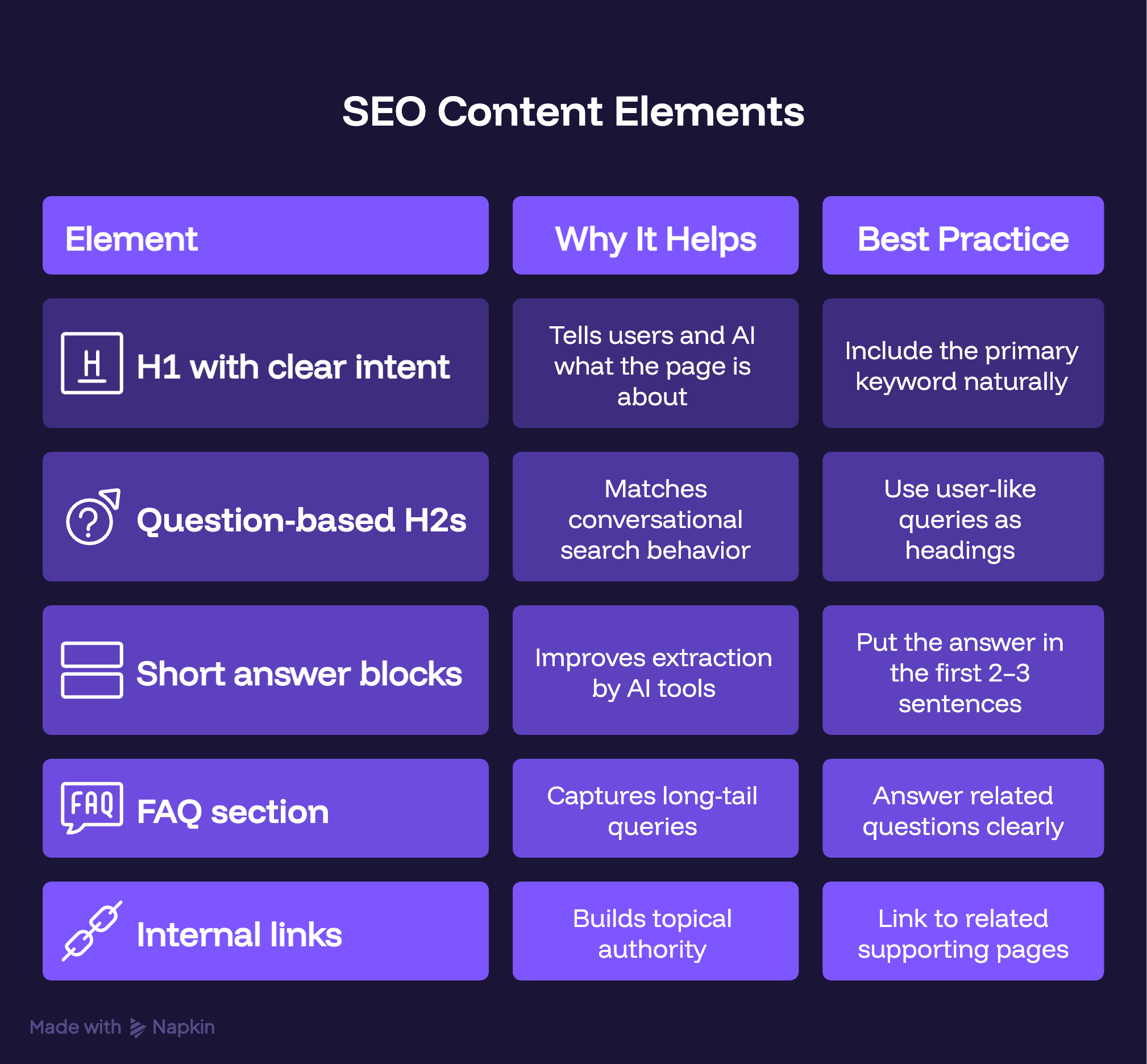
When these elements work together, your site becomes easier to navigate and easier to cite. That is especially important now that AI Overviews and AI chat interfaces are absorbing more of the search journey before a user ever reaches a page.
To turn your content into an answer engine, start with intent. Write for the question behind the keyword, then answer it directly before expanding into context. This approach works well for featured snippets, AI Overviews, and users who want fast clarity.
A practical optimization workflow looks like this:
Start each section with a direct answer.
Use simple, conversational language.
Break long ideas into short paragraphs.
Add bullet points where steps or features need clarity.
Include FAQs that reflect real user questions.
Refresh content regularly so it stays current.
This is also where schema and formatting support your work. FAQ schema, clean headings, and concise definitions help search systems identify the most useful parts of the page. The result is content that performs well for both humans and AI extraction.
Some content formats are naturally better suited to answer engines. FAQ pages, how-to posts, comparison articles, glossary entries, and problem-solution guides all map well to conversational search behavior. These formats make it easier for users to find direct answers without reading irrelevant filler.
The best-performing content usually has a narrow purpose. It answers one main problem, uses supporting detail only where needed, and avoids trying to do too much on one page. That focus makes the content easier to optimize, easier to update, and easier for AI systems to trust.
A lot of content fails because it sounds polished but does not answer anything quickly. Long introductions, vague subheads, and buried conclusions make it harder for users and AI systems to extract value. That hurts both engagement and visibility.
Other common mistakes include:
Ignoring content freshness.
Overusing keywords without answering intent.
Skipping schema and structured formatting.
Writing for search engines instead of readers.
Treating every page as if it should rank for everything.
These mistakes matter more in AI search than they did in classic SEO. If the content is not easy to understand at a glance, it is less likely to be cited, reused, or trusted.
The data below shows why answer engine optimization and content optimization are now strategic priorities for brands.
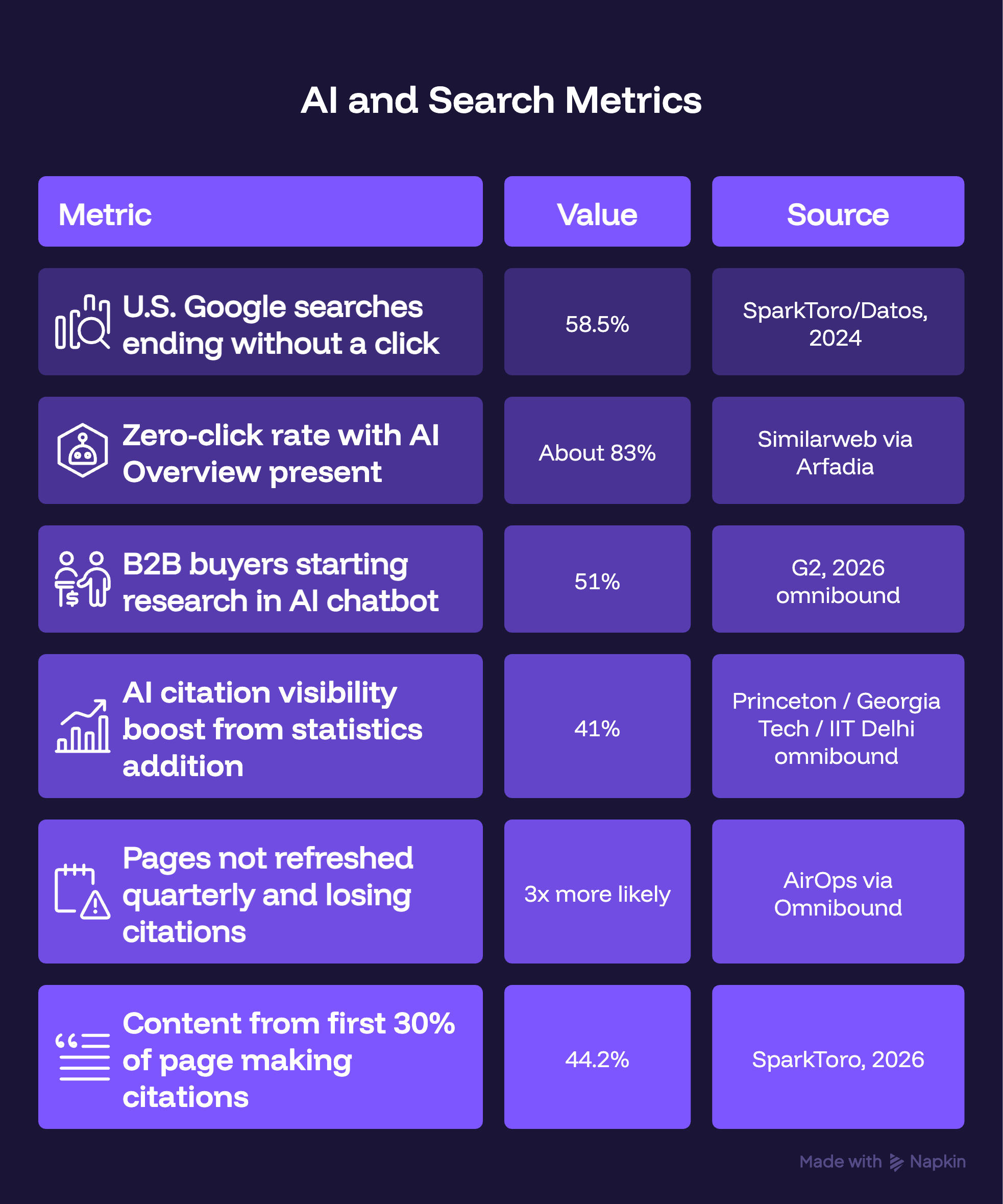
These numbers show a clear pattern: search is becoming more answer-driven, and freshness plus structure are now core ranking and citation signals. If a brand wants to stay visible, it has to think beyond traffic alone and optimize for the answer layer as well.
For IcyPluto, the opportunity is to help brands build content that works as a conversational front door. That means combining answer engine optimization, content optimization, and semantic clarity into a system that supports visibility across Google, AI Overviews, and chat-based discovery. The real goal is not just ranking; it is becoming the source AI systems trust when they answer a user’s question.
This is especially relevant for B2B and service businesses, where research journeys are longer, and trust matters more. If your content can answer early-stage questions clearly, you create a better first impression and a stronger path to conversion. In a zero-click world, that visibility has real brand value even before the click happens.
The conversational front door is the new model for content visibility. Instead of writing pages that only try to rank, brands now need pages that answer, guide, and earn citations in AI-powered search environments. That requires a blend of answer engine optimization, content optimization, and a structure that prioritizes the best answer.
Brands that adapt early will have a greater chance of being visible where decisions are made. As AI search continues to grow, content that is clear, current, and easy to extract will outperform content that is merely keyword-rich. For IcyPluto, the strategic advantage is helping brands turn their content into the answer users see first.
It is content designed to give users a direct, helpful answer the moment they land on a page. It mirrors the way people ask questions in search and AI tools.
They shift the focus from keyword matching to answer quality, structure, and clarity. Content now needs to be easy for AI systems to extract and cite.
Content optimization improves readability, structure, freshness, and intent alignment. Those signals make content more useful for both users and AI systems.
FAQ pages, how-to guides, comparison posts, and definition-style content usually perform well. These formats align naturally with conversational search behavior.
Fresh content is more likely to be cited and trusted. One 2026 analysis found that pages updated in the last 12 months accounted for most commercial-stage AI citations.