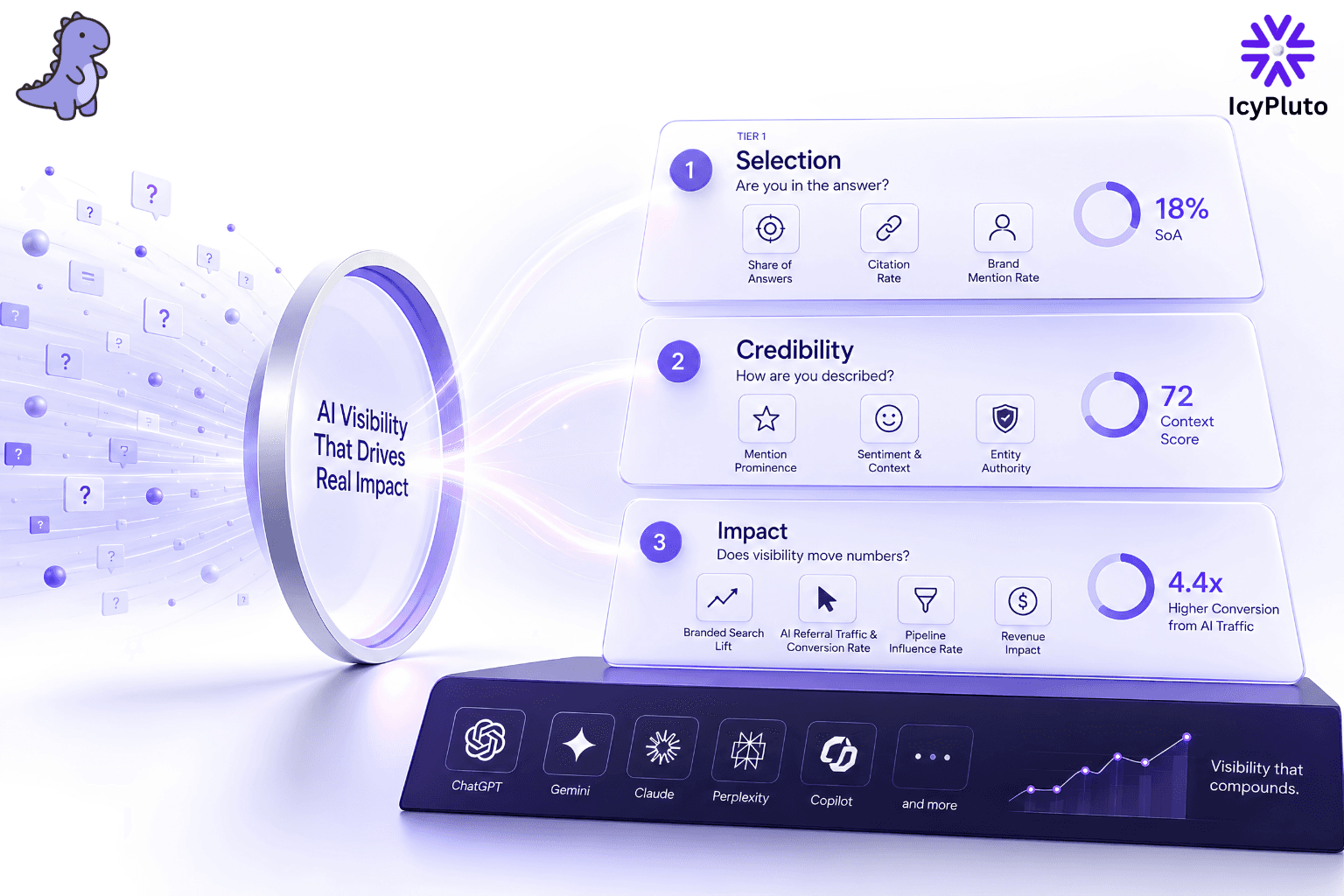
AI search has turned visibility into a numbers gam...
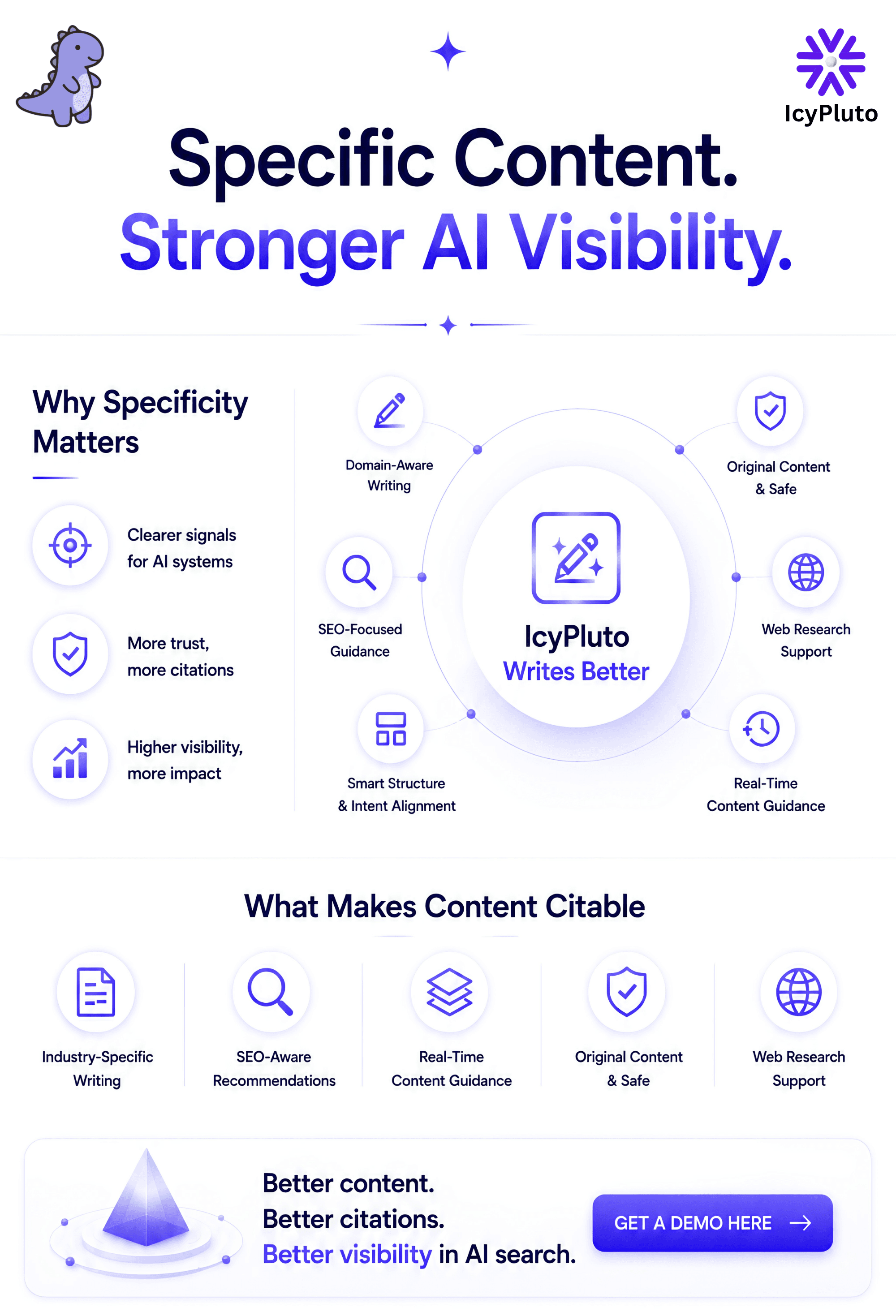
AI SEO writing is getting more specific, and that ...
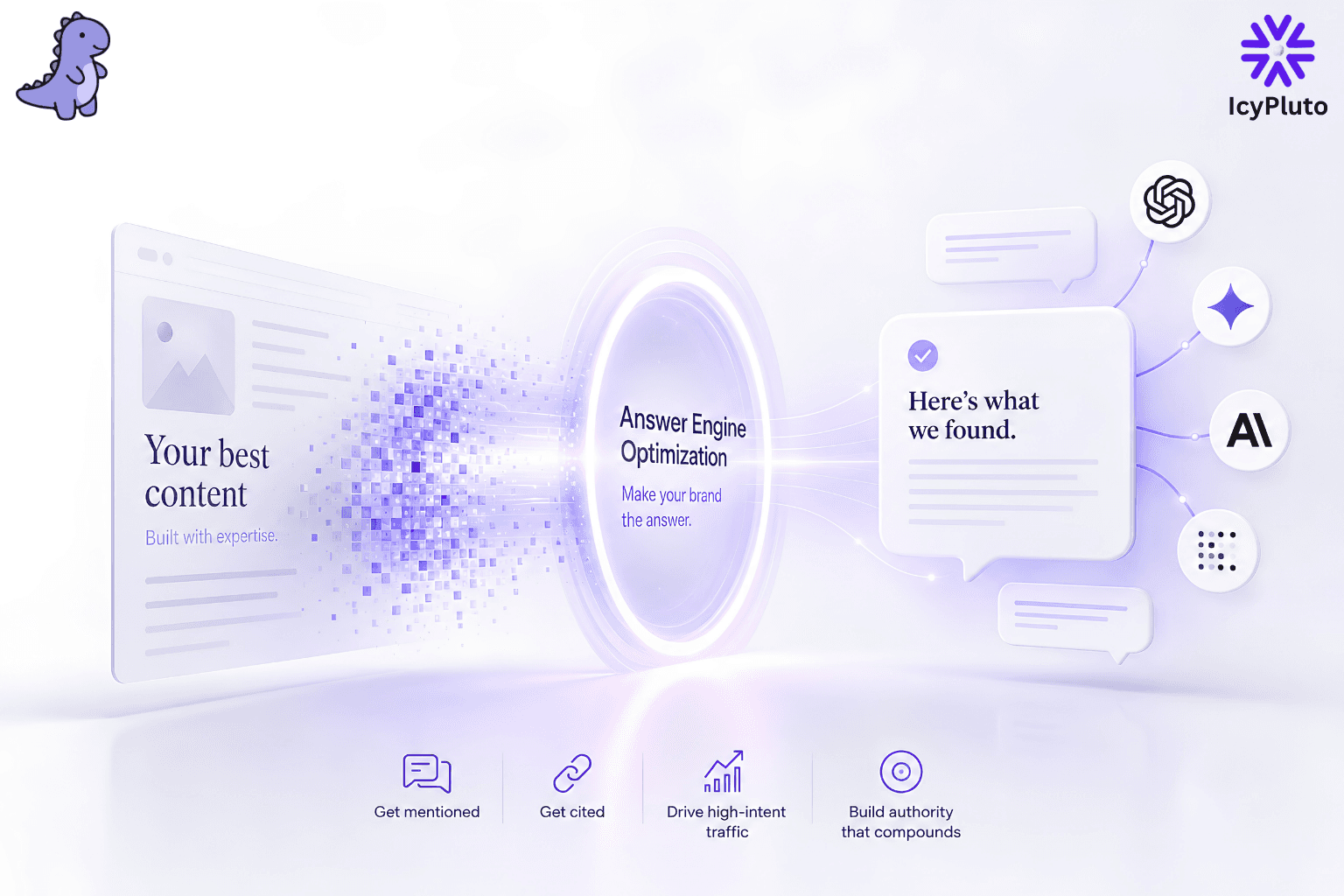
This blog breaks down why Answer Engine Optimizati...
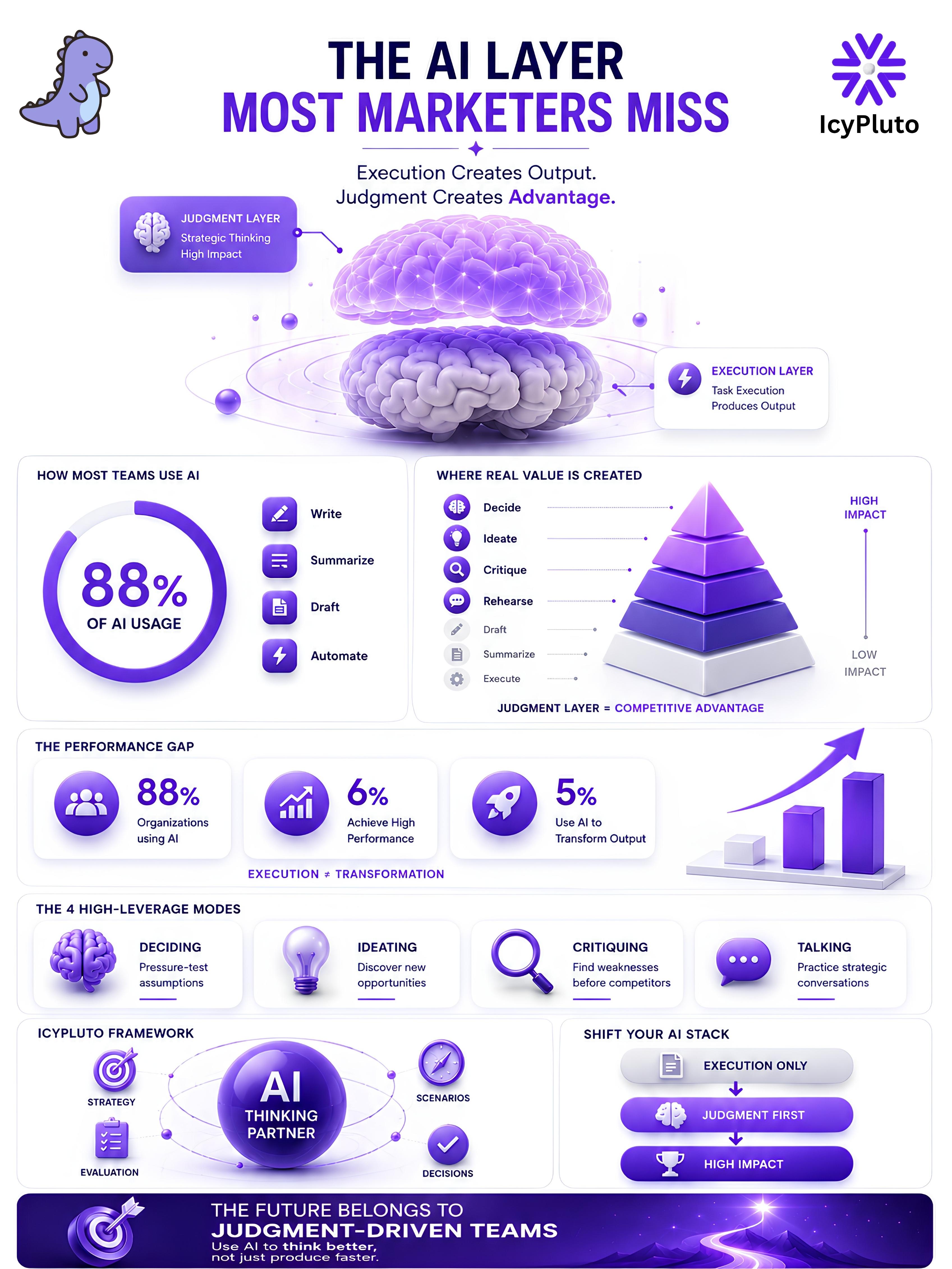
Most marketers and SEO professionals are using AI in the wrong layer of their work. They are using it for execution - drafting content, summarizing research, and speeding up tasks that used to take longer. While this brings real productivity gains, it misses the much bigger opportunity that AI offers.
At Icypluto, we have seen this pattern repeatedly with our clients. The true competitive advantage in the AI era lies not in the execution layer but in the judgment layer. This is where strategic decisions, critical thinking, ideation, and evaluation happen. When you shift your AI usage to these higher-value areas, you move from being faster at routine work to becoming significantly more effective at the work that actually drives results.
Think of your work as having two distinct layers. The execution layer involves tasks like writing first drafts, summarizing documents, generating outlines, and handling repetitive activities. Most people and organizations are heavily concentrated here.
The judgment layer is where real value is created. This includes making strategic decisions, evaluating options, ideating new approaches, critiquing your own work, and preparing for important conversations. This is the layer where experience, context, and human insight matter most.
A peer-reviewed study analyzing over 200 real-world ChatGPT use cases found that Writing and Identifying modes (execution-focused) dominated usage. The more strategic modes - Deciding, Ideating, Critiquing, and Talking - were used far less frequently. This imbalance is costing professionals and businesses significant potential.
It is easy to understand why execution mode dominates. It produces visible output quickly. You can show a completed draft or a summary and feel productive immediately. In fast-paced environments, this creates pressure to deliver more content faster.
However, as AI tools become better at execution tasks, continuing to use them only for this purpose risks turning skilled professionals into high-volume content managers rather than strategic thinkers. McKinsey’s 2025 State of AI survey revealed that while 88% of organizations use generative AI, only 6% are considered high performers who achieve meaningful business impact. The difference often comes down to how deeply they integrate AI into decision-making processes.
Deciding mode is one of the highest-leverage ways to use AI. Instead of asking AI to write something, you use it to pressure-test assumptions, evaluate priorities, and explore different strategic scenarios.
For example, you might ask AI to analyze which keywords or topics deserve priority given your current visibility, competitive landscape, and business goals. Or you could use it to simulate different budget allocation scenarios between traditional SEO and emerging AI visibility strategies.
When used well, AI becomes a sparring partner that helps you make sharper, more informed decisions. This is where senior professionals can multiply their value.
Most people use AI for basic ideation - “give me five blog post ideas.” The real opportunity lies in deeper, more strategic ideation.
This includes exploring entity gaps in your brand’s authority, identifying angles competitors have not covered, and discovering new ways to position your brand in AI-powered search environments. It requires treating AI as a collaborative thinking tool rather than a simple idea generator.
Critiquing mode involves using AI to honestly evaluate your own work or strategies. This can feel uncomfortable, but it is incredibly valuable.
You can run your content strategy, website architecture, or recent campaign through AI to spot weaknesses, gaps in authority signals, or assumptions that may no longer hold true. This proactive self-critique helps you catch issues before they impact performance.
Talking mode turns AI into a conversation partner. You can rehearse difficult client presentations, practice defending strategic recommendations, or simulate pushback from leadership.
This preparation leads to more confident and effective real-world conversations. It builds your ability to communicate complex ideas clearly and handle objections gracefully.
At Icypluto, we help our clients shift from execution-heavy AI usage to judgment-focused workflows. We encourage teams to spend more time using AI for strategic thinking, scenario planning, and critical evaluation.
Our approach includes structured prompts for decision-making, regular critique sessions, and deliberate ideation exercises. This helps teams move beyond faster output toward genuinely better strategies and outcomes.
The difference between execution and judgment usage is backed by solid research:
McKinsey’s 2025 State of AI survey found that only 6% of organizations achieve high performance with AI, largely due to workflow transformation rather than simple tool adoption.
EY’s 2025 Work Reimagined Survey showed that while 88% of employees use AI, only 5% use it in ways that fundamentally transform their output.
Studies consistently show that professionals who engage with AI in strategic modes create significantly higher business impact.
The AI tools we have today are incredibly capable at execution tasks. But the professionals and organizations that will thrive are those who deliberately build judgment-layer capabilities.
This does not mean abandoning execution efficiency. It means using AI to handle routine work so you can spend more time on the strategic thinking that truly moves the needle.
At Icypluto, we believe the future belongs to practitioners and teams that treat AI as a thinking partner rather than just a writing assistant. We are helping our clients build deliberate workflows around deciding, ideating, critiquing, and strategic conversation practice.
The gap between execution and judgment usage represents one of the biggest opportunities in digital marketing today. Those who close this gap will not only work more efficiently but will also deliver significantly more strategic value.
The question is not whether you are using AI. It is which layer of work you are using it for. Shifting more of your practice to the judgment layer may be one of the highest-return decisions you can make in your career right now.