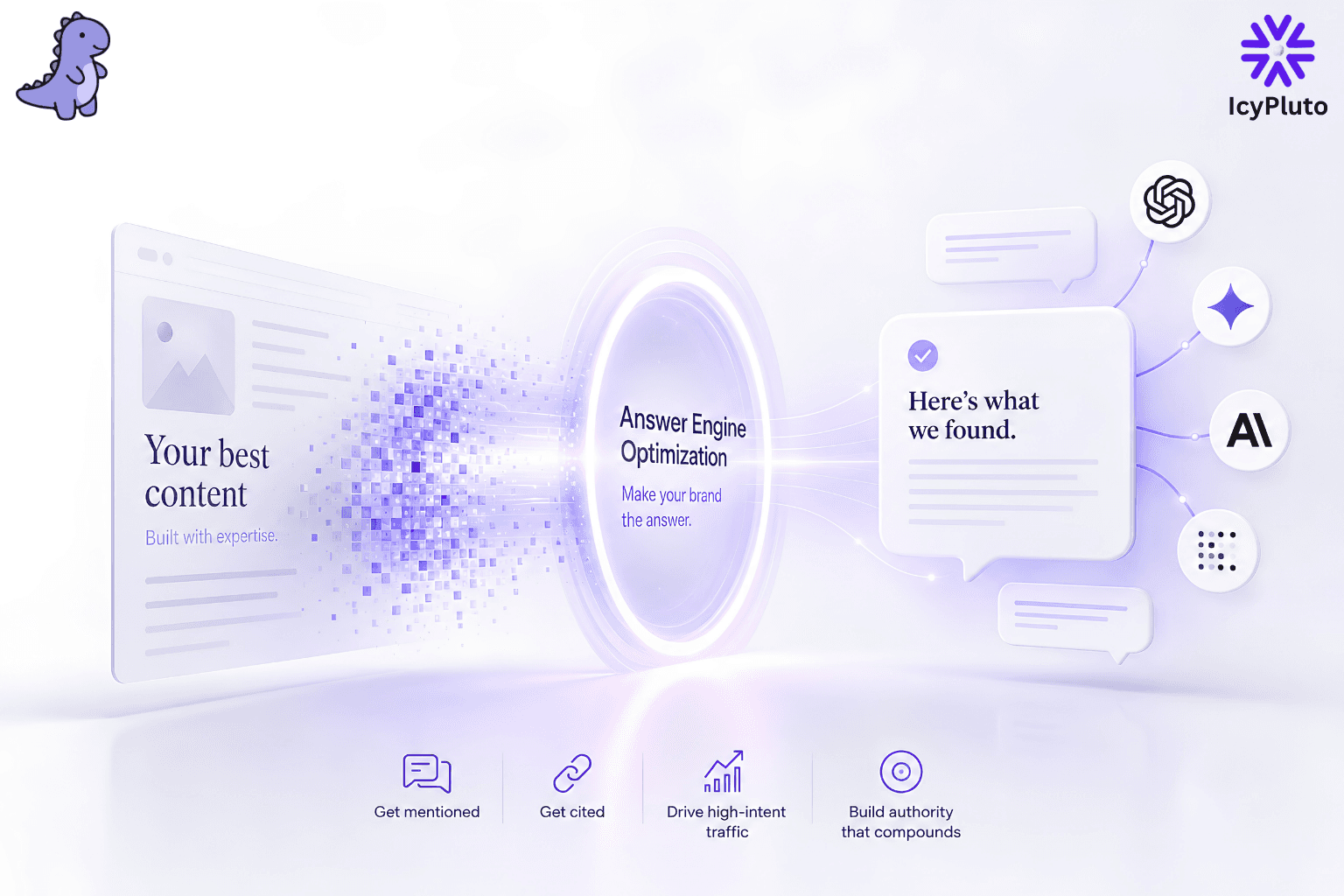
This blog breaks down why Answer Engine Optimizati...
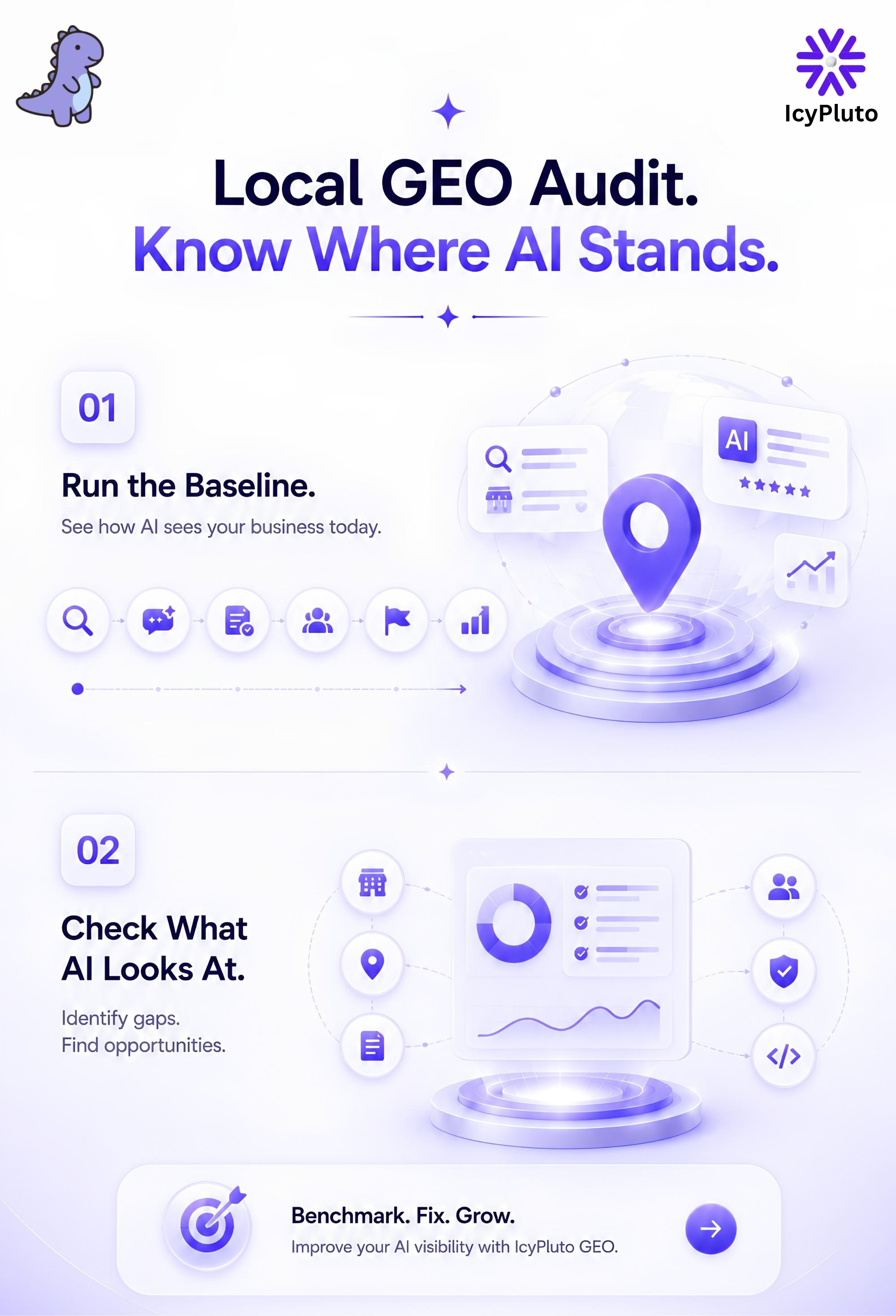
A local GEO baseline audit helps you understand ho...
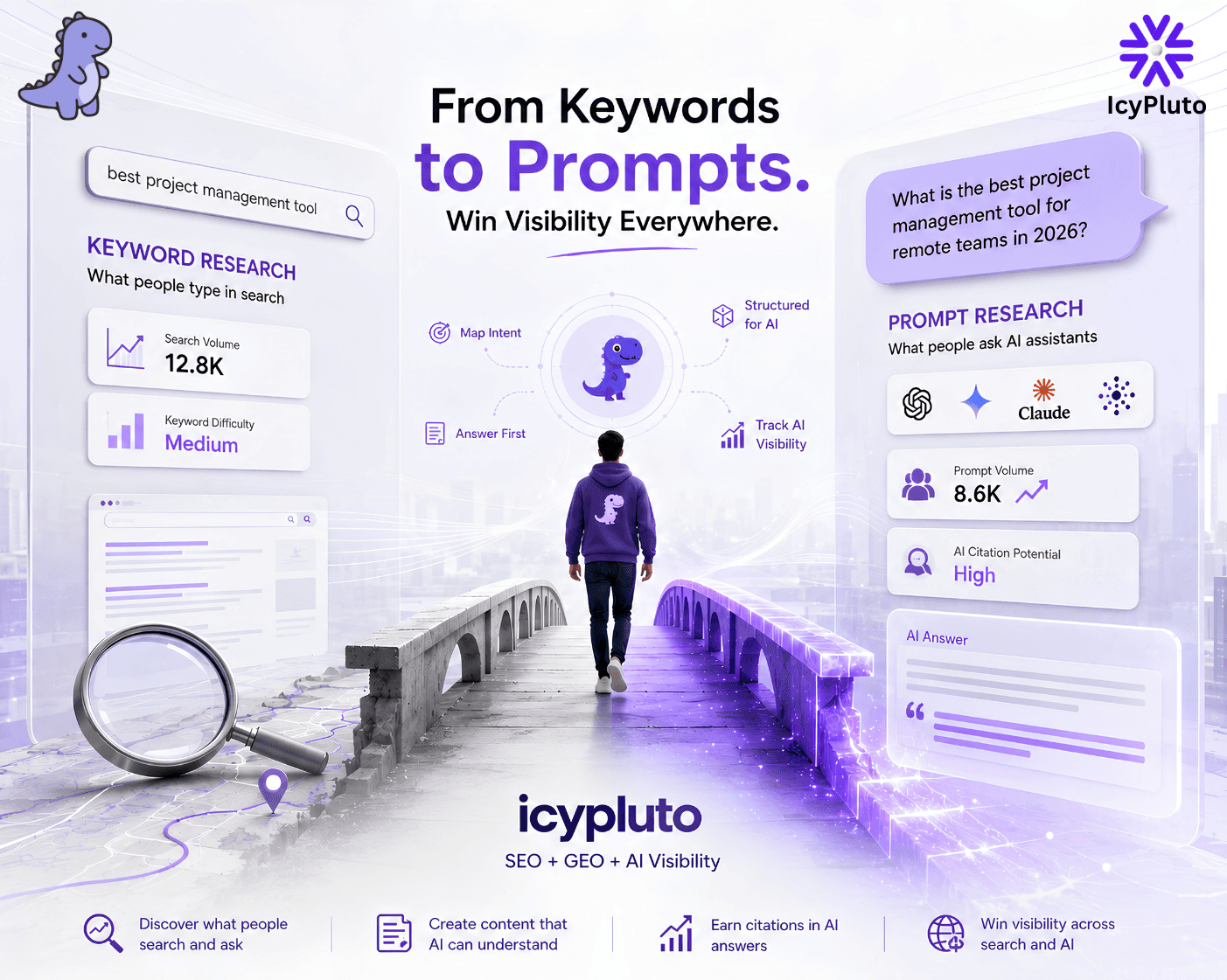
This blog explains how keyword research must now b...
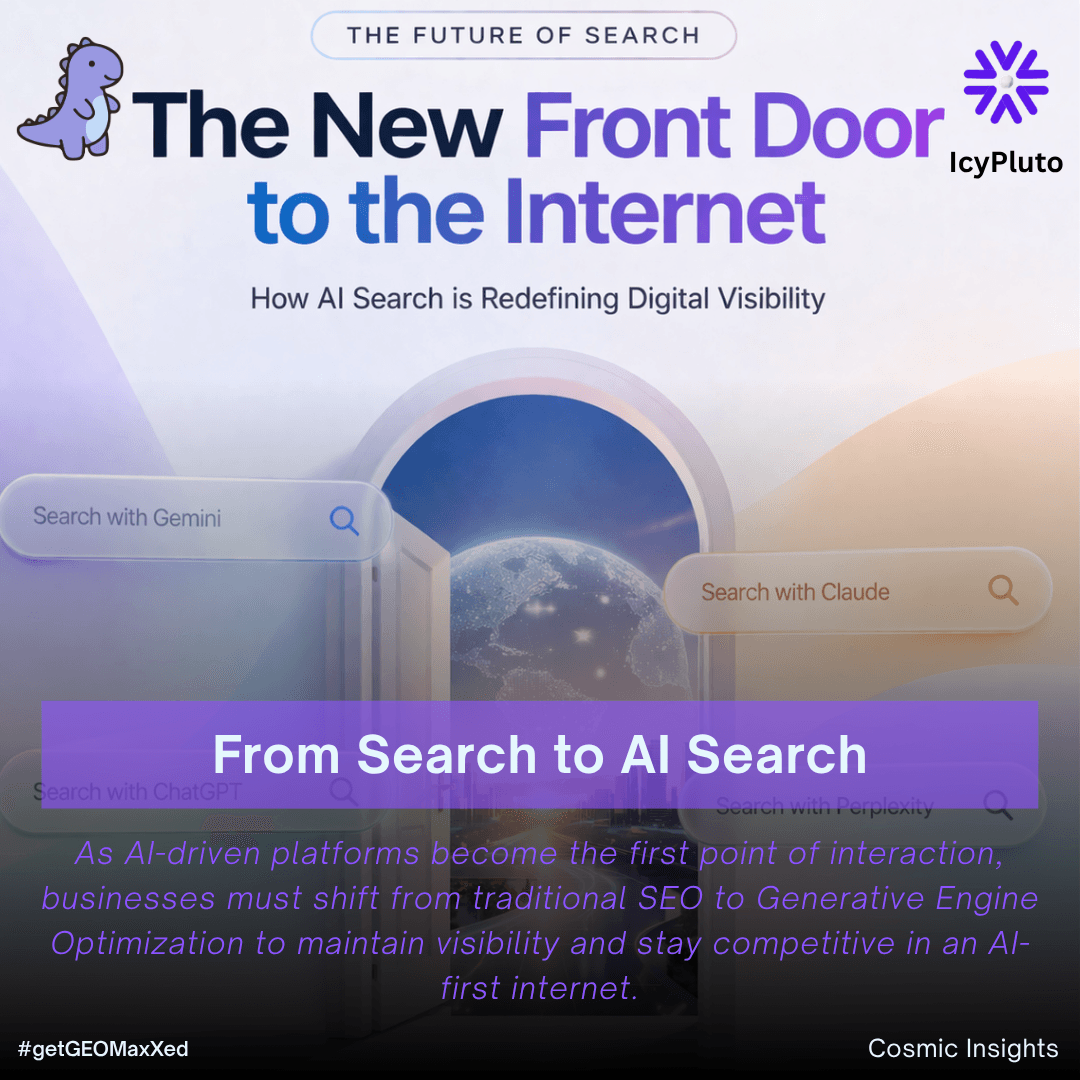
The internet is undergoing one of the most significant transformations in its history, and at the center of this shift is AI-powered search. For decades, search engines acted as the primary gateway to online information, guiding users through a structured process of queries, links, and website visits. Businesses built entire marketing strategies around this model, focusing heavily on search engine optimization to rank higher and capture traffic.
That model is now evolving into something far more advanced. AI-driven platforms are replacing traditional search behavior with a more intuitive and conversational experience. Instead of browsing multiple websites, users are receiving direct, contextual answers generated by large language models. This shift has turned search engines into answer engines, where information is synthesized rather than simply indexed.
As a result, the first interaction between a user and a brand is increasingly happening within AI-generated responses rather than on a website. This change is redefining digital visibility and forcing businesses to rethink how they approach content, marketing, and discovery in a world where clicks are no longer the primary measure of success.
The adoption of AI-powered search is happening faster than most digital shifts we have seen before. What started as experimentation has now become mainstream behavior across demographics.
Here are some key insights that define this transformation:
Around 50 percent of consumers already use AI-powered search tools for research and decision-making
Nearly 40 to 55 percent of users across industries such as retail, travel, and finance rely on AI during purchase decisions
Approximately 44 percent of users prefer AI platforms over traditional search engines as their primary information source
AI-generated summaries are appearing in a growing share of search results and are expected to exceed 75 percent penetration in the near future
By 2028, AI-driven search is projected to influence hundreds of billions in revenue globally
These numbers highlight a clear shift. Users are not just experimenting with AI. They are actively depending on it.
The consumer journey has become more dynamic and less predictable in the age of AI search. Previously, users followed a relatively linear path from awareness to consideration to decision. Today, that journey is compressed and often completed within a single AI interaction.
Most users begin with exploratory queries, asking broad questions to understand a category, compare options, or identify the best solutions. AI platforms excel at this stage by providing structured insights that simplify complex decisions. Instead of visiting multiple websites, users receive a curated summary that highlights key factors such as price, features, and brand reputation.
As the journey progresses, AI continues to play a central role by offering personalized recommendations based on user preferences. This creates a more efficient decision-making process where users can quickly move from exploration to action. In many cases, the majority of research happens before a user ever clicks on a website, making pre-click influence more important than traditional traffic metrics.
This shift has profound implications for marketers. It means that visibility is no longer about being the top result on a search engine results page. It is about being included in the AI-generated narrative that shapes user decisions.
One of the most talked-about impacts of AI search is the rise of zero-click behavior.
Users are increasingly finding answers without visiting any website. This has led to a noticeable decline in traditional organic traffic.
Here is what businesses are already experiencing:
Potential 20 to 50 percent drop in organic search traffic
Fewer clicks but higher-intent visitors
Increased importance of pre-click influence
This does not mean SEO is dead. It means its role is evolving.
Instead of optimizing for clicks, brands now need to optimize for visibility within AI-generated answers. The goal is no longer just to bring users to your website but to shape their decisions before they even visit it.
The rise of AI search has introduced a new concept known as Generative Engine Optimization, which represents the next evolution of digital marketing. While SEO focuses on improving rankings in search engines, GEO is about ensuring that a brand is represented in AI-generated responses.
One of the key differences between SEO and GEO lies in how information is sourced. Traditional SEO relies heavily on optimizing a brand’s own website. GEO, on the other hand, requires a broader approach because AI systems pull information from a wide range of sources. These include review platforms, publisher articles, forums, and user-generated content.
In this environment, a brand’s website is only one piece of the puzzle. Visibility depends on how consistently and positively a brand is mentioned across the entire digital ecosystem. This makes external content just as important as owned content, if not more.
To succeed with GEO, businesses must shift their mindset from controlling content to influencing it. This involves building a strong presence across multiple platforms, encouraging authentic user engagement, and ensuring that accurate and relevant information about the brand is widely available.
AI-powered search operates within a complex content ecosystem where multiple sources contribute to a single response. This ecosystem includes publishers, affiliate platforms, review sites, and online communities, all of which influence how a brand is perceived.
For businesses, this creates a new set of challenges and opportunities. On one hand, it becomes harder to control the narrative because AI systems determine which sources to prioritize. On the other hand, it allows brands to build authority through diverse and credible content channels.
Success in this environment requires a strategic approach to content creation and distribution. Brands must invest in high-quality content that is both informative and accessible. At the same time, they must actively participate in third-party platforms to strengthen their presence across the ecosystem.
Structured content plays a crucial role in this process. Clear headings, logical organization, and semantic relevance make it easier for AI systems to interpret and use information. Content that is well-structured and deeply informative is more likely to be referenced in AI-generated responses, increasing visibility and influence.
One of the most noticeable impacts of AI search is the decline in traditional website traffic. As users rely more on AI-generated answers, fewer clicks are directed toward individual websites. This shift has raised concerns about the future of SEO and the sustainability of organic traffic.
However, this change should not be viewed as a loss but as an evolution. The focus is shifting from post-click engagement to pre-click influence. Users are making decisions before they visit a website, which means that being part of the decision-making process is more important than driving traffic alone.
This shift requires businesses to rethink how they measure success. Metrics such as impressions, brand mentions, and AI visibility become more important than traditional click-through rates. Understanding how a brand appears in AI responses and which sources are influencing those responses is critical for staying competitive.
In this new landscape, the goal is not just to attract users but to shape their perceptions and guide their decisions at the earliest stage of the journey.
Adapting to AI-powered search requires a structured and strategic approach. Businesses that succeed will be the ones that treat GEO as a core capability rather than an experiment.
Here are the key pillars of a strong AI search strategy:
Start by understanding how your brand appears across AI platforms. Analyze which sources are being referenced and where gaps exist.
Invest in third-party and community-driven content. Your presence outside your website is just as important as your website itself.
Content should be:
Structured with clear headings
Easy to interpret
Rich in context and depth
Focused on answering real user questions
AI systems prioritize trustworthy content. This means consistently providing accurate, updated, and high-quality information.
Traditional metrics like clicks and rankings are no longer enough. Brands must track:
Mentions in AI responses
Source influence
Sentiment and positioning
The future of AI search is not just about better answers. It is about action. One of the most exciting developments in this space is the rise of AI agents that can perform tasks on behalf of users. These systems have the potential to move beyond information retrieval and into execution, such as selecting products, making purchases, or completing transactions.
This shift toward autonomous decision-making introduces a new dimension to digital marketing. Instead of influencing human users directly, brands may need to influence the AI systems that are making decisions on their behalf. This requires a deeper understanding of how AI models evaluate information and prioritize sources.
At the same time, conversational search will continue to evolve, making interactions more natural and intuitive. Users will expect seamless experiences that adapt to their needs in real time. Businesses that can deliver personalized and relevant content will be better positioned to succeed in this rapidly changing landscape.
The transition to AI-powered search is happening at an unprecedented pace, leaving little room for delay. Businesses that fail to adapt risk losing visibility, traffic, and market share to competitors who are quicker to embrace change.
Early adopters have a significant advantage in this environment. By investing in GEO, building strong content ecosystems, and optimizing for AI visibility, they can establish a dominant presence before the market becomes saturated.
The key is to approach this transformation proactively rather than reactively. Waiting for clear benchmarks or established best practices may result in missed opportunities. Instead, businesses should experiment, learn, and refine their strategies as the landscape evolves.
AI-powered search is redefining the rules of digital visibility and creating a new front door to the internet. The shift from traditional search engines to AI-driven platforms is not just a technological change. It is a behavioral change that affects how users discover, evaluate, and choose brands.
In this new era, success depends on more than just rankings. It requires a comprehensive approach that combines SEO, GEO, and a deep understanding of the content ecosystem. Brands must focus on influencing AI-generated responses, building authority across multiple platforms, and delivering value at every stage of the consumer journey.
The opportunity is immense, but so is the urgency. Businesses that act now will not only adapt to the new landscape but also shape it. Those who delay risk becoming invisible in a world where visibility is increasingly defined by AI.
The front door of the internet has changed, and the brands that learn how to stand at that door will be the ones that lead the future of digital discovery.