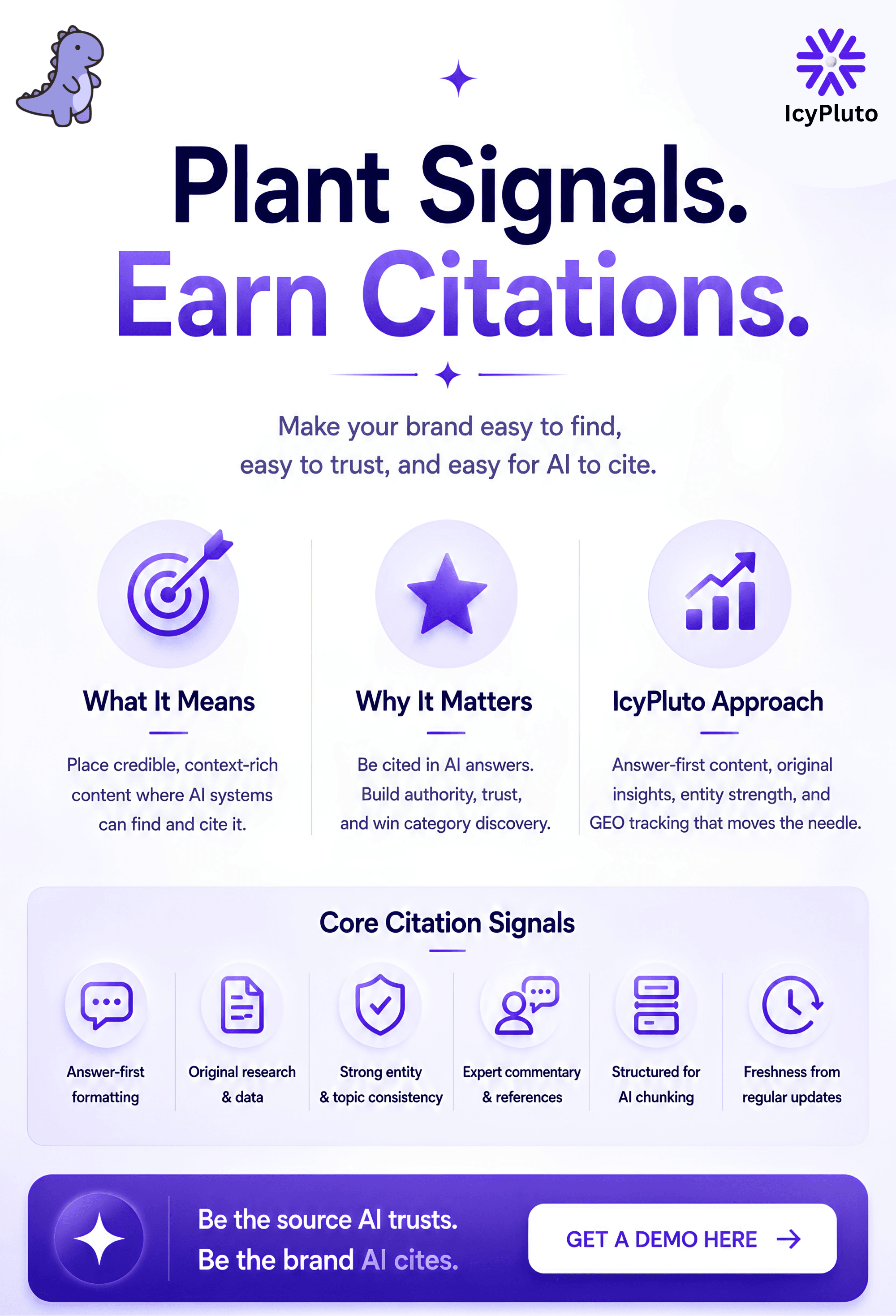
Citation seeding is becoming one of the fastest wa...
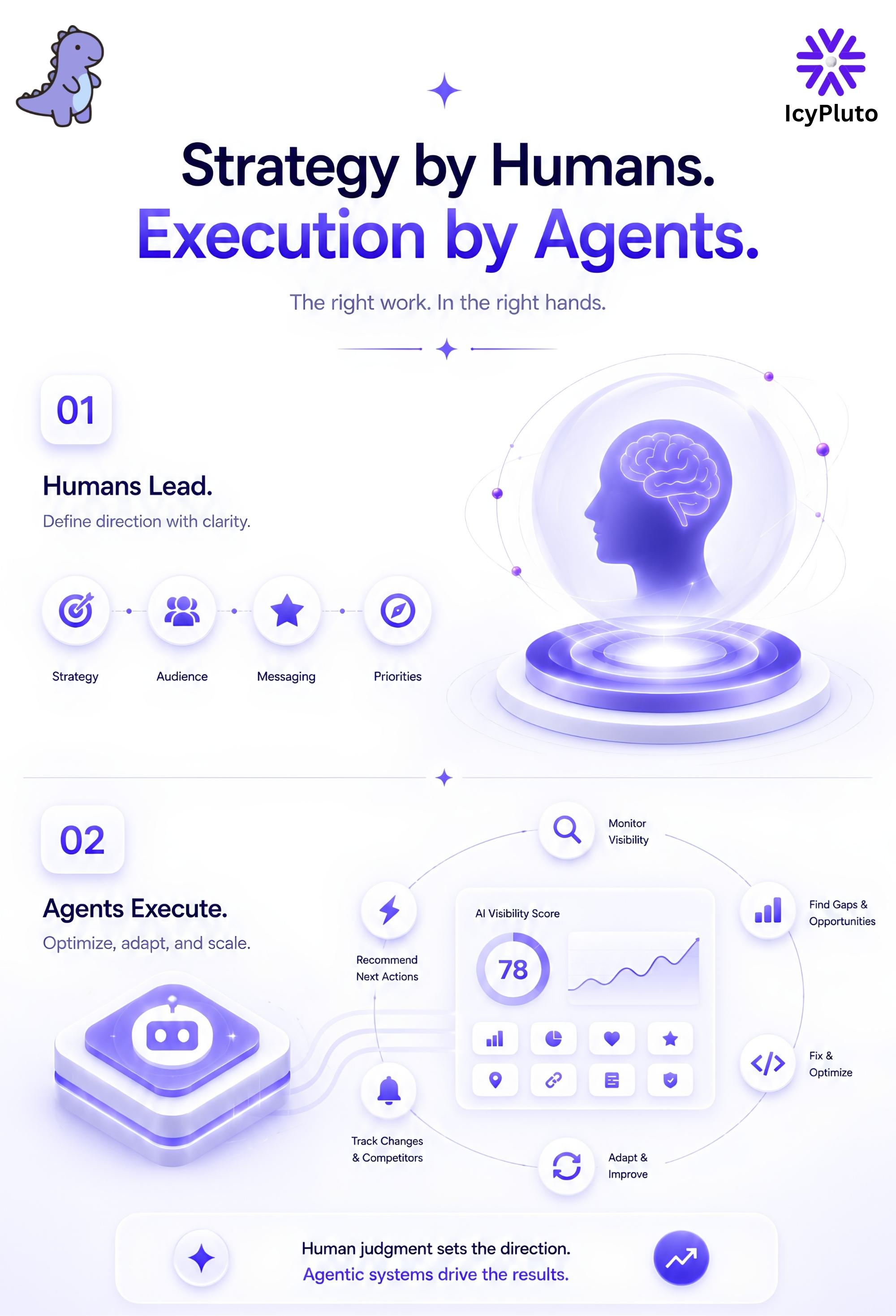
This blog explains how modern marketing teams can ...
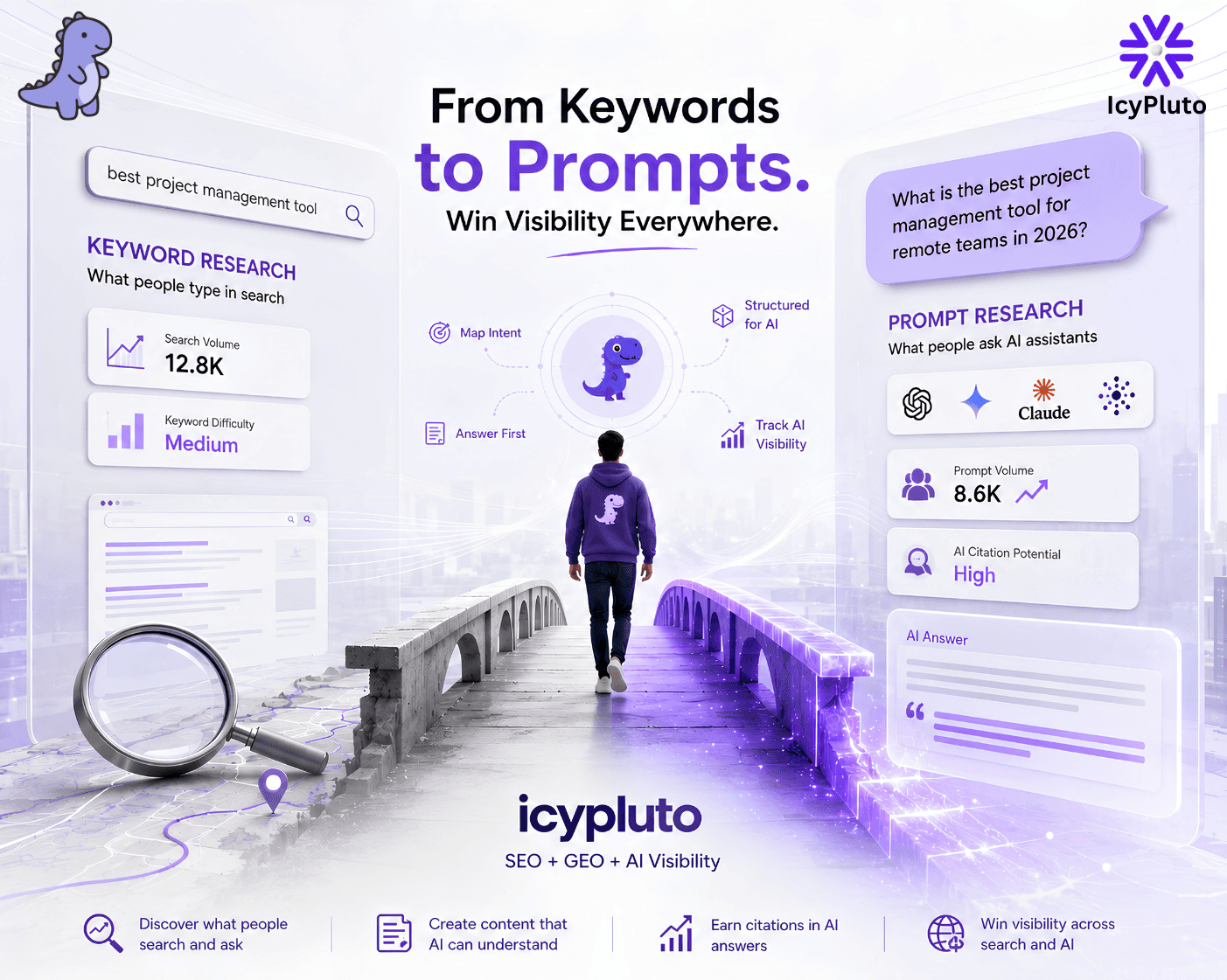
This blog explains how keyword research must now b...
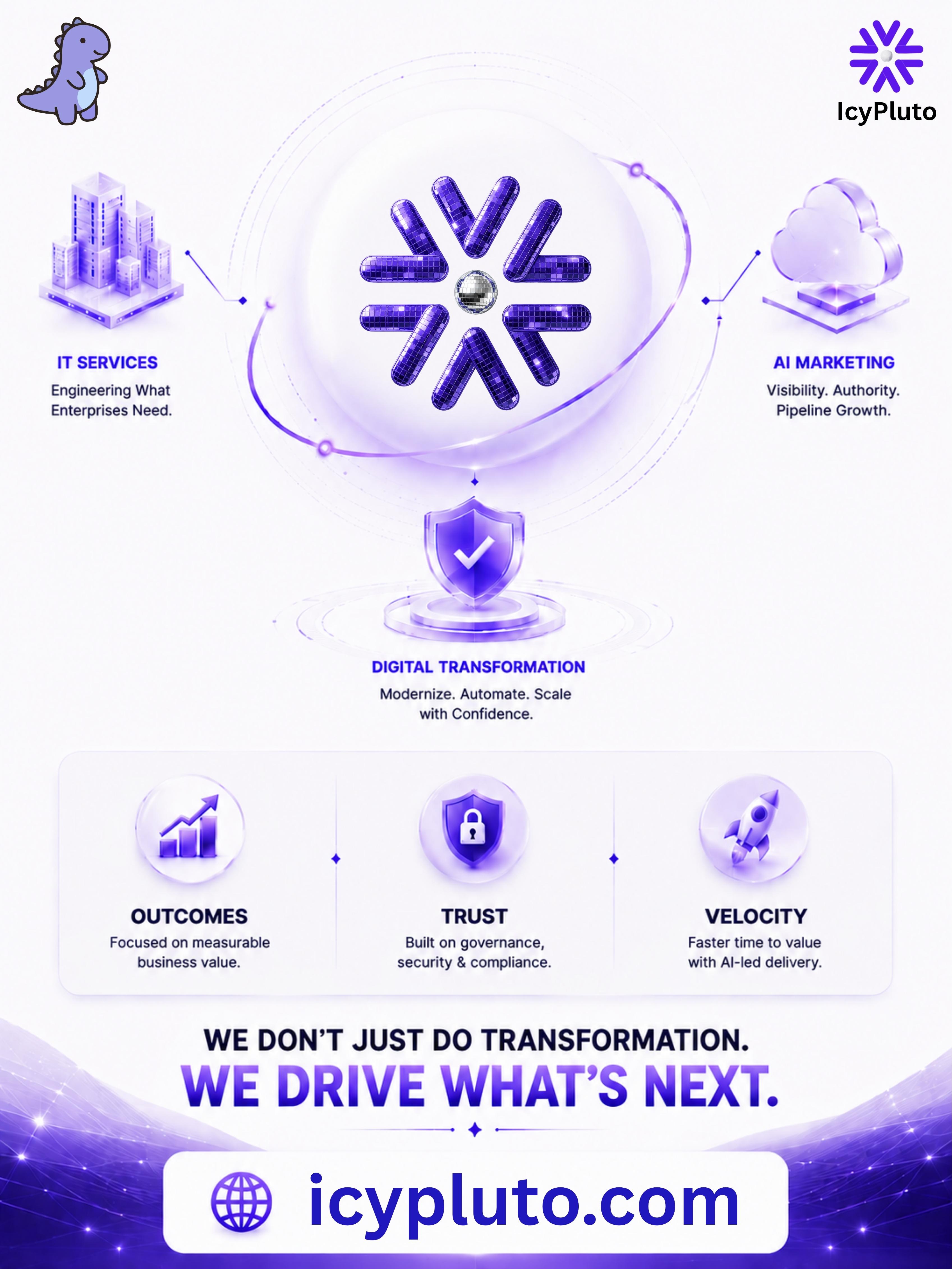
The IT industry is entering a phase where growth is no longer protected by scale, legacy relationships, or broad service catalogs alone. AI is changing how services are delivered, how buyers evaluate vendors, and how revenue is created, which means the old marketing and growth model is losing force.
The warning signs are already visible. Deloitte reports that only 11% of organizations have AI agents in production, even though 38% are piloting them, while 42% are still developing a strategy, and 35% have no strategy at all. Deloitte also notes that token costs have fallen 280-fold in two years, yet some enterprises are still seeing monthly AI bills in the tens of millions, which shows how quickly AI economics are changing the operating model for technology firms.
This is not just a delivery problem. It is a market positioning problem. Buyers no longer want vague AI claims. IDC says technology buyers are ready for vendors to move beyond overhyped capabilities and show realistic use cases and value. That is exactly where many IT brands are struggling. They are still marketing services with old language while buyers are asking harder questions about outcomes, credibility, and proof.[idc]
Deloitte describes this moment as a shift from experimentation to impact, where the distance between emerging and mainstream technology is collapsing. A leading generative AI tool reached about 100 million users in two months and now has more than 800 million weekly users, which shows how quickly buyer behavior and enterprise expectations can change.
This matters because IT firms are selling into clients whose expectations have reset. Buyers are not comparing vendors only on delivery capability anymore. They are comparing them on AI readiness, operating model maturity, governance, and ability to move from pilot to measurable outcomes.
EPAM adds a strong India-specific signal. A LinkedIn and Microsoft survey cited by EPAM found that 93% of Indian business leaders plan to deploy AI agents in the next 12 to 18 months. That means the market for AI-led transformation is real, but it also means every IT services provider is now competing in a more crowded and more demanding environment.
The strongest companies are already changing how they scale.
Microsoft announced AI partnerships with TCS, Infosys, Wipro, and Cognizant, with each firm committing to deploy more than 50,000 Copilot licenses as part of broader agentic AI adoption across global enterprises. By June 2026, Times of India reported that Infosys, TCS, and Wipro had each scaled Microsoft 365 Copilot deployments to more than 100,000 employees, taking the combined rollout across the three firms to over 300,000 licenses in less than six months.
These are not symbolic moves. They signal that leading IT firms are scaling AI capability internally so they can sell transformation more credibly to clients.
There is also evidence that AI is becoming central to revenue strategy. Reuters reported that Wipro expanded its partnership with ServiceNow to deploy agentic AI workflows across IT, HR, procurement, and cybersecurity functions, combining Wipro Intelligence with ServiceNow’s AI platform to help enterprises scale AI adoption. HCLSoftware and Sify also announced a sovereign AI partnership in India to offer subscription-based managed services built on compliant data centers, AI-ready platforms, and enterprise applications hosted in India.
The pattern is clear. Major firms are scaling through:
Large internal AI rollouts.
Platform partnerships.
Managed AI services.
Sovereign and compliance-led infrastructure offerings.
AI-native enterprise positioning.[thestar.com]
At first glance, this looks like a strong story for the IT sector. It is, but only for firms that adapt quickly.
The real challenge is that AI is starting to dismantle the traditional economics of services and software. TSIA calls this the new era of AI Economics, where value is no longer tied to access, but to work performed and outcomes delivered. That creates a major structural problem for firms that still depend on seat-based pricing, labor-arbitrage logic, or service models that are hard to measure by business outcome.
TSIA describes this as the Cannibalization Dilemma. If AI reduces the human labor a client needs, then a business model built around seats, people, or effort starts to weaken. In simple terms, the better the AI performs, the more unstable the old revenue model becomes.
This has direct marketing consequences.
IT firms can no longer rely on generic messages about digital transformation, cloud modernization, or AI enablement. Buyers want to know:
What outcome will this deliver?
How fast will value show up?
What risks are controlled?
How is this measured?
Why should this provider be trusted over the rest?[idc]
If the brand cannot answer those questions clearly, it becomes another interchangeable vendor in a crowded market.
Many IT brands still market themselves using the same broad language: AI-powered, future-ready, transformation-led, enterprise-grade. That language may have worked when the market was less mature, but now it creates sameness instead of trust.
IDC says buyers want realistic use cases and value, not hype. That means the firms still leading with abstraction are losing ground to those that lead with evidence.[idc]
Deloitte says the knowledge half-life in AI has shrunk to months from years, and one CIO said the time it takes to study a new technology now exceeds the technology’s relevance window. If an IT brand’s positioning, website, case studies, and thought leadership still reflect last quarter’s language, it already looks behind.
Only 11% of organizations have agents in production, despite 38% piloting them, and Gartner predicts 40% of agentic projects will fail by 2027 because firms are automating broken processes instead of redesigning operations. This means buyers are cautious. They are not only buying AI capability. They are buying confidence that a provider can get them from experiment to business value.
TSIA argues that enterprise AI adoption is not plug-and-play because most environments are messy, full of legacy systems, fragmented data, security constraints, and governance complexity. That means services are no longer an add-on. They are the engine that turns AI potential into business outcomes.
For marketing teams, this changes the story. The market is not buying tools alone. It is buying readiness, orchestration, governance, integration, and measurable outcomes.
TSIA’s analysis makes it clear that per-seat pricing is unstable in the AI era, and the market is shifting toward value-based and outcome-based models. If the commercial model is changing, then brand communication also has to change. Firms need to explain not just what they sell, but how value is delivered and defended over time.
What Buyers Actually Want Now
The market is becoming more disciplined, especially in India. EPAM notes that investors and enterprises now expect AI projects to come with clear ROI, transparent audit trails, and continuous monitoring. CIOs are building internal policy boards with legal and compliance teams to manage error rates and risk.[epam]
That means buyers want a provider that can do five things well:
Prove business value.
Show a credible path from design to production.
Demonstrate governance and compliance maturity.
Translate AI into measurable outcomes.
Build trust before the sales conversation gets deep[epam]
Most agencies and many IT marketing teams are not built for that. They are still optimized for lead generation, not authority generation.
Most agencies still operate with a traditional marketing mindset. Their approach revolves around SEO rankings, blog production, lead generation campaigns, and paid advertising. That model was built for a web where traffic and form fills were the main indicators of success.
The AI era requires something fundamentally different.
It requires building authority across the entire digital ecosystem that enterprise buyers and AI systems use to evaluate vendors. That includes websites, executive voices, analyst coverage, LinkedIn, PR, use-case content, infrastructure narratives, governance stories, and third-party trust signals. AI systems synthesize these signals, and buyers do too.[idc]
This is where most IT firms are exposed. They are investing in visibility, but not enough in authority. They are generating activity, but not enough market trust.
This is where IcyPluto creates leverage.
Instead of focusing only on traffic generation, IcyPluto helps IT companies build AI-era market authority. That matters because in a crowded services market, authority is what makes a brand retrievable, credible, and commercially believable.
AI engines synthesize information from multiple sources. IcyPluto helps brands establish consistent narratives across websites, LinkedIn, industry publications, PR channels, communities, thought leadership assets, and executive branding. This increases the likelihood that AI systems recognize, trust, and reference the brand.[icypluto]
For IT firms, that means stronger discoverability when buyers research AI transformation, managed services, sovereign AI, cybersecurity, cloud modernization, or agentic workflows.
AI rewards expertise. IcyPluto helps organizations become category leaders through original research, market intelligence reports, industry studies, executive thought leadership, and proprietary content assets. In IT services, this is critical because buyers do not trust broad claims. They trust demonstrated competence.
Most content generates traffic. Very little generates trust. IcyPluto builds content ecosystems designed to influence awareness, consideration, pipeline generation, and revenue acceleration. That includes proof-driven use cases, AI readiness narratives, governance content, integration explainers, and trust-building thought leadership.
The objective is not publishing more. The objective is becoming impossible to ignore.
Increasingly, buyers trust people before companies. This is especially true in IT, where decisions are high-stakes and multi-stakeholder. IcyPluto helps founders and executives become recognized industry voices through strategic positioning and thought leadership. When executives become trusted authorities, the organization becomes easier to believe.
The future belongs to brands that own conversations before buyers enter purchasing cycles. IcyPluto helps companies build that architecture. Not just campaigns. Not just content. Not just SEO. An integrated authority engine designed for the AI era.
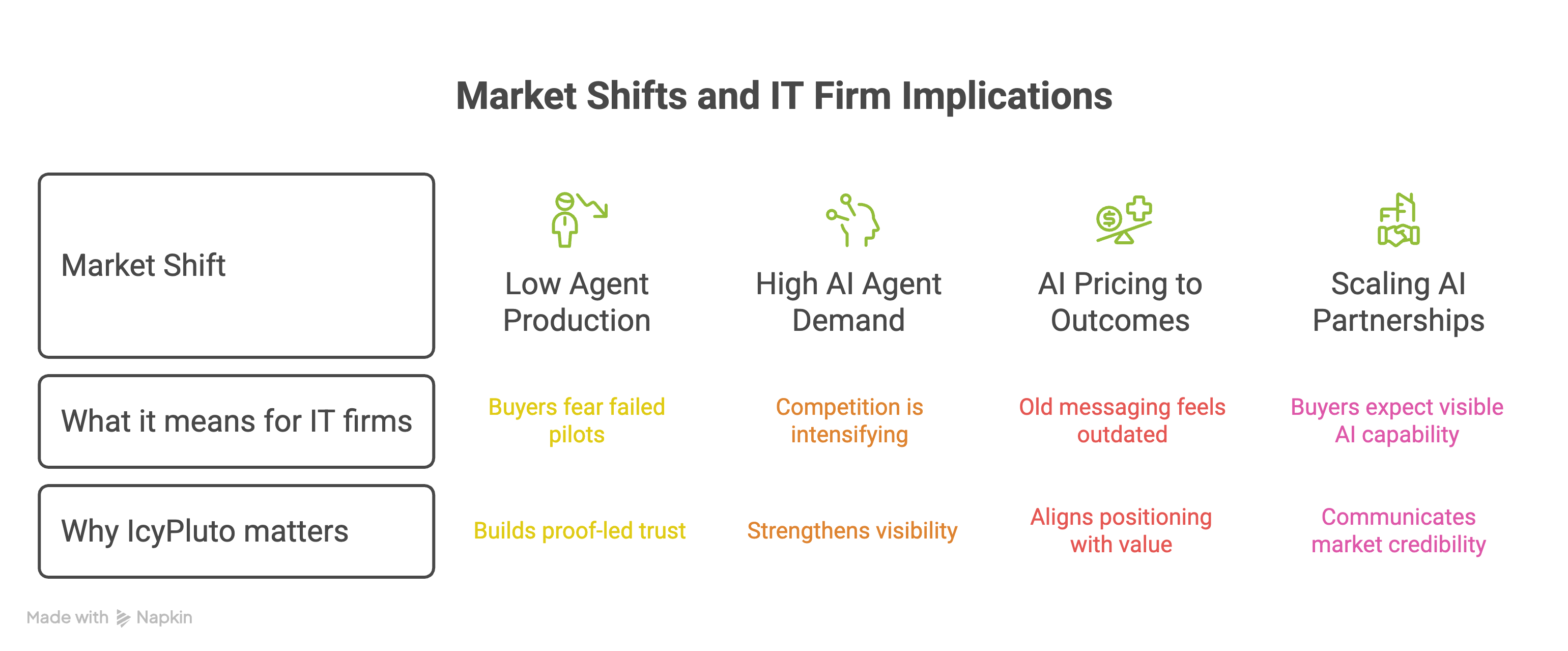
The IT industry still has massive opportunity, but the rules of growth are changing fast. AI is compressing relevance windows, changing pricing logic, raising buyer expectations, and forcing firms to prove value earlier in the journey.[linkedin]
The leaders are already moving. TCS, Infosys, Wipro, Cognizant, HCLSoftware, and others are scaling AI capability through partnerships, internal deployment, and managed-service expansion. But scale alone is not enough. Brands still need to be understood, trusted, and remembered by the market.[business-standard]
That is exactly why IcyPluto becomes the unfair advantage.
It helps IT firms move beyond traffic and start building authority. It helps them become more visible in AI-driven discovery, more credible across digital channels, and more aligned with the way enterprise buyers now evaluate value.
The next generation of winners will not be the firms that simply say they do AI. They will be the firms the market already trusts to lead it.
The traditional model depended heavily on SEO, lead generation campaigns, blog production, and paid media. In the AI era, buyers are researching vendors through AI tools, expecting stronger proof of value, and forming trust before they ever fill out a form. That means traffic alone is no longer enough to drive growth.
The biggest challenges include generic messaging, weak differentiation, broken attribution, rising buyer expectations, and the need to prove business outcomes earlier in the journey. Many IT firms are still visible in the market, but they are not building enough authority to stand out.
AI has increased both opportunity and skepticism. Buyers now hear similar claims from many vendors, so they want clear use cases, measurable ROI, governance readiness, and confidence that a provider can move from pilot to production successfully.
AI visibility refers to how often and how accurately a brand is recognized, cited, and recommended across AI-driven platforms and search experiences. It matters because buyers increasingly use AI systems to compare vendors, understand categories, and shortlist providers.
Traffic can bring visits, but authority builds trust. In high-value IT buying decisions, buyers do not choose vendors only because they found them. They choose vendors they believe can deliver. Authority increases that confidence across every stage of the buying journey.
IcyPluto helps IT brands build AI-era market authority through AI visibility strategy, category authority building, revenue-focused content systems, executive brand development, and integrated growth architecture. The goal is not just to get attention, but to become the brand that buyers and AI systems trust first.
Traditional agencies often focus on rankings, traffic, content volume, and paid campaigns. IcyPluto focuses on building authority across the full digital ecosystem so brands become more discoverable, trustworthy, and recommendation-ready in the AI era.
Enterprise buyers often trust people before companies. When founders, CEOs, CTOs, and senior leaders become visible and credible voices in the market, that trust extends to the brand and strengthens buying confidence.
Yes, SEO is still important, but it is no longer enough on its own. Companies now need a broader authority strategy that includes AI visibility, thought leadership, digital trust signals, and consistent narratives across multiple channels.
Because AI is already changing how enterprise buyers research, compare, and evaluate vendors. Companies that adapt early will build stronger authority and trust, while those that rely only on old growth tactics will find it harder to stay relevant.